Blog

  • Still Think Lower Greenville Is the Frat Strip? That News Is a Decade Old

    Still Think Lower Greenville Is the Frat Strip? That News Is a Decade Old

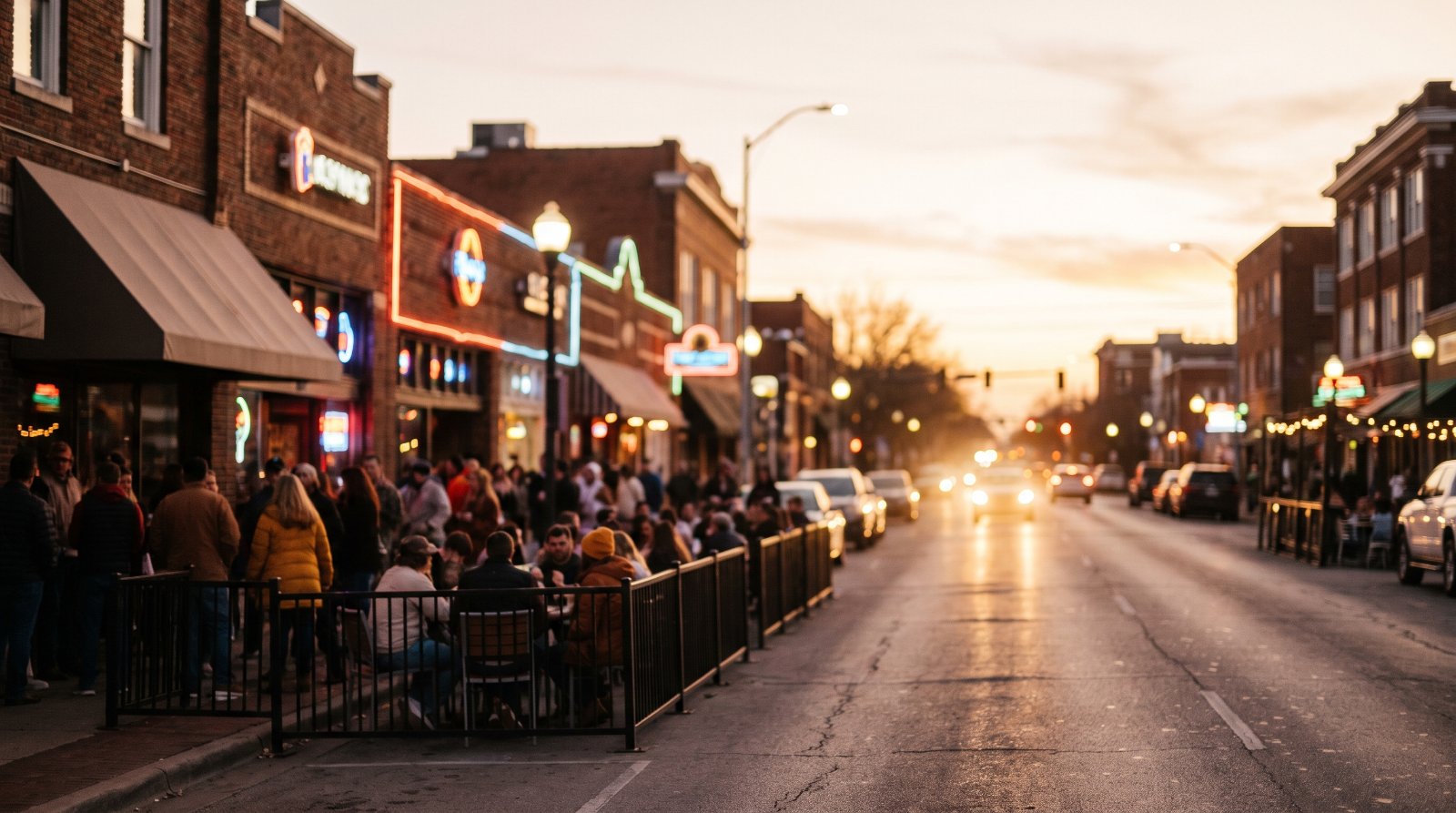
    Every Dallas neighborhood carries one sentence of reputation, and Lower Greenville’s is the most out-of-date sentence in the city. Say the name to someone who formed their opinion in the late 2000s and they’ll describe a strip: shot bars, cover charges, a police presence with weekend regularity — the kind of Saturday night you age out of and then hold against the street forever.

    Here’s the thing; the street didn’t wait around for anyone’s opinion to update. Lower Greenville today is the closest thing Dallas has to a living room — the neighborhood you go to on a normal night, with no occasion, no strategy, and no costume. Not the loudest. Not the fanciest. Not the one you take visitors to first. The one you actually end up in most. One scope note before we start: this is the neighborhood profile. The avenue itself runs three miles north through the M Streets and changes accent every few blocks, and that longer walk gets its own piece. Read this one to decide whether tonight belongs here; read that one when you want the whole biography.

    The cleanup story, briefly, because it’s the hinge

    The old reputation was earned, and the fix is a matter of public record: in the early 2010s the city rezoned the strip so that late-night operation required a specific permit, which cleared out the worst-behaved bars almost overnight; the street itself got rebuilt at the same time — wider sidewalks, calmer traffic, room to actually walk. What grew back afterward was different on purpose. Restaurants and neighborhood bars that wanted to be open at 7pm, not just packed at 1am.

    That’s the whole history lesson, and it explains the texture you feel there now. Lower Greenville wasn’t gentrified into blandness, and it wasn’t preserved as a museum of itself; it was re-planted, and the species that took root were the patio, the dinner room, and the mid-size music hall. A decade-plus later, the reputation and the street have almost nothing to do with each other.

    The living-room thesis

    What Lower Greenville does better than any neighborhood in Dallas is the unremarkable night done well. Deep Ellum asks for energy. Uptown asks for a little polish. Bishop Arts asks for an afternoon. Lower Greenville asks for nothing — you show up in whatever you’re wearing, walk two blocks, and the street hands you a dozen workable versions of the evening inside a five-minute radius.

    The density is the whole mechanism. The good blocks — Lowest Greenville, the stretch where the avenue bottoms out near its southern end — pack restaurants, bars, and patios shoulder to shoulder, which changes the risk math of going out the same way it does in Uptown; just at two-thirds the volume and none of the dress code. If the first spot has a wait, the second spot is forty steps away. Nobody has to commit to anything until they’re already standing in it.

    Part of why it works is that the strip has an actual neighborhood attached. The blocks behind the avenue are houses — porches, dogs, people who walk to dinner — and that residential gravity keeps the street honest in a way pure entertainment districts never manage. The crowd on a Wednesday includes people who live four hundred feet away, which means the bars have to be good on Wednesdays, not just profitable on Saturdays. You can feel the difference even if you can’t name it; the street is somebody’s routine before it’s anybody’s destination.

    This is also why the street absorbs every kind of night without ceremony. Tuesday solo dinner at the bar: normal here, nobody blinks. Six friends who couldn’t pick a plan: the street is the plan. The weeknight version of Lower Greenville might be its best self — patios half-full, kitchens unhurried, the whole place running at conversation volume. If tonight needs a neighborhood and you don’t want to think hard, this is the default setting; and the default is good.

    The Granada is the anchor

    Every real neighborhood has a building that holds it together, and here it’s the Granada Theater — an old movie house from the avenue’s early days, converted decades ago into one of the city’s best-loved mid-size music rooms. It books across genres, the sightlines are humane, and it sits close enough to everything that a show there comes with a built-in before and after on foot. That last part is rarer than it sounds. In most of Dallas, a concert is an event you drive to; on Lower Greenville it’s the middle third of an evening.

    Next door, Sundown at Granada extends the ecosystem — the eat-and-drink annex with a rooftop, where pre-show dinner and post-show recap happen without anyone touching a car key. The pairing is the neighborhood in miniature: culture and comfort, wall to wall, zero logistics. Where the Granada sits in the city’s larger live-music food chain — which rooms do volume, which do intimacy, which do discovery — is a guide of its own; the short version is that this one punches at the exact weight most nights actually want.

    Where to actually go

    Vibe-level, because the point is the pattern, not the checklist:

    • Granada Theater — the anchor. If a name you even half-recognize is on the marquee, that’s the night’s spine sorted.
    • Sundown at Granada — the show’s front porch: dinner before, rooftop after, no car in between.
    • HG Sply Co. — the rooftop that made the street’s daytime case. Bowls-and-patio energy downstairs, skyline-adjacent air upstairs; the brunch-to-golden-hour range is the draw.
    • Truck Yard — a backyard that escalated: food trucks, string lights, a treehouse, seating that looks scavenged because it is. The lowest-stakes group venue in Dallas — nobody has ever felt underdressed at Truck Yard.
    • The Lowest Greenville blocks — not a venue, the actual asset: the walkable southern stretch where all of the above sits. Park once (or get dropped), then let your feet do the deciding.

    The date-density argument

    Lower Greenville is the city’s default date neighborhood, and it earns the title on mechanics, not romance. A good date needs exits and extensions in equal measure — ways to gracefully end at ninety minutes; ways to keep going without a logistics huddle if it’s working. This street is engineered for both. Dinner, then a walk past six possible nightcaps, each one a low-commitment yes: the ice-cream-line move, the one-more-drink patio, the “there’s a show at the Granada, want to just see?” audible.

    Nothing about that requires a reservation-grade plan, which is exactly the point. The neighborhoods that demand impressive plans punish an ordinary Tuesday; Lower Greenville rewards it. It’s the difference between a date that feels staged and one that feels like your actual life, going slightly better than usual.

    When Lower Greenville is the wrong choice

    The honesty section — skip it when:

    • The night wants a scene. Big birthday energy, dancing, a crowd with strangers worth meeting — that’s Deep Ellum, which does volume and collision better than this street wants to.
    • You want quiet at peak hours. Friday and Saturday from about 10pm, the strip is loud, young, and elbow-to-elbow — the old reputation’s one weekly cameo. Come early, come midweek, or embrace it.
    • You’re chasing a capital-letter Occasion. Anniversary-grade dinners and rooftop spectacle live elsewhere. This street’s ceiling is “great regular night,” and it doesn’t pretend otherwise.
    • You’re driving in blind on a weekend. Parking near the good blocks on a Saturday night is an unpaid part-time job. Get dropped off, or hunt the side streets east of the avenue and settle in for the walk.

    Choosing a neighborhood is choosing a failure mode, and Lower Greenville’s is the gentlest one in Dallas: “pleasant night, nothing to report.” Some weeks that’s a flaw. Most weeks it’s exactly the assignment.

    This weekend in Lower Greenville

    The verdict: this is the neighborhood for the nights that make up most of your life — the Tuesday you don’t want to cook, the Thursday show, the Saturday date that shouldn’t feel like a production. Granada if the marquee cooperates; HG or Truck Yard by daylight; the Lowest Greenville walk after dark; and the full avenue when you’ve got an afternoon to spend on three miles of it.

    If you’d rather have the choosing done for you, the Weekend Drop lands every Thursday — a short list across Dallas, with Lower Greenville earning its slot as often as any street in the city, and who’s going visible before you commit. The city-wide hub lives at /dallas.

    Three, not thirty. Some weeks all three are within four blocks of the Granada — that’s not laziness; that’s the street doing its job.
  • Uptown Is the Only Part of Dallas That Works on Foot. It Also Peaks at Seven.

    Dallas is a city you drive. Everyone knows it, everyone complains about it, and everyone has quietly organized their social life around it — the valet, the ten-minute hop between two rooms four blocks apart, the group text that opens with “where are we parking.” Uptown is the exception, and that single fact explains both the reputation it has and the reputation it deserves.

    Inside roughly a square mile north of Woodall Rodgers you can park once, walk a rail-trail, cross to a patio, ride a free trolley up the avenue, and never touch the steering wheel again. Almost nowhere else in this city offers that. What nobody warns you about is that the whole arrangement has a bedtime. Here’s the honest read.

    Uptown is shaped like a railroad, because it is one

    The Missouri–Kansas–Texas line — the Katy — ran freight up this corridor for most of a century. When the trains stopped, the right-of-way stayed, and the neighborhood you walk today is still organized around that stripe of land. Everything in Uptown is oriented to it the way older cities orient to a river.

    The street grid is older than the buildings on it. State-Thomas, the pocket of restored Victorian houses on the downtown end, was laid out before cars and was for decades part of Freedman’s Town, the community founded here by formerly enslaved people after emancipation and later cut apart by highway construction and redevelopment. The Freedman’s Cemetery Memorial at Lemmon and Central marks what was one of the largest burial grounds of that community in the country. It is the most significant thing in Uptown, and it is the thing visitors most reliably walk straight past.

    Then came the 1990s and 2000s, which filled nearly every remaining lot with mid-rise apartments. Old grid, dead railroad, new density: that is the entire recipe, and it is why this is the rare Dallas neighborhood where walking is the default rather than a stunt.

    The Katy Trail is the spine, not the amenity

    People describe the Katy Trail as something Uptown has. It is closer to the truth to say Uptown is the thing that grew along the trail. Three and a half miles of former rail bed running from the edge of Victory Park up past Knox and on toward Mockingbird, shaded for long stretches, with a soft crushed-stone runners’ lane beside the concrete for much of its length.

    It is the closest thing this city has to a public front porch, and it runs on a schedule:

    • Sunrise to nine is the social shift. Run clubs, dog people, the same faces on the same benches. After that it is headphones and heat, and in July and August it is genuinely only headphones and heat.
    • Golden hour is the best hour. The hour before sundown is when the trail is at its most pleasant and most crowded at once, which is a fair trade. It is also the strongest low-effort date circuit in Dallas, precisely because it does not try.
    • Know where it puts you down. The south end drops you near Victory Park and the arena. The middle stretch delivers you to the Katy Trail Ice House, which functions as the trail’s living room and is one of the only patios in Dallas where arriving sweaty on a bike is normal. The north end hands you to Knox Street, where the neighborhood’s whole rhythm changes over.

    One etiquette note, because it is the fastest way to be disliked here: the trail is narrower than it looks and busiest at six. Keep right, and say something before you pass.

    McKinney Avenue is the street; the trolley is the trick

    McKinney Avenue runs the length of the neighborhood on a diagonal, from the edge of the Arts District up to Knox, and it carries most of what people mean when they say “Uptown.” Walking the whole thing is a real commitment in August.

    Which is what the M-Line is for. The McKinney Avenue Transit Authority runs restored vintage streetcars up and down the avenue, the cars have names, and the ride is free. It is not fast — it is a trolley on a street, and it will get stuck behind a delivery truck like anything else. Speed is not the point. The point is that it lets you begin your evening at one end of the neighborhood and finish it at the other without either driving or committing to the walk, which is the single move most visitors to Uptown fail to make.

    Two anchors worth knowing on the avenue: West Village, at McKinney and Lemmon, is the walkable retail cluster and behaves like an outdoor mall, which is a fine thing to meet at and a poor thing to spend a night in. The Crescent holds down the downtown end with the hotel-and-courtyard version of the same idea. Both are useful landmarks. Neither is the reason to come.

    The clock is the thing nobody plans for

    Uptown peaks at seven. Its native art form is the patio shift — roughly five-thirty to nine, when the weather cooperates and the whole corridor is outside at once — and it is genuinely excellent at that. It is not excellent at midnight. The rooms stay open, but by eleven the neighborhood is coasting, and the energy has moved somewhere east of here.

    So the rule is simple, and it is the opposite of how most people use it:

    • Start nights here, don’t end them. Uptown is the best opening act in Dallas and a mediocre closing one. Trail at golden hour, patio at seven, then decide whether the night gets a second chapter somewhere else.
    • Sunday afternoon is the underrated slot. Brunch, the trail, one patio, home by dark. Uptown does the low-stakes weekend afternoon better than any neighborhood in the city.
    • Weeknights are the local version. Tuesday and Wednesday on McKinney are what people who actually live here are talking about. Friday and Saturday belong to everyone else.

    Where the edges hand you off

    Uptown’s borders are unusually useful, which is another way of saying it is a good base:

    • South: Klyde Warren Park decks over the freeway and stitches the neighborhood directly to the Arts District. Walk across for the museums, walk back for dinner. It is a fifteen-minute reroute that turns an evening into a day.
    • North: cross Central on the Knox bridge and you are on Knox Street, which shares the trail and almost nothing else.
    • West: Turtle Creek Boulevard and its greenbelt, the Frank Lloyd Wright–designed Kalita Humphreys Theater sitting just across the water, and past that the Oak Lawn side of town, which runs on an entirely different clock.
    • East: the Cityplace/Uptown DART station, the only underground station in the entire system, which makes arriving without a car unusually easy for Dallas.

    When Uptown is the wrong choice

    Honesty being the job of these guides — put the night somewhere else when:

    • You want a late one. Uptown is finished before you are. If the plan has a headliner or a one a.m. in it, that is a Deep Ellum assignment, and it always has been.
    • You want it to be cheap. This is the most expensive square mile in Dallas in which to have a casual evening. The convenience is real and it is priced accordingly.
    • You want independent and idiosyncratic. Uptown is polished, and polish is what it sells. For small storefronts and an afternoon that drifts, Bishop Arts is six blocks of exactly that.
    • You want the skyline in the frame. You are standing too close to it. The view is from across the river at Trinity Groves, or from a room with scale to it in the Design District.
    • You want to be anonymous. For a square mile of a four-million-person metro, Uptown is a small town. You will run into someone. Some nights that is the feature.

    This weekend in Uptown

    The verdict: go, and go early. Uptown is the one place in Dallas that answers the complaint everyone has about Dallas — you can leave the car, you can walk, the sidewalk has people on it — and it is undone almost entirely by people who show up at ten expecting it to behave like a nightlife district. It is not one. It is a neighborhood with a trail down the middle and a very good three-hour window, and if you use the window it is hard to beat.

    If you would rather have the shortlist handed to you, the Weekend Drop lands every Thursday with three picks, the room and the reason. For something in the next two hours, Tonight in Dallas is the faster door — and the Dallas guide is where the rest of the neighborhoods live.

  • Bishop Arts Is Six Blocks. That’s the Entire Point.

    Bishop Arts is six blocks. Not a district in the way Dallas usually means the word — not a mile of warehouses, not a corridor you drive between stops. Six blocks, walkable end to end in about eight minutes, with more independent storefronts per foot than anywhere else in the city.

    This is the single most common reason people come back disappointed. They budget a night for it, arrive at nine, and discover that the thing they came for closed at six and the thing that’s open is a forty-minute wait. Bishop Arts is not a night out. It’s an afternoon that becomes one, if you let it. Here’s the honest read.

    Why six blocks, and why here

    Bishop Arts exists because of a streetcar. In the 1930s this corner of North Oak Cliff was one of the busiest transit junctions in Dallas — the place where the lines met and therefore the place where the shops were. When the streetcars stopped, the reason stopped with them, and the neighborhood spent forty years as the kind of address people gave apologetically.

    The revival was slow, tenant by tenant, from the eighties onward, and it worked precisely because nobody had money to knock anything down. What you’re walking through is a 1930s commercial strip that survived by being ignored — which is why the buildings are small, the doors are close together, and the scale feels like nothing else in a city that mostly builds for cars.

    That history is also why the neighborhood is touchy. The blocks got popular, rents followed, and some of the businesses that made it worth visiting can no longer afford to be in it. You don’t need to have an opinion about that to visit well. You do need to know it’s the conversation happening around you.

    The shape of the day

    The mistake is treating this as a dinner destination. The correct shape runs the other direction:

    • Afternoon is the actual district. The boutiques, the bakeries, the record and book browsing, the reason anyone calls it “Arts” — all of that is a daylight economy. Come at two and the six blocks make sense immediately.
    • Early evening is the handoff. Between five and seven the street changes staff and clientele. This is the best hour here, and almost nobody plans for it.
    • Night is good but narrow. A handful of rooms carry the late shift, and they’re excellent. But the district contracts after nine — the browsing is over, and what’s left is dinner and a drink.

    Compare that to Deep Ellum, which is nearly the inverse: dead in the afternoon, at full volume at eleven. Running both in one night is a classic Dallas overreach. Pick the hour, then pick the neighborhood.

    Parking is the whole logistics problem

    Six blocks of destination with a residential street grid around it means the parking math is genuinely hostile on a Friday or Saturday night. Three ways through it:

    • Come on a weekday or come early. The same street at three on a Wednesday is a completely different, much better experience.
    • Take the streetcar. The line runs from downtown across the river and drops you at the edge of the district. It is free, it is scenic across the Trinity, and it removes the entire problem.
    • Park once and stay parked. Do not move the car between blocks. You cannot; it’s six blocks.

    When Bishop Arts is the wrong choice

    Honesty being the point of these guides — skip it when:

    • You need volume or a dance floor. Nothing here is built for a crowd of strangers. That’s an east-of-downtown assignment.
    • You’re arriving at nine with a group of eight. The rooms are small by design. Large parties late are the single most reliable way to have a bad time here.
    • You want the skyline. You’re on the wrong side of the river and down in a street grid. For the view, Trinity Groves is the version of “across the river” that faces the city.
    • You want scale. Big rooms, big art, big ceilings — that’s the Design District, which does industrial volume the way this district does intimacy.

    This weekend in Bishop Arts

    The verdict: go, and go earlier than you think. Bishop Arts is the rare Dallas place that rewards aimlessness — but only during the hours when there’s something to be aimless among. Arrive at two, drift until six, eat at seven, and you will have had the afternoon this city is worst at offering. Arrive at nine and you’ll have had dinner in a nice place you could have had anywhere.

    If you’d rather have the short list handed to you, the Weekend Drop lands every Thursday with three picks, the room and the reason. For something in the next two hours, Tonight in Dallas is the faster door — and the Dallas guide is where the rest of the neighborhoods live.

  • Everyone Says They’re Going to Deep Ellum. Almost Nobody Knows Where They Are

    Everyone in this city has said the sentence. “We’re going to Deep Ellum.” It gets said in group chats on Thursday and in Ubers on Saturday, and it is, almost always, a sentence about a parking situation rather than a place. You end up on one block of Elm, in whichever room had the shortest line, and you go home having experienced roughly four percent of a neighborhood that has been the most interesting square mile in Dallas for a hundred years.

    Deep Ellum is not a bar crawl. It is three parallel streets with a century of receipts, a genuine live-music economy, a mural program that became its own tourist attraction, and a very specific ceiling that nobody warns you about. Here’s the honest read.

    The name is a clue, and so is the history

    “Deep Ellum” is what Deep Elm sounded like when people actually said it — Elm Street, east of downtown, far enough out to be its own world. In the 1920s and ’30s that world was one of the most important Black and Jewish commercial districts in the South, and one of the most important blues and jazz corridors in the country. Blind Lemon Jefferson played these streets. Robert Johnson recorded in Dallas. This was not a scene that happened to be here; this was the scene, and the rest of the city knew it.

    Then the highways came. Central Expressway and the interchange work severed Deep Ellum from downtown as cleanly as a cut, and the district spent decades as an afterthought, then a warehouse squat, then a punk and indie stronghold, then — recently, and loudly — a place with a marketing budget. Knowing that arc is not trivia. It explains why the neighborhood feels like four neighborhoods stacked on top of each other, and why locals are touchy about which one you think you’re visiting.

    Three streets, three completely different nights

    The thing that makes people feel lost here is that they treat Deep Ellum as one destination. It’s three, running parallel, and they do not want the same evening from you.

    • Elm is the volume. The marquees, the lines, the venues that hold a thousand people, the sidewalk at 11pm that is its own event. If your night has a headliner in it, it’s on Elm.
    • Main is the dinner street. Slower, more restaurant than room, the one you’d actually take a date to before deciding whether the night gets a second chapter.
    • Commerce is the one locals mean. Smaller rooms, longer regulars, the bars where the bartender’s opinion is worth more than the menu. It rewards showing up twice.

    Walk all three in one loop and the district stops being confusing. It takes about fifteen minutes.

    The murals are real, and they are not the neighborhood

    The mural program turned a stretch of wall into one of the most photographed backdrops in North Texas, and it did exactly what it was supposed to do: it gave people a reason to look up. It also produced the single most common way to spend an evening here badly — arriving for the wall, taking the picture, and leaving having met no one and heard nothing.

    Look at the art. It’s good, and a lot of it is by people who live within a mile of it. Then put the phone away and go inside somewhere, because the murals are the invitation and the rooms are the point. This is the same failure mode that turns the Design District’s gallery night into a photo errand instead of an evening.

    How to actually use Deep Ellum

    • Arrive before nine or after eleven. The nine-to-eleven window is when every show lets in and every line is at its worst. Early gets you a seat and a conversation; late gets you the room after the crowd thins and the bartender relaxes.
    • Take the train if the night has a headliner. There is a DART station at the edge of the district, and on a show night it is straightforwardly better than circling for a lot. Parking here is the number-one reason people leave in a bad mood.
    • Pick the room, not the block. Check who’s actually playing before you go. Deep Ellum on a night with the right show is the best evening in Dallas; Deep Ellum on a random Tuesday is a quiet street with good tacos.
    • Eat first, on Main. The neighborhood’s food is better than its reputation, and eating before the show is the difference between a night and a hangover.
    • Give it a second visit before you judge it. No district in Dallas is worse served by a single sample.

    When Deep Ellum is the wrong choice

    Every neighborhood is a bet. Here’s when to put the chips somewhere else:

    • You want the view. There isn’t one. Deep Ellum looks inward, at rooms and walls. If the skyline is the assignment, cross the river to Trinity Groves, which does exactly one thing and does it close to perfectly.
    • You want quiet, or you want to hear each other. On a Friday after ten, the sidewalk is loud before you’ve even chosen a door. This is a feature. It is not always the feature you want.
    • You want to browse. There’s shopping, but drifting between storefronts isn’t the district’s rhythm — the good stuff here is behind doors, on a schedule, with a cover.
    • You want a guaranteed night. Deep Ellum has the highest ceiling in the city and a real floor. When the calendar is wrong, it is genuinely just a street.

    This weekend in Deep Ellum

    The verdict: go, but go on purpose. Deep Ellum punishes the group that shows up at 9:30 with no plan and rewards, extravagantly, the person who picked a room, ate first, and walked all three streets on the way. It is the only neighborhood in Dallas where the best possible night and the most forgettable one happen on the same block, four hours apart.

    If you’d rather not do the scouting, that’s the entire job of the Weekend Drop — three picks, every Thursday, with the room and the reason. For a shortlist you can use in the next two hours instead, Tonight in Dallas is the faster door. And if you’re working through the city one neighborhood at a time, the Dallas guide is where the rest of them live.

  • This Weekend in Dallas: August 7–9

    It’s Friday night, which means one of the three days is already spoken for. Fine — the back half of a weekend was always the good half.

    Below are seven things worth leaving the house for between now and Sunday night. Not seventy. Seven. That’s the entire premise: somebody already read the other two hundred listings so you don’t have to.

    Saturday, August 8

    The Shed Saturday Farmers Market

    Sat 9am–5pm · Dallas Farmers Market, 920 S Harwood, Downtown · Free to walk in

    The default Saturday morning, and it earns the spot — go before eleven, when the Shed is still shaded and the good tomatoes haven’t been picked over by people who woke up earlier than you.

    Pepperpalooza

    Sat 9am–3pm · A Tasteful Place, Dallas Arboretum, White Rock · With garden admission

    An entire festival about peppers, held in the one corner of the Arboretum that’s actually a working kitchen garden — deeply specific, which is usually the sign an event is run by people who care.

    House of Ego

    Sat 6–9pm · Shops at Redbird, 3662 W Camp Wisdom Rd, southern Dallas · Free

    A solo show from artist Seyoun Taylor built around storytelling — and a reminder that the Redbird arts programming has quietly gotten better than most of what’s north of I-30.

    The Mavericks & Friends

    Sat 7pm · Majestic Theatre, 1925 Elm St, Downtown · $88

    Thirty-plus years in and the Mavericks still play like a band that has somewhere better to be and decided against it. The Majestic is the correct room for it.

    Sunday, August 9

    A Book Buzz | Grown-Up Book Fair!

    Sun 12pm · Community Beer Co. Brewery & Taproom, 3110 Commonwealth Dr, Design District · Free

    The Scholastic book fair, except everyone is of drinking age and nobody’s mother is capping the budget. Easily the best-conceived thing on this list.

    Sunday Unwind with Chloe Clemente

    Sun 5–7pm · Tande Craft Kitchen & Cocktails, Grandscape, The Colony · No cover listed

    Two hours of live music on the tail end of a Sunday, which is the exact window where a decent set does the most work. Worth the drive north if you’re already out that way.

    Community Care Sound Bath Series

    Sun 5:30pm · City of Cedar Hill · Free

    Lie on a floor while someone hits large bowls at you. Say what you want — it’s free, it’s forty minutes, and you will drive home calmer than you arrived.

    That’s the list

    Seven picks, four of them free, spread from Redbird to The Colony. The full weekend — every event we looked at, plus who’s actually going — lives at /dallas and in the Weekend Drop.

    Back Thursday with next week’s.

  • You’ve Photographed the Bridge. Trinity Groves Is What Happens When You Cross It

    You’ve Photographed the Bridge. Trinity Groves Is What Happens When You Cross It

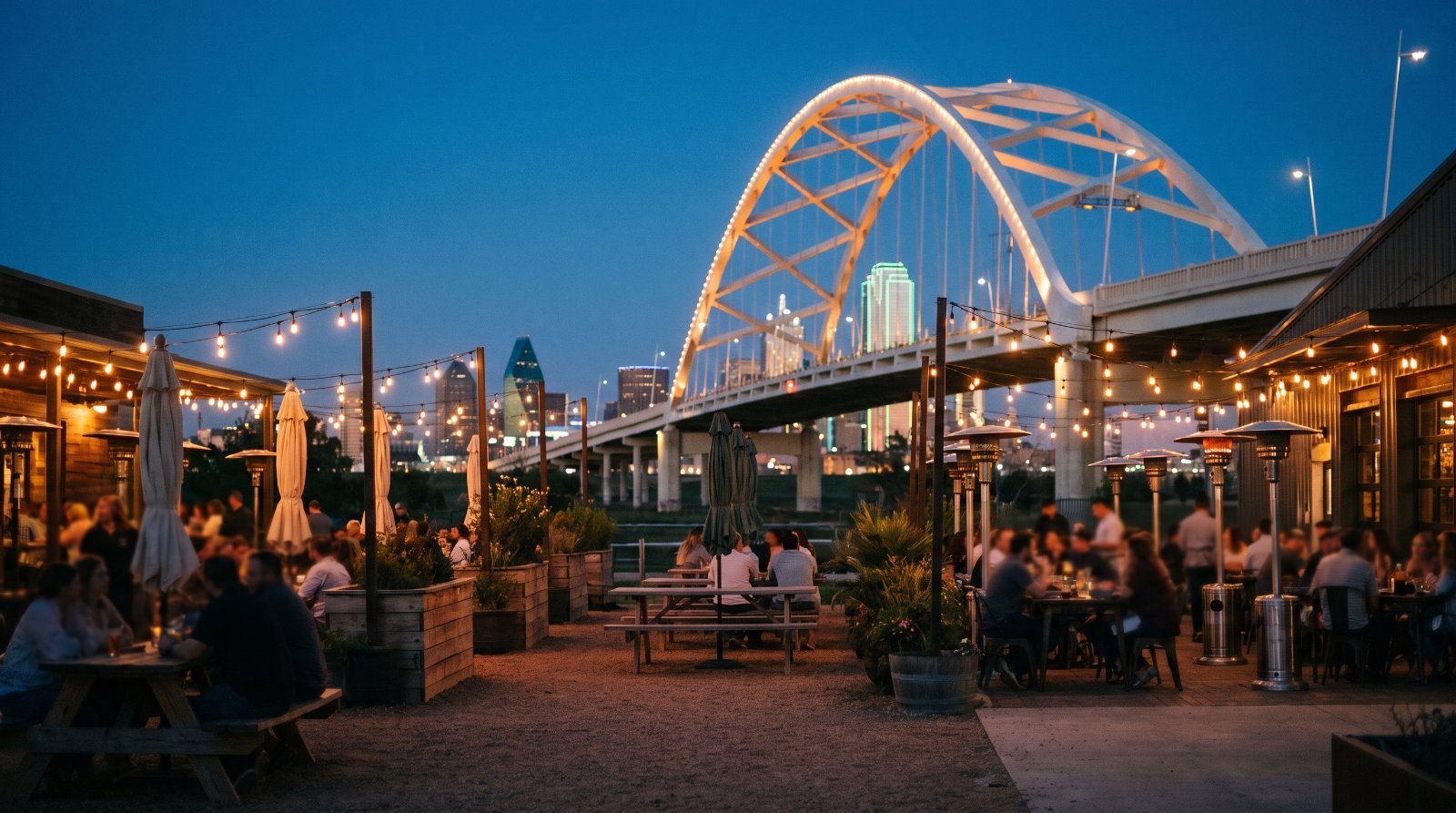
    The Margaret Hunt Hill Bridge might be the most photographed object in Dallas. It’s the white arch in every apartment-tower ad, every conference badge, every transplant’s third Instagram post; the city adopted it as a logo almost the moment it opened. And yet the standard Dallas relationship with the bridge is entirely one-sided. You shoot it from the downtown levee. You drive under it on the tollway. And the number of times you’ve crossed it to find out what it was built to connect you to — for most of this city, that count is ZERO.

    What’s on the other side is Trinity Groves — a restaurant row planted at the western foot of the bridge, holding the single best view of the Dallas skyline that exists, in a part of the city most people north of the river couldn’t sketch on a map. It’s worth crossing for. It’s also a specific kind of place with specific limits, and pretending otherwise is how people end up disappointed at 9:45pm. Here’s the honest read.

    The bridge, and the Dallas habit of not crossing it

    Two facts worth actually knowing: the bridge was designed by Santiago Calatrava, the Spanish architect whose signature white arches span rivers across Europe, and it opened in 2012 as the city’s big bet on finally facing the Trinity instead of turning its back to it. That’s the whole history lesson, and it explains the shape of everything at its feet — Trinity Groves exists because the bridge suddenly made West Dallas a five-minute drive from downtown instead of a psychological expedition.

    The not-crossing habit is real, though, and it isn’t really about distance; it’s about grooves. Dallas runs on a handful of them — Uptown to Deep Ellum to Lower Greenville — and the west side of the river isn’t on any of them. Crossing the bridge requires a decision in a way that drifting up McKinney doesn’t. Which is exactly why it works as a plan: nobody ends up at Trinity Groves by accident, so the crowd on any given night is entirely people who meant to be there.

    A restaurant row built as a lab

    Here’s the part of the story most first-timers don’t know: Trinity Groves opened in the early 2010s as a restaurant incubator — a development where new concepts get a first room, a first lease, and a real shot, with the lineup expected to change as ideas graduate or wash out. The rotating cast isn’t churn; it isn’t decline. It’s the design.

    That one fact recalibrates how you should use the place. Don’t arrive loyal to a specific restaurant you read about two years ago — it may have moved on, and something unproven and interesting may be in its slot. Arrive loyal to the format instead: a horseshoe of dining rooms and patios you can walk end to end in four minutes, compare menus in the window, and pick by appetite rather than by reservation. It’s the rare Dallas dinner where the decision happens on foot, at the door, with the skyline over your shoulder.

    The practical effect is that Trinity Groves is unusually good for groups that can’t agree. The walk-and-compare mechanic absorbs indecision; the loudest opinion in your group text gets exactly one lap to make its case. And because everything shares parking and geography, “let’s just see” is an actual strategy here instead of a stall tactic.

    The skyline owes you nothing — except from here

    Every rooftop east of the river sells you the skyline from inside it, which means you’re always looking at half of it. The west bank is the only place the city stands up in full: the whole downtown wall, face-on, with the bridge’s arch in the foreground doing its one perfect trick. Sunset happens behind you at Trinity Groves, which means you’re not squinting into it — you’re watching it light the towers up like a slow dimmer switch running in reverse.

    The best free version of this is the Ronald Kirk Pedestrian Bridge, the old Continental Avenue crossing one span north, decommissioned from car traffic and handed to people on foot. It runs parallel to the Calatrava arch at exactly the right distance to see it whole, and walking it at dusk is one of the two or three best zero-dollar moves in Dallas — twenty minutes over the river, skyline in front of you the entire way; joggers and quinceañera photo shoots and first dates all sharing the deck. Dinner on one side, walk in the middle, city on the other. If skyline views are the whole assignment, the rooftop rundown covers the from-inside-it version; this is the only chapter where you get to look Dallas in the face.

    West Dallas is a place, not a backdrop

    One thing worth saying plainly: Trinity Groves is a development at the foot of a bridge. West Dallas is a part of the city — one that was here long before the arch went up, with generations of families, mostly Latino and Black, whose neighborhoods sit within a few blocks of the patios. Singleton Boulevard has been somebody’s main street for a lot longer than it’s been a dinner destination.

    You don’t need to do anything ceremonial with that information. Just carry it. It means the right posture on that side of the river is guest, not discoverer — the neighborhood around the restaurant row isn’t an extension of it, and the difference between the two is the difference between visiting a place and consuming it. Eat well, walk the bridge, tip like the view was part of the meal, and skip the urban-safari commentary on the drive out.

    How to actually use Trinity Groves

    The honest mechanics, because this is where expectations go sideways:

    • It’s a drive-to destination, not a wander neighborhood. You arrive, you do the thing, you leave. There is no second act around the corner, no next bar down the block. Plan the night as dinner-plus-bridge-walk and it lands; plan it as “we’ll see where the night takes us” and the night takes you back across the river.
    • The patio hours are the good hours. The whole proposition is the view, and the view works at golden hour and after dark. An August afternoon out there is a dare; an 8pm arrival is the move.
    • It’s a strong early-date format. Walk-and-compare dinner, then a bridge walk with a skyline doing the talking during any lull. Built-in ending, built-in extension — the Kirk bridge is right there if it’s going well.
    • Take out-of-towners here first. Not because it’s the most Dallas place — because it’s where Dallas is most visible. The city literally lines up for the photo.

    When Trinity Groves is the wrong choice

    Skip the crossing when:

    • You want a night with chapters. Dinner here ends and the neighborhood ends with it. If the plan needs a bar after the bar, stay east — Deep Ellum exists for exactly that appetite.
    • You want to browse. No bookstores, no record bins, no storefront drift. That’s a Bishop Arts afternoon — one neighborhood south, a world apart in texture.
    • Live anything is the point. The stage-shaped part of the night lives elsewhere; this is a dinner-and-view format, and it’s honest about it.
    • You’ve been three times this month. The view doesn’t change. That’s its power on a first visit and its ceiling on a fifth. Trinity Groves is a rotation player, not a home base.

    The failure mode here is arriving with Deep Ellum expectations: you’ll have a great dinner, take the best photo of your year, and be confused about what to do at 10pm. The answer is nothing. You go home. That’s not the neighborhood failing — that’s the format working exactly as designed.

    This weekend in Trinity Groves

    The verdict: cross the bridge — deliberately, occasionally, at the right hour. Trinity Groves does one night shape and does it close to perfectly: a walk-up dinner decision, the city’s best view for free, and a pedestrian bridge that turns the drive home into the last scene of the evening instead of an errand. Every city has a place it takes its own picture from. Dallas’s happens to serve dinner.

    If you’d rather have the week’s short list handed to you, the Weekend Drop lands every Thursday — a few things across Dallas actually worth the drive, west side included when it earns the slot, with who’s going visible before you commit. Tonight’s version lives at /tonight, and the full city hub is at /dallas.

    Three, not thirty. And once in a while, one of the three is on the other side of the river — exactly where the photo gets taken from.

  • Think the Dallas Design District Is Just Furniture Showrooms? Stay Past Six

    Think the Dallas Design District Is Just Furniture Showrooms? Stay Past Six

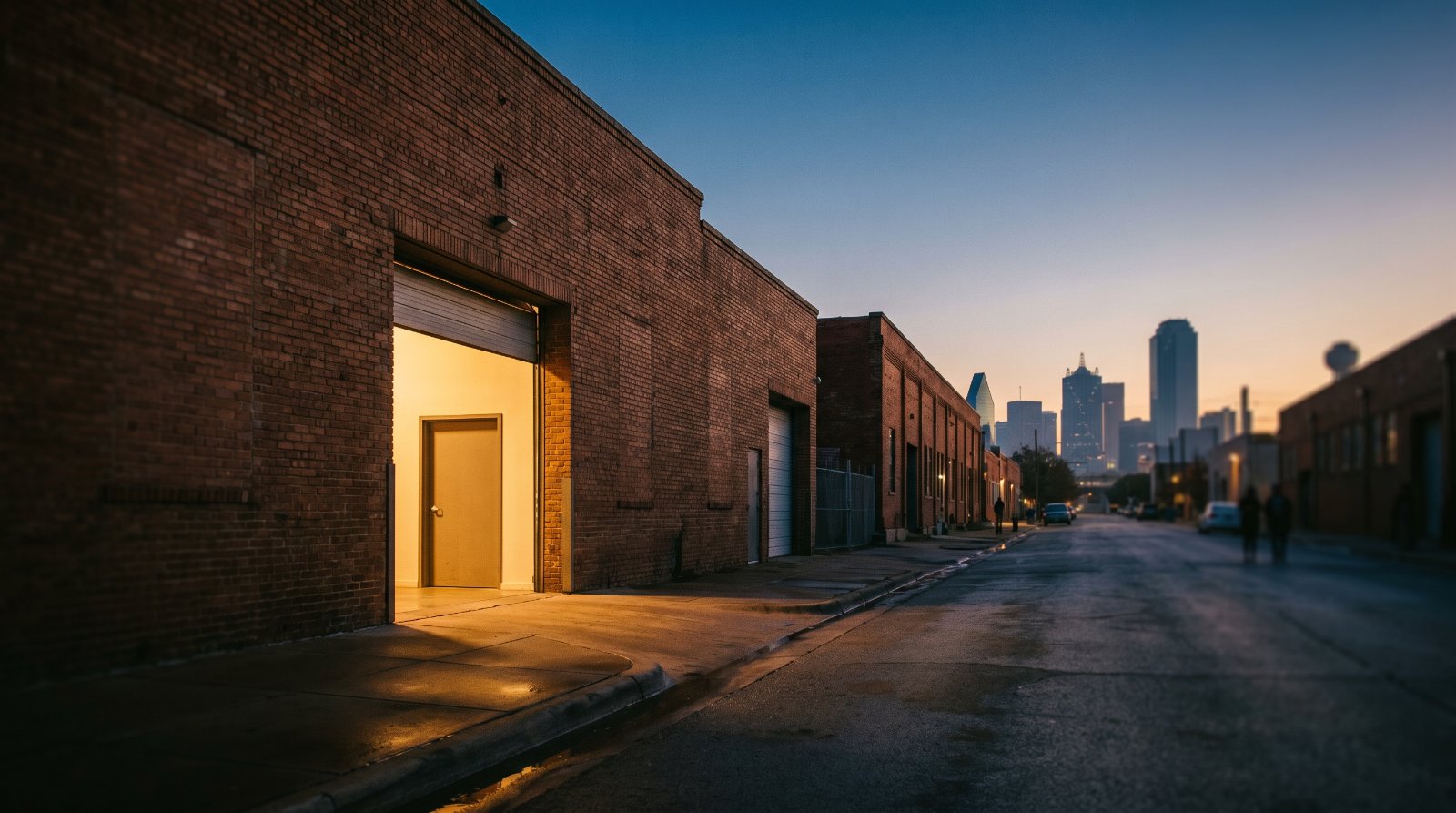
    Say “Design District” to most of Dallas and you can watch the interest drain out of the conversation in real time. Furniture showrooms. Rug warehouses. The place your one friend with a decorator went once — on a weekday, with an appointment. It sits in the flats northwest of downtown, pinned between Stemmons and the Trinity levees; and if your entire exposure is the drive down Riverfront toward somebody’s wedding venue, “neighborhood” feels like a generous word for it.

    Here’s what that read misses: the Design District is the only part of central Dallas where art gets to be the size it wants to be. Not the size a landlord tolerates — the size it wants. The same warehouse bones that built the wholesale trade make this the one place in the city where a gallery can hang something twelve feet tall without apologizing to anyone. The district has exactly one trick, and it’s a clock — it runs on hours that are almost the perfect inverse of everywhere else in Dallas, and nearly everyone who dismisses it showed up at the wrong one.

    The stereotype is true — and it’s load-bearing

    The furniture thing didn’t come from nowhere. The district grew up in the mid-1900s as a wholesale trade corridor in the Trinity’s old industrial flats, and for decades its showrooms sold to the trade only; designers in, everyone else squinting through the glass. That started loosening in the 2000s, when showrooms began opening their doors to the public and galleries migrated in for the reason artists migrate anywhere — square footage nobody else was fighting over.

    So the showrooms aren’t a phase the neighborhood is growing out of. They’re the load-bearing wall. The design trade keeps the buildings honest — long, deep, high-ceilinged rooms with loading docks and concrete floors — and that turns out to be exactly the container serious art needed. Write the district off for its daytime business and you miss what those same buildings do after dark. The two economies share walls; the second one doesn’t advertise.

    Dragon Street is the gallery spine

    Dallas galleries cluster here the way venues cluster on Elm Street in Deep Ellum, and Dragon Street is the spine — the densest run of commercial art rooms in the city, with more scattered down the cross streets toward Riverfront. These are working galleries, not gift shops; real shows, rotating monthly, hung in rooms big enough that the work gets air. You can walk in on a Saturday afternoon, spend twenty minutes with paintings priced like cars, and leave without anyone taking your email.

    That last part matters more than it sounds. The unspoken rule of gallery-going — the one that keeps the gallery-shy on the sidewalk — is that you’re allowed to just look. Nobody expects you to buy. Nobody is going to make you say something smart. A gallery on a quiet afternoon is one of the few free rooms in Dallas where standing still and thinking counts as participating.

    And when several rooms open new shows on the same evening, the street briefly becomes the thing nobody believes Dallas has: a walkable art night. Door to door on foot, wine in plastic cups, strangers comparing notes in front of the same canvas. Watch for those nights; they’re the district’s social season, and they’re the easiest possible way in. An opening is the rare party where showing up alone and knowing nothing isn’t the exception — it’s the default condition.

    Anchoring all of it is Dallas Contemporary, the warehouse-scale museum on the district’s Glass Street edge. It’s a museum in the loosest, best sense — a former industrial building where shows get to be enormous, loud, and occasionally bewildering; a full register away from the marble-hall museums across town. If art after dark is your genre generally, the museums-at-night rundown covers the whole city’s version of it. The Contemporary is the Design District doing it at native scale.

    The district runs on an inverted clock

    Here’s the mechanic that explains every bad first impression: most Dallas neighborhoods fill up on weekend afternoons and thin out by ten. The Design District does the opposite. Its daytime economy runs on weekday trade hours, so a Sunday-at-2pm drive-through delivers exactly what the skeptics report — shuttered showrooms, empty sidewalks, a district apparently in witness protection.

    Come back on an opening night, or any evening the rooftop and the dinner rooms are running, and the same streets are alive in a low-key, grown way. No lines, no promoters, no parking blood sport. The people who are there came on purpose, which changes the texture of every room. This is the whole trade the district offers: you give up spontaneity, and in exchange you get intention. Nothing here is trying to catch your eye from a sidewalk, because the sidewalk was never the point.

    The practical version: check what’s on before you go, aim for evenings, and treat the district as a destination neighborhood rather than a wandering one. It rewards a plan the way Deep Ellum rewards the lack of one.

    The levee edge nobody uses

    The district’s western boundary is the Trinity levee system, and threading through the neighborhood is the Trinity Strand Trail — a paved path following the river’s old meander, quietly connecting the warehouse blocks toward the Katy Trail’s orbit. It is, reliably, one of the emptiest good walks in central Dallas. The skyline sits close and fully visible; the light off the levee grass at golden hour is the best free show in the zip code; and most evenings you will pass more herons than people.

    It isn’t the Katy Trail and it isn’t trying to be — no ice house waiting at the end, no run-club social layer. But as a pre-dinner walk before a gallery night, or a place to take a visitor who thinks they’ve seen Dallas, the levee edge is the district’s quiet second argument. The neighborhood’s whole aesthetic — big sky, hard geometry, no crowd — concentrates out there.

    Where to land when the galleries close

    Vibe-level, because the district does one right room per night rather than a crawl:

    • The Gallery Rooftop Lounge — the rooftop above the district’s hotel edge, with the skyline at eye level instead of postcard distance. This is the after-opening move; the art conversation continues, now with a view of the city that made it.
    • Meddlesome Moth — the district’s long-running gastropub, where the beer list is the point and the room has more character than most bars twice its age. The reliable dinner anchor when the evening needs food underneath it.
    • Ascension — the daytime exception to the inverted clock: coffee serious enough to justify the drive, in a room full of people sketching things. If you need the district before dark, start here.

    Notice what’s not on the list: a strip. There is no run of bars, no next-door-if-this-is-full option. Each of these is a destination with dead blocks around it — which is either a flaw or a filter, depending on what you want from a night.

    When the Design District is the wrong choice

    Honesty being the point of these guides — skip it when:

    • You want to wander. The blocks are long, the sidewalks are industrial, and striking out means getting back in the car. Browse-and-drift is Bishop Arts territory, full stop.
    • It’s Saturday afternoon and you expect open doors. Some showrooms and galleries will be open; plenty won’t. The district’s daytime is a weekday.
    • The night wants volume. Dancing, live rooms, a crowd to disappear into — that’s Deep Ellum, which does 1am better than this neighborhood does 11pm.
    • You need options stacked next to options. A group that can’t commit will starve here. Take them somewhere with density; save this place for people who’ve already agreed on the plan.

    The Design District’s failure mode is specific: you showed up at the wrong hour, saw a warehouse district, and concluded that’s all there was. It isn’t a boring neighborhood; it’s the most schedule-dependent neighborhood in Dallas, which is a different diagnosis entirely. Respect the clock and it delivers. Ignore it and it won’t even wave.

    This weekend in the Design District

    The verdict: this is Dallas’s best low-frequency neighborhood. Not every week — but when there’s an opening night, a show at the Contemporary, or an evening that wants a rooftop without a scene attached, nothing else in the city offers this particular ratio of art to elbow room. Walk the levee first; hit the galleries at opening-hour; land on one right room after. The district’s warehouse siblings across the city — the ones that trade in sound instead of canvas — get a guide of their own.

    And if you’d rather not do the scouting, the Weekend Drop lands every Thursday — a short list of what’s actually worth leaving the house for across Dallas, gallery nights included when they earn it, with who’s going visible before you commit. Tonight-shaped plans live at /tonight, and the wider city hub is at /dallas.

    Three, not thirty. And in this neighborhood, honestly — sometimes ONE, chosen well, after six.

  • This Weekend in Dallas: July 17–19, 2026

    July 17–19, 2026. High of 98°F on Saturday. If you’re leaving the house between 6 p.m. and 8 p.m., you’re getting golden hour and 92° at the same time — which, for Dallas in July, is the best you can do. Here’s where our curator is spending the weekend.

    Friday, July 17 — Deep Ellum, 8 p.m.

    The pick. A live show at Trees Dallas or the sister room at Ruins, depending on which touring act lands the strongest bill. Both are five minutes from Louie Louie’s, which is the late-night if the show ends before you’re done. Doors around 7:30, sound around 8:15, out by 10:30 if you want.

    Why it made the Drop. Friday nights in Deep Ellum thin out fast when it’s this hot — the patios stall and the walk-ups vanish. A show room is climate-controlled, the sound is good, and you get the neighborhood without the block-walking sweat. This is a “leave the office, meet friends inside, decide the rest of the night after the encore” plan.

    Parking. The Elm Street lot is $10 flat after 6, or you take the 7-minute walk from Baylor DART. Rideshare drop-off is at the corner of Crowdus and Main.

    Saturday, July 18 — Bishop Arts, 7 p.m.

    The pick. A Bishop Arts dinner-then-drinks route. Start at Written by the Seasons or Boulevardier for the sit-down (reservations exist, but a two-top before 7:30 is usually walk-in). Walk five minutes to Wits End for the nightcap. Emporium Pies is open until 11 if the evening has one more move in it.

    Why it made the Drop. Bishop Arts is the block that survives July because everything is a two-minute walk from the last thing. You don’t re-park, you don’t re-Uber, you don’t reset the mood. It’s the anchor Saturday — the plan that could hold the whole night for a two-top or a four-top and doesn’t need a group text of nine to work.

    Neighborhood note. The best patio in Bishop Arts on a July night is the covered one at Boulevardier around dusk. Ask for the corner seat by the window.

    Sunday, July 19 — Katy Trail & Uptown, 10 a.m.–2 p.m.

    The pick. A Katy Trail walk south from Knox to the American Airlines Center overlook, ending at HG Sply Co. or Meddlesome Moth for brunch. Trail is coolest before 10 a.m.; the reward is a shaded patio the rest of the morning.

    Why it made the Drop. Sundays in Dallas summer break one of two ways — either you’re inside from 11 a.m. to 5 p.m. or you commit to an early move. This is the early-move plan. It’s also the pick with the most first-timer badges in the app right now, which means Sunday is a soft landing if you’ve never RSVP’d to a Drop before.

    Backup. If it’s already 96° at breakfast, the Nasher Sculpture Center is open Sunday from 11 to 5. Sun-hat sculpture garden after a shaded coffee at Ascension. Different mood, same win.

    Bonus: two picks we saved for later

    • Fort Worth Stockyards Rodeo — Friday and Saturday at 8 p.m. It’s on the list next month when the drive is 15° cooler at kick-off. Right now the walk from the parking lot is a mistake.
    • White Rock sunset paddle — 7 p.m. wind-down at the boathouse. Landed on our Later list when we saw the forecast; the wind’s under 8 mph both evenings, which is the paddle-friendly threshold. On for the first Sunday after the heat wave breaks.

    How the Drop works

    Every Thursday at 5 p.m. Central we open a Drop of three picks for Friday, Saturday, Sunday, plus a rolling Tonight feed that refreshes weekdays at 4 p.m. Cards ship with the venue, the time, the cost, and — before you RSVP — the list of your friends already going. Attendee lists are on the free tier. Always.

    For tonight’s shortlist, see Tonight in Dallas. For the mechanic — who curates, what we won’t do, the trust promises — read the Dallas page. For the current weekend’s three-pick preview in-app, the Weekend Drop page is where it lands first.

    Published every Thursday morning. Next week’s guide lands July 24.