
Tag: deep ellum

  • The Best 3 Hours in Dallas: Five Circuits, Two Stops Each

    The Best 3 Hours in Dallas: Five Circuits, Two Stops Each

    Every bad night out you’ve ever had was too long, and most of them were too wide. Five hours, four stops, three parking situations, two neighborhoods; and somewhere around hour four the evening stopped being fun and became logistics with drinks. Meanwhile the nights you actually retell are almost embarrassingly small: dinner and a show. A walk and a bar. Golden hour and one long table. Three hours, two stops, done before anyone got tired of anyone.

    That’s not an accident, and it’s not lowered expectations. It’s the correct specification. A great night is three hours and two stops; three stops at the absolute ceiling, and only when they’re a short walk apart. This post makes the case once, then hands you five ready-to-run circuits across the metroplex. Consider it the only Dallas itinerary template you need to keep: not a list of places; a shape you can pour any evening into.

    The case for the short night

    Three hours is the honest length of human enthusiasm. Hour one is arrival and appetite; hour two is the peak; hour three is the warm glide down. Everything after that is chasing hour two, buying rounds nobody needs, adding a stop to postpone the ending, and it works about never. The best hosts have always known this: end things slightly before anyone wants them to end, and the night gets remembered at its peak instead of its residue.

    Two stops is the honest width, and the reason is contrast. One stop is a nice evening but has no story arc; nothing happened next. Two stops gives the night a hinge: the walk between them, the change of light and volume, the tiny joint decision that this evening is going somewhere. Four stops gives you four opening acts and no show.

    And the walking is not decoration; in this city it’s the entire trick. Dallas nights die in cars. Every drive between stops is a fifteen-to-twenty-minute momentum tax (park, pay, re-park, re-orient), and two of those taxes will eat an hour of your three. So the rule that makes everything else work: drive to the night once, then never again until home. Pick a neighborhood, plant the car, and let your feet run the itinerary. Which means the real unit of a Dallas night out isn’t the venue; it’s the circuit. A tight loop of two or three stops in one walkable pocket. Here are five, field-tested, one per mood.

    Circuit one: Bishop Arts; the bookstore, the counter, the horn section

    The most complete three hours in Dallas, and the proof of the whole theory, because the entire circuit fits inside a few blocks of Oak Cliff. Start at the bookstore-bar, The Wild Detectives, a house full of books that pours wine and lets you hold both at once, right at opening-of-evening, when the light through the front porch is doing its best work. Browse for forty-five minutes; buying is optional, the ritual isn’t. Stop two is dinner at a counter; the neighborhood keeps several small rooms where the bar seats face the kitchen, and a counter seat turns dinner into theater without adding a dollar. Stop three, the ceiling stop, is the jazz room: Revelers Hall, a shoebox with a live band most nights, close enough to hear the brass from the sidewalk before you commit. Total walking: maybe six hundred meters all evening. The Bishop Arts guide has the full lay of the land, and the west side’s second act is there when you outgrow the postcard blocks.

    When it works: any evening; but it’s built for a first date or an out-of-town guest, because the circuit does the impressing so nobody has to.

    Circuit two: Deep Ellum; the patio, the show, the slice

    Deep Ellum is where the two-stop rule earns its keep, because the neighborhood is engineered to turn one night into five stops and then bill you for all of them. Resist. Start on a patio or in a taproom on the quieter end of the grid around 7; one drink, one hour, let the neighborhood’s volume come up around you. Stop two is the anchor and the reason you came: a show. Any room, any bill; the neighborhood stacks stages within a few blocks of each other, so pick by volume, not by name recognition. That’s the circuit. The optional third stop isn’t another bar; it’s the late slice or the taco window on the walk back to the car, which is less a stop than a victory lap. The Deep Ellum guide reads Main, Elm, and Commerce for you; what’s actually on the stages tonight lives at /tonight.

    When it works: Thursday through Saturday, when you want the night loud and the week overwritten.

    Circuit three: Uptown; golden hour on the trail, then one long dinner

    The inverted circuit: this one starts with the free stop and spends the whole budget on stop two. Get on the Katy Trail an hour before sunset, September finally makes this pleasant again, and walk it while the whole corridor goes gold and the day’s residue burns off. That’s stop one: zero dollars, and the best mood-setter in the city. Stop two is dinner just off the trail, and Uptown’s density means you’re never more than a few blocks from a patio table or a bar seat when the light runs out. No third stop. The trail already was the show; dinner is the encore, and a night that’s one walk and one table has a calm no amount of itinerary can buy. The Uptown guide covers where the trail spits you out.

    When it works: the golden-hour window, obviously; and it’s the strongest low-key date circuit in Dallas precisely because it doesn’t try hard.

    Circuit four: Design District; the galleries, then the cocktail room

    The city’s best-kept weeknight circuit. The Design District’s warehouse galleries cluster tightly enough that on an opening night you can walk three shows in ninety minutes; free, air-conditioned, and full of things to talk about, which is the quality that makes this the great conversation circuit. (On non-opening nights, one gallery with evening hours plus a slow lap of the showroom blocks does the same work at lower volume.) Stop two is a cocktail room or dinner nearby, where the argument about the art you just saw becomes the entertainment. The circuit’s secret is sequencing: culture first, drinks second. Run it backwards and the galleries become homework; run it forwards and the bar has a built-in agenda. The Design District guide maps which blocks hide the rooms; opening nights are dated, so check the weekend shortlist for what’s on.

    When it works: weeknights and first Saturdays; and it’s the circuit for the friend who claims to be over going out.

    Circuit five: Fort Worth. Magnolia Avenue, start to finish

    Yes, Fort Worth. Thirty-five miles is a real objection at 6pm on a Tuesday and a fake one on a Saturday, and Magnolia Avenue is the single best street-as-circuit in the metroplex: a walkable near-mile of restaurants, bars, coffee, and rooms with live acts, where the entire evening runs on one parking decision. Start with a slow browse of the avenue while it’s light; record shop, coffee, whatever the street offers you. Stop two is dinner anywhere on the strip; the density does the choosing. Stop three, if the night has a third act in it, is one of the avenue’s live rooms or backyard bars. The point of this circuit isn’t any single stop; it’s the street itself, and the mildly vacation-shaped feeling of running a whole evening somewhere that isn’t your default city. The Fort Worth guide makes the full case for the other half of the metroplex.

    When it works: Saturdays; and any night you catch yourself saying Dallas feels small; it isn’t, you’ve just been running the same circuit on repeat.

    How to run a circuit

    Five shapes, one operating manual.

    • Three hours means start by 7. A circuit that starts at 9 isn’t a short night, it’s a late one, and it borrows the whole thing from tomorrow morning.
    • One car decision per night. Park once, inside the circuit. If a stop requires re-parking, it’s not part of tonight’s circuit; it’s the seed of a different night.
    • Two stops is the spec; three is the ceiling. The third stop must be a short walk and must be smaller than stop two, never bigger. Nights should taper, not re-peak.
    • End on time, on purpose. Leaving at the peak is a skill. The circuit’s whole advantage is that it ends before it decays; protect that, even from yourself.
    • Repeat before you branch. Run a circuit twice and the rooms start recognizing you, which upgrades every future lap. Novelty is overrated; the second visit is where a city starts feeling like yours.

    A good shortlist is a circuit with names on it

    To be honest, this whole essay is the philosophy behind a product; so let’s just say it. The weekend shortlist is that product; and a good shortlist is really a pre-built circuit: a couple of picks that sit near each other in space and time, the free one flagged, and who’s going attached to each. That last part is the one thing no itinerary template can generate on its own; and it’s usually the thing that actually decides a night.

    So: five circuits, one shape, three hours. Tonight’s version is at /tonight, the weekend’s at /weekend, and the rest of the map lives at /dallas. Pick a pocket, park once, and give the night a hinge. The best three hours in Dallas are whichever three you actually go get.
  • This Weekend in Dallas: September 18-20

    The State Fair opens next Friday, which means this is the last weekend before Fair Park takes over a month of everyone’s calendar and every plan turns into a conversation about parking. Use it while the city still belongs to the rest of the city. Autumn arrives officially on Tuesday, the Arboretum is opening its fall run two days early, and the evenings have finally stopped being hostile.

    Seven picks. There are several hundred things happening across DFW between Friday and Sunday; these are the ones we’d clear a night for.

    Friday, September 18

    ’til Midnight at the Nasher

    Fri 6pm to midnight · Nasher Sculpture Center, 2001 Flora Street, Dallas (Arts District) · Free

    Yolanda Cruz and The Daydreamers at 7, Vanita Leo at 8:15, then Raiders of the Lost Ark on the lawn at 9:15. Six hours in a sculpture garden downtown for nothing, and the film starts late enough that you can eat first and still make it.

    Butthole Surfers: The Hole Truth and Nothing Butt

    Fri 6:30pm · The Texas Theatre, 231 W Jefferson Blvd, Dallas (Oak Cliff) · Ticketed

    A Texas band documentary in the upstairs room of a Texas theater that has spent a decade earning the right to show it. Oak Cliff on a Friday is its own argument, and Jefferson Boulevard is walkable before and after.

    Saturday, September 19

    Autumn at the Arboretum

    Sat 9am to 5pm, opening day · Dallas Arboretum, 8525 Garland Road, Dallas (White Rock Lake) · $25.95 adults, $21.95 ages 3 to 12, parking $15

    Opening day of the pumpkin build, which is the one weekend it exists without the line. Go in the morning, go to the lake side after, and you have handled an entire Saturday before noon.

    First Day of Autumn at the Dallas Farmers Market

    Sat 9am to 5pm · Dallas Farmers Market, The Shed, 920 S Harwood Street, Dallas (Farmers Market District)

    Pumpkin patch, live music, and tastings in The Shed. This is the low-commitment version of a Saturday plan: you can give it forty minutes or four hours and it works either way.

    Lily Rose

    Sat doors 7pm, show 8pm · Granada Theater, 3524 Greenville Ave, Dallas (Lower Greenville) · $23 to $32

    The Granada at capacity is still the best-sounding room on Lower Greenville, and Lily Rose writes for rooms exactly this size. Thirty dollars, walkable to everything after.

    Sunday, September 20

    Piano in the Park

    Sun 10am to 2pm · Klyde Warren Park, Reading Room, 2012 Woodall Rodgers Fwy, Dallas (Uptown) · Free

    Four hours of open piano in the park, first come first served. The correct use of this is coffee, a bench, and no plan after it.

    Tricky with Marta Zlakowska

    Sun doors 7pm, show 8pm · Trees, 2709 Elm Street, Dallas (Deep Ellum) · $30

    Tricky on a Sunday in Deep Ellum is the closing move, not the opener. Thirty years of records, a room that holds about six hundred, and you are home by eleven.

    The rest of it

    That’s seven. Two of them are free and three run in daylight, which is the whole point of a list this short. If you want tonight instead of the weekend, /tonight is the three-item version. The running weekend list is at /weekend, and everything else lives at /dallas.

    Next weekend the Fair opens. Plan accordingly.

  • The Best Nights in Dallas Happen in Buildings That Don’t Look Like Anything

    The Best Nights in Dallas Happen in Buildings That Don’t Look Like Anything

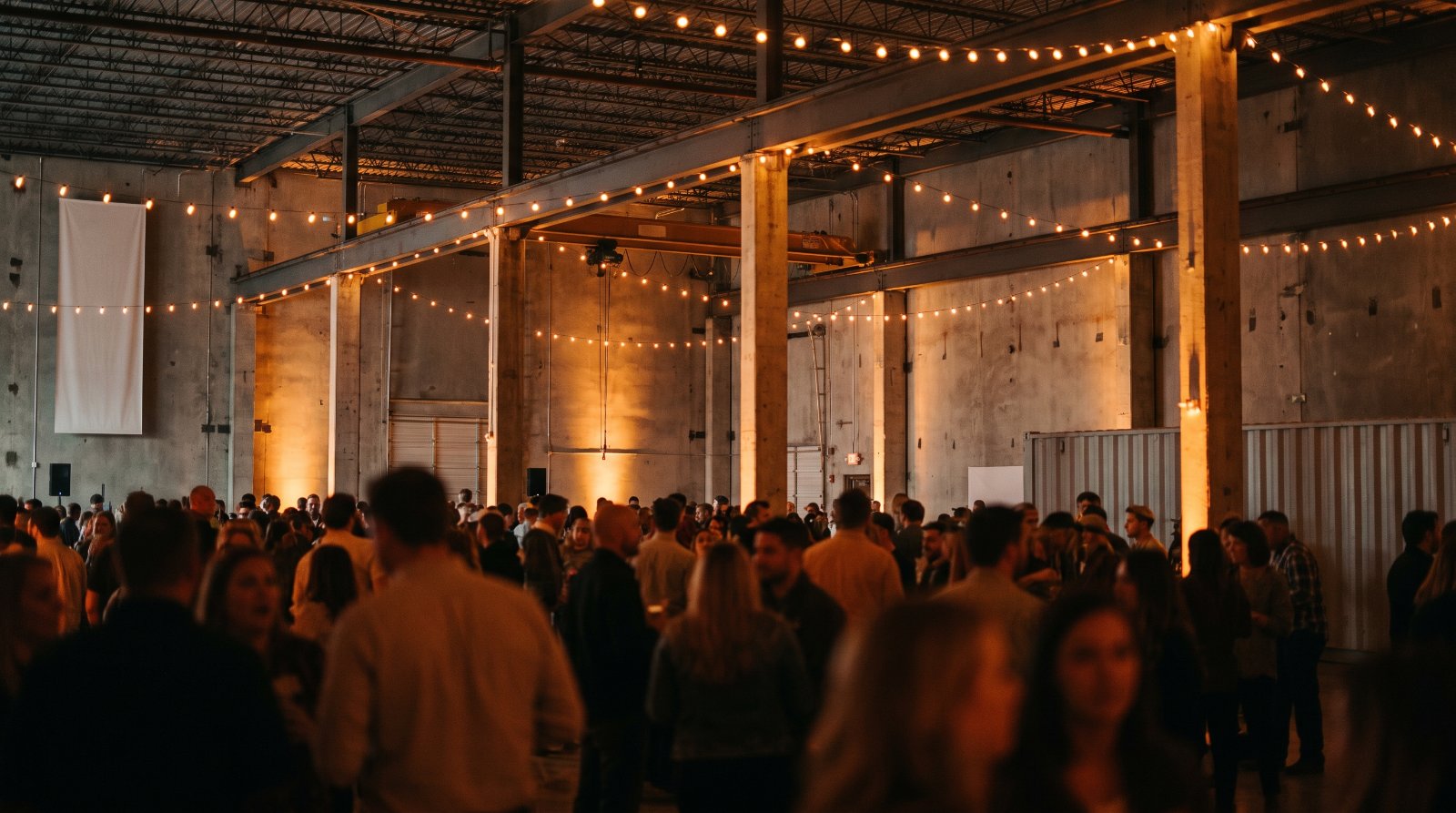
    You’ve seen the evidence; you’ve just never seen the invitation. Sunday morning, someone’s photos surface from a room with concrete floors, one serious light rig, and a crowd that looks like it was cast; geotag empty, caption unhelpful, building unidentifiable. You ask where it was and get a laugh and “oh, it was a one-night thing.” And a suspicion settles in that Dallas runs a second calendar underneath the public one, and that nobody sent you the link.

    The suspicion is roughly correct, and this post is the missing explainer. The warehouse night, the pop-up, the one-night venue, the show in a building with no sign, is a real and growing layer of how this city goes out. It’s not a secret society; it’s a format. With logic, geography, and logistics you can learn. Here’s how it works, where it lives, and why the parts that look sketchy from the outside are mostly just the format doing its job.

    Why the blank room works

    A bar is a room looking for a night. It has defaults, the TVs, the regulars, the playlist, the kitchen pushing covers, and whatever you planned bends around them. A warehouse is the opposite: a room with no defaults at all. No theme until someone brings one, no crowd until someone assembles it. A warehouse night is a night that borrowed a room, and that inversion is the entire appeal. Everything you experience inside it was decided on purpose, because nothing was there to begin with.

    The second structural advantage: the room’s capacity is the guest list. Warehouse nights are small and capped; not as a pose but as a load-bearing fact; a hundred and fifty tickets because the building holds a hundred and fifty people. That cap changes the social math. Everyone present chose this specific, slightly inconvenient thing over the easy defaults, which means the crowd is pre-filtered for intent in a way no bar on a Saturday can manage. You’re not around people who ended up there. You’re around people who found it.

    The formats, not a directory

    No list of venues here, and that’s not evasion; the churn is the design. Buildings get leased, nights move, series rest and return. What persists are the shapes, and Dallas currently runs four of them:

    • The listening session. A serious sound system in an empty room, an album or a DJ played for people who came to actually hear it. Hi-fi bar energy without the bar. The quietest, most conversation-friendly version of the format.
    • The art install. A gallery that exists for one weekend; work hung on brick, lighting done right, then gone. Half the reason it’s in a warehouse is that no permanent gallery would take the risk; that’s the point.
    • The market night. Vintage racks, local makers, food out of a trailer, someone playing records in the corner. The daytime-adjacent, lowest-commitment door into the whole format; bring anyone.
    • The one-night venue. The full transformation: a dinner in a fabrication shop, a set in a print shop, a floor where a loading dock was. The most ambitious version and the one that produces those Sunday-morning photos.

    The geography

    The format follows one rule: wherever Dallas keeps its square footage cheap and its neighbors asleep. Right now that draws a rough triangle.

    The Design District is the established corner; showroom and warehouse blocks that empty out at 6pm, leaving a neighborhood of beautiful, dark, available buildings. After-hours is when the district’s second life starts, and it’s the most walkable and best-lit corner of the warehouse map. If you only learn one of these zones, learn this one; the Design District guide covers the daytime layer the pop-ups sit on top of.

    The Deep Ellum edges. Not the neon core, but east past Good-Latimer toward Exposition Park and Fair Park’s orbit, where the leases are still cheap enough for one-night ideas. This is the scrappier end of the triangle, closer to the format’s roots, and the live-music rundown will tell you why the neighborhood’s sound has always leaked past its official venues.

    West Dallas off Singleton, among the actual working fabrication yards; the newest front, rawest spaces, and the reason your rideshare driver will ask if you’re sure about the address. You are.

    The honesty section: how the logistics actually work

    Two things about this format read as red flags to newcomers and are actually just the mechanics. Worth saying plainly.

    Tickets are in advance, almost always. A capped room can’t do walk-ups, and the organizer is fronting the lease on a building with no bar revenue to catch them. Buying ahead isn’t a hustle; it’s the only way the economics close.

    The address drops late; day-of, sometimes hours before doors. This is the one that spooks people, so here’s the plain version: it’s capacity management and lease reality, not subterfuge. A public address three weeks out invites three hundred people to a hundred-and-fifty-person room, plus every complication a landlord can imagine. Late-drop addresses keep the night the size it was designed to be. That’s the format, not a warning sign.

    What an actual warning sign looks like, for contrast: no named organizer, no history you can find, payment by direct transfer to a stranger instead of a real ticket link. The legitimate operators in this city have names, track records, and refund policies. The format is unmarked; the people running it shouldn’t be.

    Practical notes, learned the standard way: flat shoes, because the floor is concrete and honest about it. Layers, because nobody promised you HVAC. A charged phone, because the address lives on it. And arrive close to doors; a capped room rewards punctuality the way a bar never has to.

    How you actually find them

    The format has no marquee, so distribution is the whole game. Traditionally that meant being three group chats deep or on the right organizer’s list; which is exactly the gatekeeping that made you feel like the city had a calendar you couldn’t see.

    That’s the layer a short list run by an actual human is for. When a warehouse night makes the weekend shortlist, the finding-out problem and the vetting problem are both already solved; a real organizer, a real ticket link, and the who’s-going part visible, which matters more with this format than any other. Walking into a bar alone is a Tuesday; walking into an unmarked building is easier with a name you recognize on the list. If a recurring warehouse series is running this month, that’s the kind of thing that shows up there.

    When the warehouse night is the wrong call

    • When you need a guarantee. The format trades certainty for surprise, in both directions. Some nights are the story you tell for a year; some are a cold room and a sound guy fighting a generator. A bar offers a floor and a ceiling; a warehouse removes both.
    • When comfort is the mission. Seating is folkloric, the bathroom situation is a group project, and the bar (if there is one) has three options. If tonight’s requirement is a booth and a cocktail list, the city has better rooms for that.
    • As a first date. A big swing. You can’t scout it, you can’t quietly bail, and you’re betting the whole evening on an unknown room. Second date at the earliest, and only for a co-conspirator.
    • When the group can’t commit. Advance tickets plus a late-dropping address is a coordination tax. The “maybe I’ll meet y’all there” friend does not survive this format.

    Who’s going this weekend

    The warehouse layer is the strongest argument this city makes for letting someone else do the scouting: a whole tier of nights that are genuinely worth it and structurally impossible to Google. You don’t need to be three group chats deep. You need one short list from someone who is.

    The weekend shortlist is a few picks worth leaving the house for, the unmarked-door kind included when they’re real and vetted, with RSVPs visible so the leap of faith comes with familiar names attached. Tonight’s list is at /tonight, and the rest of the city lives at /dallas.

    The buildings don’t look like anything. That was never the problem; it’s the whole reason the nights inside them do.

  • The Bookstore Is the Last Store in Dallas Where You’re Allowed to Be Slow

    The Bookstore Is the Last Store in Dallas Where You’re Allowed to Be Slow

    Every commercial room in Dallas is optimized to move you along. The coffee line wants you decided before you reach the register. The restaurant wants the table back in ninety minutes. Even the places built for browsing have gone efficient; you’re tracked, funneled, and politely hurried from the moment the door chimes. Then there’s the bookstore, where you can stand in one aisle for forty minutes, read a third of something you never buy, and nobody so much as glances at you. It is the last retail format in the city where slowness isn’t shrinkage. Slowness is the point.

    That makes the good bookstores in Dallas worth more than their inventory. In a city chronically short on rooms where you can exist without a schedule, the bookstore is one of the few left standing; and Dallas, quietly, has a strong independent layer that most people who “keep meaning to read more” have never actually walked into. This is the map; plus the case for the bookstore event as the easiest night out this city offers.

    Slow is the product

    Consider what your attention goes through in a normal Dallas day: a commute engineered around it, a job that meters it, a phone that auctions it off in fifteen-second lots. Every environment you pass through is bidding. The bookstore is the one commercial room that isn’t. Nothing in it refreshes. Nothing counts down. The spines don’t autoplay.

    Browsing, real browsing, no list, no destination, is one of the last unscheduled activities adults get, and it does something the feed can’t: it lets you find the thing you weren’t looking for. An algorithm shows you more of what you already liked. A shelf shows you what the person who built it liked, which is how you end up leaving with a Hungarian novel when you came in for a birthday card. That serendipity is the product. The book is just the receipt.

    The test: does the store have a point of view?

    Not every room with books in it earns the slow treatment, so run the test from the front table. A real bookstore is an argument about what’s worth reading; a shelf of bestsellers is a vending machine.

    The evidence is always in the same two places. First, the staff-picks table: if the handwritten cards are specific, opinionated, and slightly unhinged, humans who read live here. If the front table is just this month’s national bestseller list restacked, the room has no author. Second, the events wall: a store that hosts readings, signings, and book clubs is telling you it thinks of itself as a room for people, not just inventory. Third, subtler: is there anywhere to sit? A chair in a bookstore is a policy statement. It says stay.

    The independent layer, by neighborhood

    Four rooms, four different jobs. Vibe-level only; go slow and find the rest out yourself.

    Bishop Arts. The Wild Detectives

    The format proof. A converted house in Bishop Arts where the bookstore and the bar are the same room, and the backyard hosts everything from readings to bands. The Wild Detectives settled an argument most cities are still having: that a bookstore can be a genuine social venue; a place you go out to; without the books becoming wallpaper. Order a drink, pick a shelf, take both to the yard. It’s also the single best argument for the neighborhood around it; the Bishop Arts guide covers the rest of the block-by-block case.

    North Dallas. Interabang Books

    The full-service independent: bright, deeply stocked, staffed by people who read like it’s a competitive sport. This is where the staff-picks test pays off most visibly; ask one open-ended question and you’ll leave with three titles and a small reading list for later. If Wild Detectives is the bookstore as night out, Interabang is the bookstore as institution; the city needs both.

    Deep Ellum. Deep Vellum Books

    The most literary room in Dallas, full stop. Deep Vellum is a publisher, a nationally serious one, particularly for work in translation, with a storefront, which makes browsing here feel like reading someone’s actual convictions. The shelves skew international, independent, and unbothered by what’s trending. Come here when you want the Hungarian novel on purpose.

    Northwest Highway; the Half Price Books mothership

    The used-book cathedral. The flagship is a warehouse of second chances, out-of-print oddities, five-dollar hardcovers, entire genres you forgot existed, and it rewards a completely different browsing mode: no point of view, all volume, pure excavation. It’s the right room for a rainy Saturday and a wrong-turn discovery, and the only one on this list where two hours can pass without your noticing the first one.

    The reading is the introvert’s event format

    Here’s the part that makes bookstores an events story and not just a shopping one: most of these rooms host things; author readings, signings, book clubs, the occasional backyard show. And the bookstore event might be the most structurally forgiving night out in Dallas.

    Walk through why. Someone else does the talking; an author on a small stage is carrying the entire conversational load for the room. The topic is pre-assigned; every person there has one guaranteed subject in common, which dissolves the what-do-I-even-say problem before it forms. Arriving alone is the default, not the exception; a reading is one of the few rooms in this city where a party of one is the standard unit. And the exits are clean: when it ends, you can buy the book and leave, or drift into the after-chatter, entirely your call; no tab to settle, no group to negotiate with.

    If a full bar feels like too much room and a dinner party feels like too much commitment, this is the format between them. The solo playbook runs on the same principle, pick rooms where the setting does the introducing, and the bookstore reading might be its purest case.

    When the bookstore is the wrong call

    • When the night needs momentum. A bookstore is a decelerator. It winds you down, beautifully, which makes it the wrong second stop on a night that’s supposed to build; that’s a live-music problem; different tool entirely.
    • As a group outing. Four people browse at four speeds. Someone’s done in ten minutes, someone’s cross-legged in poetry, and now the group chat is negotiating in a quiet room. Bookstores are for ones, twos, and the specific two that can browse separately without checking in.
    • Most weeknights after dark. Bookstores keep bookish hours; the store part of the evening mostly belongs to daylight and weekends. The exception is event nights and the bookstore-bar hybrid; which is exactly why Wild Detectives matters.
    • When you’re impulsive and it’s the 28th. Honest one: a bookstore is free right up until the moment it very much isn’t. Browsing is a gateway activity. Budget accordingly.

    Who’s going this weekend

    The shelves are the permanent collection; the calendar is what changes. Which room has an author in it this week, which backyard has a show, which book club is open to walk-ins; that’s the layer worth tracking, and it’s exactly the kind of thing that hides in six different Instagram accounts until someone puts it on one list.

    The weekend shortlist comes with a short set of picks across Dallas, the bookish ones included whenever they earn a slot; with who’s-going attached, so you know if Thursday’s reading has a familiar face in it before you commit. Tonight’s version lives at /tonight, and the whole city hub is at /dallas.

    Go be slow somewhere. The aisle will wait, and nobody’s watching the clock; least of all the store.

  • Everyone Says They’re Going to Deep Ellum. Almost Nobody Knows Where They Are

    Deep Ellum is Dallas’s live music district just east of downtown, built on three parallel streets: Elm, Main, and Commerce, each running a different kind of night. It rewards a plan; the neighborhood is at its best when you pick the show first and the street second, and just a street on the nights the calendar is wrong.

    Everyone in this city has said the sentence. “We’re going to Deep Ellum.” It gets said in group chats on Thursday and in Ubers on Saturday, and it is, almost always, a sentence about a parking situation rather than a place. You end up on one block of Elm, in whichever room had the shortest line, and you go home having experienced roughly four percent of a neighborhood that has been the most interesting square mile in Dallas for a hundred years.

    Deep Ellum is not a bar crawl. It is three parallel streets with a century of receipts, a genuine live-music economy, a mural program that became its own tourist attraction, and a very specific ceiling that nobody warns you about. Here’s the honest read.

    The name is a clue, and so is the history

    “Deep Ellum” is what Deep Elm sounded like when people actually said it. Elm Street, east of downtown, far enough out to be its own world. In the 1920s and ’30s that world was one of the most important Black and Jewish commercial districts in the South, and one of the most important blues and jazz corridors in the country. Blind Lemon Jefferson played these streets. Robert Johnson recorded in Dallas. This was not a scene that happened to be here; this was the scene, and the rest of the city knew it.

    Then the highways came. Central Expressway and the interchange work severed Deep Ellum from downtown as cleanly as a cut, and the district spent decades as an afterthought, then a warehouse squat, then a punk and indie stronghold, then, recently, and loudly, a place with a marketing budget. Knowing that arc is not trivia. It explains why the neighborhood feels like four neighborhoods stacked on top of each other, and why locals are touchy about which one you think you’re visiting.

    Three streets, three completely different nights

    The thing that makes people feel lost here is that they treat Deep Ellum as one destination. It’s three, running parallel, and they do not want the same evening from you.

    • Elm is the volume. The marquees, the lines, the venues that hold a thousand people, the sidewalk at 11pm that is its own event. If your night has a headliner in it, it’s on Elm.
    • Main is the dinner street. Slower, more restaurant than room, the one you’d actually take a date to before deciding whether the night gets a second chapter.
    • Commerce is the one locals mean. Smaller rooms, longer regulars, the bars where the bartender’s opinion is worth more than the menu. It rewards showing up twice.

    Walk all three in one loop and the district stops being confusing. It takes about fifteen minutes.

    The murals are real, and they are not the neighborhood

    The mural program turned a stretch of wall into one of the most photographed backdrops in North Texas, and it did exactly what it was supposed to do: it gave people a reason to look up. It also produced the single most common way to spend an evening here badly; arriving for the wall, taking the picture, and leaving having met no one and heard nothing.

    Look at the art. It’s good, and a lot of it is by people who live within a mile of it. Then put the phone away and go inside somewhere, because the murals are the invitation and the rooms are the point. This is the same failure mode that turns the Design District’s gallery night into a photo errand instead of an evening.

    How to actually use Deep Ellum

    • Arrive before nine or after eleven. The nine-to-eleven window is when every show lets in and every line is at its worst. Early gets you a seat and a conversation; late gets you the room after the crowd thins and the bartender relaxes.
    • Take the train if the night has a headliner. There is a DART station at the edge of the district, and on a show night it is straightforwardly better than circling for a lot. Parking here is the number-one reason people leave in a bad mood.
    • Pick the room, not the block. Check who’s actually playing before you go. Deep Ellum on a night with the right show is the best evening in Dallas; Deep Ellum on a random Tuesday is a quiet street with good tacos.
    • Eat first, on Main. The neighborhood’s food is better than its reputation, and eating before the show is the difference between a night and a hangover.
    • Give it a second visit before you judge it. No district in Dallas is worse served by a single sample.

    When Deep Ellum is the wrong choice

    Every neighborhood is a bet. Here’s when to put the chips somewhere else:

    • You want the view. There isn’t one. Deep Ellum looks inward, at rooms and walls. If the skyline is the assignment, cross the river to Trinity Groves, which does exactly one thing and does it close to perfectly.
    • You want quiet, or you want to hear each other. On a Friday after ten, the sidewalk is loud before you’ve even chosen a door. This is a feature. It is not always the feature you want.
    • You want to browse. There’s shopping, but drifting between storefronts isn’t the district’s rhythm; the good stuff here is behind doors, on a schedule, with a cover.
    • You want a guaranteed night. Deep Ellum has the highest ceiling in the city and a real floor. When the calendar is wrong, it is genuinely just a street.

    This weekend in Deep Ellum

    The verdict: go, but go on purpose. Deep Ellum punishes the group that shows up at 9:30 with no plan and rewards, extravagantly, the person who picked a room, ate first, and walked all three streets on the way. It is the only neighborhood in Dallas where the best possible night and the most forgettable one happen on the same block, four hours apart.

    If you’d rather not do the scouting, that’s the entire job of the weekend shortlist: three picks, with the room and the reason. For a shortlist you can use in the next two hours instead, Tonight in Dallas is the faster door. And if you’re working through the city one neighborhood at a time, the Dallas guide is where the rest of them live.

    Quick answers on Deep Ellum

    What is Deep Ellum known for?

    Live music. Deep Ellum, just east of downtown Dallas, has been the city’s music district for about a hundred years, with venues, murals, bars, and taquerias spread across three parallel streets: Elm, Main, and Commerce. Each street runs a different kind of night.

    When is Deep Ellum busy?

    Friday and Saturday after ten, when the sidewalks are loud before you have chosen a door. On a night with the right show it is the best evening in Dallas; on a random Tuesday it is a quiet street with good tacos. The calendar, not the neighborhood, decides which one you get.

    How do you actually use Deep Ellum?

    Pick the show first and the street second. Deep Ellum rewards a plan built around a specific room and start time; wandering in cold usually lands you on one crowded block of Elm Street. Check the calendar, commit to the show, and eat within a block of the venue.

  • This Weekend in Dallas: July 17–19, 2026

    July 17–19, 2026. High of 98°F on Saturday. If you’re leaving the house between 6 p.m. and 8 p.m., you’re getting golden hour and 92° at the same time; which, for Dallas in July, is the best you can do. Here’s where our curator is spending the weekend.

    Friday, July 17. Deep Ellum, 8 p.m.

    The pick. A live show at Trees Dallas or the sister room at Ruins, depending on which touring act lands the strongest bill. Both are five minutes from Louie Louie’s, which is the late-night if the show ends before you’re done. Doors around 7:30, sound around 8:15, out by 10:30 if you want.

    Why it made the list. Friday nights in Deep Ellum thin out fast when it’s this hot; the patios stall and the walk-ups vanish. A show room is climate-controlled, the sound is good, and you get the neighborhood without the block-walking sweat. This is a “leave the office, meet friends inside, decide the rest of the night after the encore” plan.

    Parking. The Elm Street lot is $10 flat after 6, or you take the 7-minute walk from Baylor DART. Rideshare drop-off is at the corner of Crowdus and Main.

    Saturday, July 18. Bishop Arts, 7 p.m.

    The pick. A Bishop Arts dinner-then-drinks route. Start at Written by the Seasons or Boulevardier for the sit-down (reservations exist, but a two-top before 7:30 is usually walk-in). Walk five minutes to Wits End for the nightcap. Emporium Pies is open until 11 if the evening has one more move in it.

    Why it made the list. Bishop Arts is the block that survives July because everything is a two-minute walk from the last thing. You don’t re-park, you don’t re-Uber, you don’t reset the mood. It’s the anchor Saturday; the plan that could hold the whole night for a two-top or a four-top and doesn’t need a group text of nine to work.

    Neighborhood note. The best patio in Bishop Arts on a July night is the covered one at Boulevardier around dusk. Ask for the corner seat by the window.

    Sunday, July 19. Katy Trail & Uptown, 10 a.m.–2 p.m.

    The pick. A Katy Trail walk south from Knox to the American Airlines Center overlook, ending at HG Sply Co. or Meddlesome Moth for brunch. Trail is coolest before 10 a.m.; the reward is a shaded patio the rest of the morning.

    Why it made the list. Sundays in Dallas summer break one of two ways; either you’re inside from 11 a.m. to 5 p.m. or you commit to an early move. This is the early-move plan. It’s also the pick with the most first-timer badges in the app right now, which means Sunday is a soft landing if you’ve never RSVP’d to one of these before.

    Backup. If it’s already 96° at breakfast, the Nasher Sculpture Center is open Sunday from 11 to 5. Sun-hat sculpture garden after a shaded coffee at Ascension. Different mood, same win.

    Bonus: two picks we saved for later

    • Fort Worth Stockyards Rodeo. Friday and Saturday at 8 p.m. It’s on the list next month when the drive is 15° cooler at kick-off. Right now the walk from the parking lot is a mistake.
    • White Rock sunset paddle. 7 p.m. wind-down at the boathouse. Landed on our Later list when we saw the forecast; the wind’s under 8 mph both evenings, which is the paddle-friendly threshold. On for the first Sunday after the heat wave breaks.

    How the shortlist works

    The weekend shortlist is three picks for Friday, Saturday, Sunday, plus a rolling Tonight feed that refreshes weekdays at 4 p.m. Cards ship with the venue, the time, the cost, and, before you RSVP, the list of your friends already going. Attendee lists are on the free tier. Always.

    For tonight’s shortlist, see Tonight in Dallas. For the mechanic, who curates, what we won’t do, the trust promises, read the Dallas page. For the current weekend’s three-pick preview, the weekend page is where it lands first.

    Check back for the next weekend shortlist.