
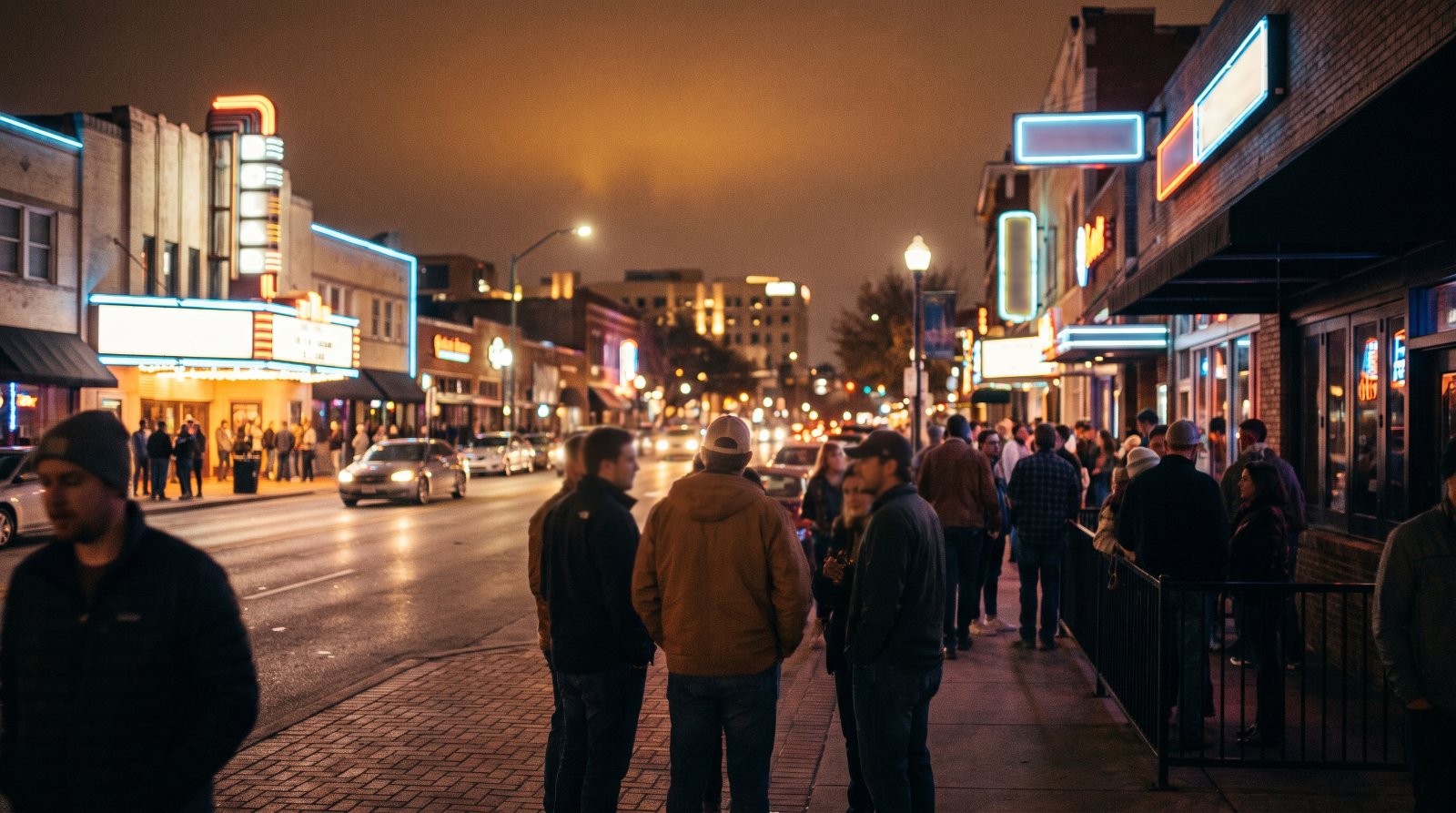
Cedar Springs Road, the few blocks around Throckmorton in Oak Lawn, is Dallas’s original nightlife strip and the heart of its LGBTQ+ scene: storefront bars facing the sidewalk, a crowd that spans every age, and a Saturday night that starts loud and gets warmer as it goes. Start with a first drink somewhere with big windows and let the sidewalk set the pace.
Every city has one street that figured out nightlife before the rest of town did, and in Dallas that street is Cedar Springs Road. The few blocks around Throckmorton, Oak Lawn’s main artery, known to everyone simply as the Strip, have been throwing the city’s most committed party for longer than most Dallas neighborhoods have had names worth saying. Dance floors that actually get danced on. Bartenders who remember you. A Saturday night that starts loud and gets warmer as it goes.
Say the important thing plainly, up front: the Strip is the heart of LGBTQ+ Dallas, and it has been for generations. That’s not a footnote to the neighborhood; it’s the reason the neighborhood is good. The bars here were built by and for people who needed rooms where they could be entirely themselves; and rooms like that develop a quality the rest of the city spends a lot of money failing to imitate; everyone in them is actually glad to be there. The Strip is for everyone precisely because it has never been for everyone-in-general. You’re welcome on Cedar Springs. You’re also a guest in a house someone else built, and the house rules are the whole reason it’s the best party in town.
What the Strip actually is
Geographically, it’s compact: Cedar Springs Road as it runs through Oak Lawn, with the core clustered around the Throckmorton intersection; the crosswalks there are painted rainbow, city-installed and city-maintained, which tells you how officially Dallas recognizes what these blocks are. A few minutes away, at Cedar Springs and Oak Lawn Avenue, the Legacy of Love monument marks the neighborhood’s gateway. Overhead, every few minutes, jets slide down the flight path into Love Field, low enough to read the tail fins; the Strip’s own metronome, and a reminder that this street points somewhere.
The scale matters. This is not an entertainment district in the master-planned sense; no parking garages the size of city blocks, no corporate anchor. It’s a strip in the honest sense: a run of storefront bars and shops that face the sidewalk, built at a height where the street can hear itself. On a weekend night the sidewalk is as much the venue as any room on it; a slow two-way current of people in everything from full drag to gym clothes, greeting each other like the block is a reunion. Which, most nights, it is.
The rooms
Vibe-level, because the point is knowing which door matches which night:
- Round-Up Saloon. The two-step institution. A country-western dance hall where the boots are real, the floor is full, and a stranger will teach you the steps if you stand near the rail looking willing. There is no better first stop on the Strip, and no room in Dallas that converts skeptics faster.
- Sue Ellen’s. The Strip’s longest-running room for women, and one of the longest-running of its kind anywhere. Live bands, a patio, and a crowd that has been showing up for each other for decades.
- JR’s. The corner living room. Big windows onto the street, a crowd that spans every age the neighborhood has, and the right first-drink energy for a night whose shape you haven’t decided yet.
- The Rose Room. The drag stage inside Station 4, and the reason Dallas drag has a national reputation. Production values that embarrass most concert venues, performers at the top of the craft, and a show that treats your attention as something to be earned. Go once and you’ll understand why the city talks about it the way it does.
That’s a sampler, not a census; the Strip holds more doors than this, and half the fun is that they’re forty feet apart. Striking out costs you a sidewalk, not a drive.
Why it taught the city to go out
Here’s the thesis in the title, cashed out. Most nightlife runs on evaluation; rooms where everyone is quietly auditioning; ranking; being ranked. The Strip’s founding premise was the opposite. These were rooms built as refuge, where the whole point was to stop performing the moment you got inside the door. Strip out the audition and what’s left is the actual point of going out; dancing because the song is good, talking to strangers because they’re there, staying late because you’re happy.
That’s the standard the Strip set, and you can feel Dallas nightlife measuring against it everywhere else in the city. The hospitality here isn’t a service style; it’s a value system with a dance floor. Birthdays get announced from stages. Newcomers get absorbed into groups mid-song. The bartender’s memory for faces functions as the neighborhood’s institutional memory. Other districts sell you a night out; Cedar Springs demonstrates one.
And it’s earned the right to be loud about it. Weekend nights on the Strip are packed, thumping, and unsubtle; that is the product, not a side effect. Nobody comes to Cedar Springs at midnight on Saturday for a quiet chat. They come because somewhere between the two-step and the second show, the week’s weight comes off.
Pride, briefly
The history deserves its two sentences straight. For decades, Dallas’s Pride parade ran right down Cedar Springs, the neighborhood functioning as both host and honoree; the citywide celebration has since moved its main events to Fair Park, where the crowds have more room. The Strip didn’t lose anything in that move that matters; every June the street still runs at festival pitch, and the other eleven months it remains what the parade was always celebrating: the place itself.
Beyond the Strip: Oak Lawn and Turtle Creek
The Strip is Oak Lawn’s loudest few blocks, not its whole story. Walk east and the neighborhood tips downhill toward Turtle Creek, where the city keeps one of its gentlest landscapes; a green corridor of parkland and old trees winding along the water, close enough that you can trade the dance floor for total quiet in ten minutes on foot. Tucked along the creek sits the Kalita Humphreys Theater, the Frank Lloyd Wright-designed playhouse that still stages work today; even dark, the building is worth the detour.
This adjacency is the neighborhood’s secret weapon. Most loud districts strand you in loudness; leaving Deep Ellum means driving. Oak Lawn lets you sequence the night: creek walk at golden hour while the light does its thing on the water, first drink at JR’s as the street wakes up, show at the Rose Room, and the walk back toward Turtle Creek when your ears need the credits to roll. For the polished-patio version of this side of town, Uptown picks up one neighborhood over; the Katy Trail crowd and the Strip crowd are closer cousins than either admits.
When Cedar Springs is the wrong choice
Honesty, as always:
- You want conversation volume. Weekend nights on the Strip are for dancing and shouting happily into ears. If the night is about actually hearing someone, do the Turtle Creek end early, or pick a quieter neighborhood and save the Strip for a night that wants noise.
- You want grit and guitar amps. The Strip’s stages run drag and dance floors, not rock rooms. Warehouse noise and 1am guitars live across town in Deep Ellum.
- You’re treating it as a spectacle. The Strip is not a zoo, and drag is not a backdrop for your group photos. Come to participate; tip the performers, learn the two-step, hold the door. Guests who act like guests get the best of this neighborhood; tourists who act like audiences get its politest cold shoulder.
- You hate a wait. Prime Saturday hours mean lines at the marquee rooms. Go early, go Thursday, or make peace with the sidewalk; which, on this street, is half the entertainment anyway.
The failure mode here is mild by Dallas standards: you stayed too late and spent too little time deciding to. The city has worse problems; most of them are covered by what the rest of Dallas is doing at 9pm on any given night.
This weekend on the Strip
The verdict is not complicated: Cedar Springs is one of the great going-out streets in Texas, it belongs in your rotation no matter who you are, and it will make you better at being in rooms full of strangers; because it’s been perfecting that exact art longer than anywhere else in the city. Creek at sundown; boots by ten; show at midnight. Bring cash for the performers and your actual personality for everyone else.
If you’d rather have the week’s short list handed to you, the weekend shortlist is a few things across Dallas genuinely worth leaving the house for, with who’s already going visible before you decide, and Oak Lawn’s picks in the mix when they’ve earned it. Tonight-shaped plans live at /tonight; the citywide hub is at /dallas.
Three, not thirty. The two-step only takes one song to learn.
Quick answers on Cedar Springs
Where is Cedar Springs in Dallas?
Cedar Springs Road runs through Oak Lawn, northwest of downtown Dallas. The strip everyone means is the few blocks around the Throckmorton intersection, marked by the Legacy of Love monument at Cedar Springs and Oak Lawn Avenue, under the flight path into Love Field.
What are the bars on Cedar Springs like?
The Strip is a run of storefront bars that face the sidewalk: dance floors, drag stages, video bars, and patios within a couple of walkable blocks. Crowds span every age, the dress code runs from full drag to gym clothes, and on weekend nights the sidewalk itself is half the venue.
When should you go to Cedar Springs?
Saturday night is the classic run: it starts loud and gets warmer as it goes. Early evening suits a first drink somewhere with big windows; midnight is not the hour for a quiet chat. June runs at festival pitch for Pride, though the parade’s main events now happen at Fair Park.