The West End is downtown Dallas’s historic district: Dealey Plaza and the Sixth Floor Museum, brick streets that photograph best at golden hour, and the Discovery District’s screens after dark. It earns about an hour, in daylight or at dusk. Most Friday and Saturday nights it is the wrong choice, and this guide says why.
The West End has the strangest reputation split of any neighborhood in Dallas. To visitors, it’s the first place they’re sent; the historic district, the museums, the brick streets on every postcard. To locals, it’s the place they haven’t been since a school field trip; filed somewhere between “parking for the arena” and “that’s still there?” One group treats it as the whole city. The other treats it as none of it. And both readings miss the same thing: a compact, genuinely old, genuinely beautiful few blocks of downtown Dallas that work brilliantly at specific hours and lie completely dormant the rest of the time.
That’s the actual key to the West End; it isn’t good or bad; it’s scheduled. This guide is the schedule: what the district is, what it holds, the golden-hour case nobody makes for it, and the honest list of nights when you should absolutely be somewhere else.
What the West End actually is
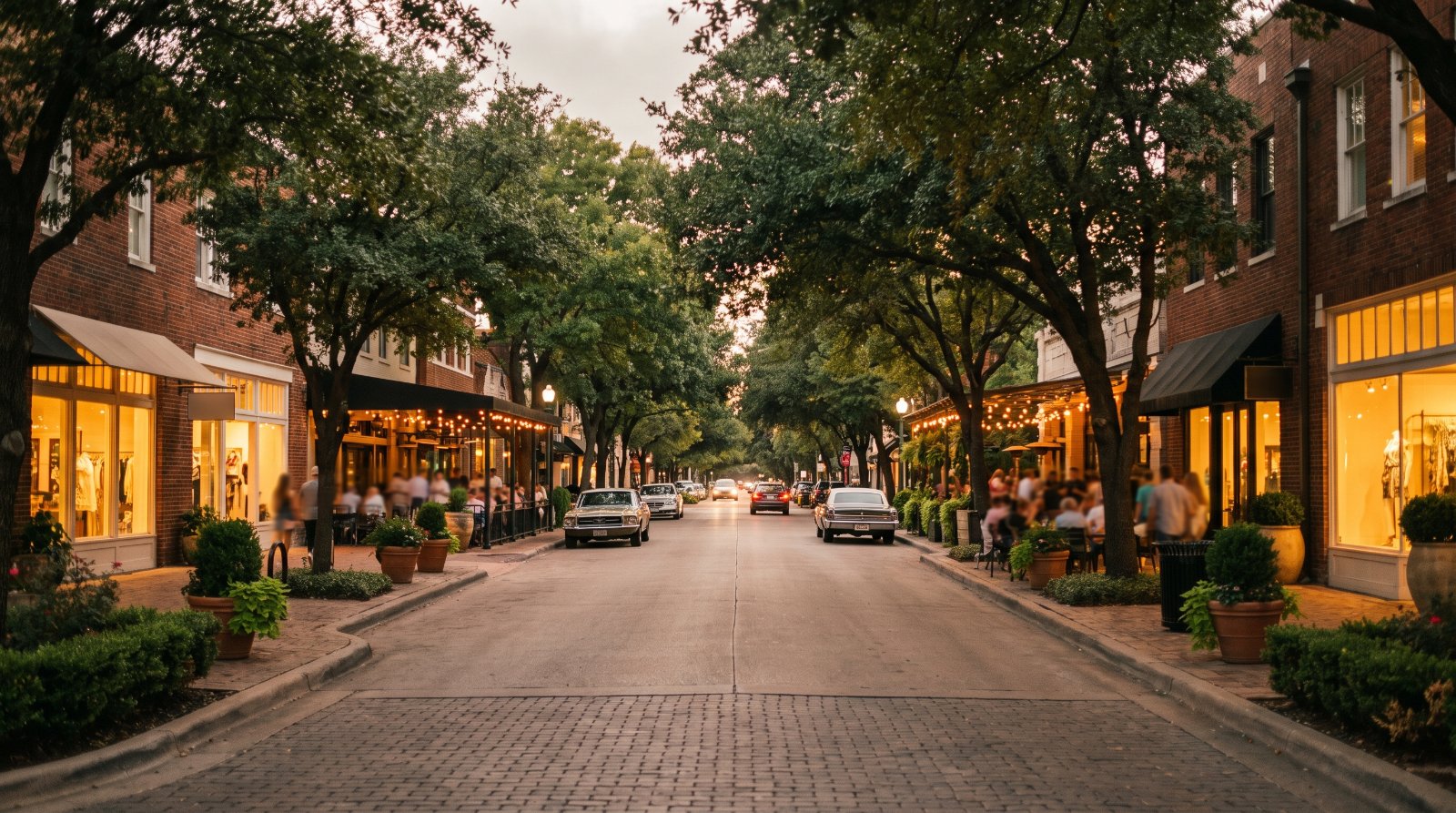
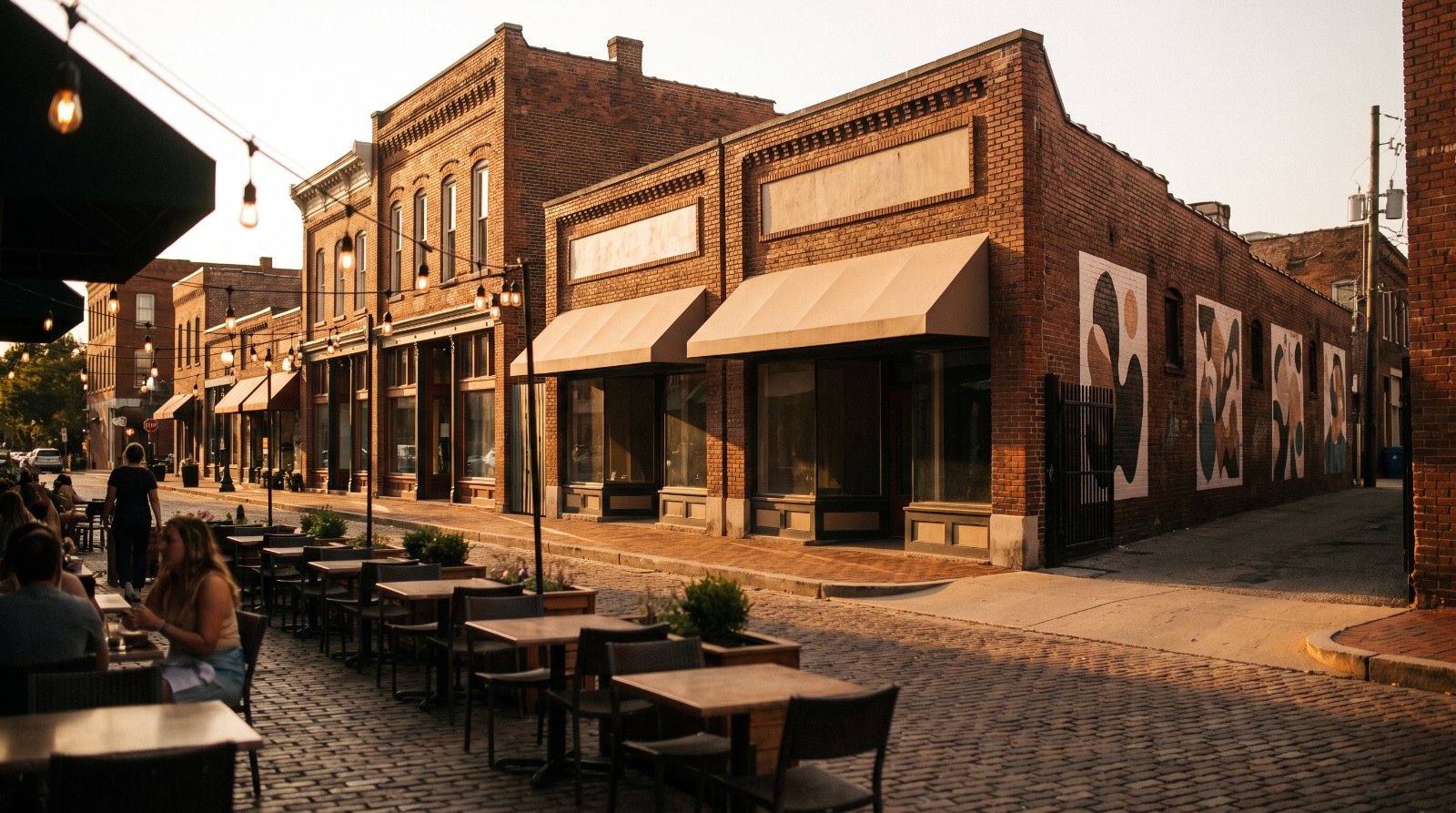
Start with the bones, because the bones are the argument. The West End Historic District is the surviving stretch of Dallas’s late-1800s warehouse quarter; blocks of red brick built when the railroads made this corner of downtown the city’s loading dock. The buildings are broad-shouldered and low by downtown standards, five and six stories of arched windows and heavy masonry, and they’ve outlived nearly everything from their era. In a city with a famous habit of demolishing its own past, these are some of the oldest commercial blocks still standing; walking them is the closest Dallas gets to time travel on foot.
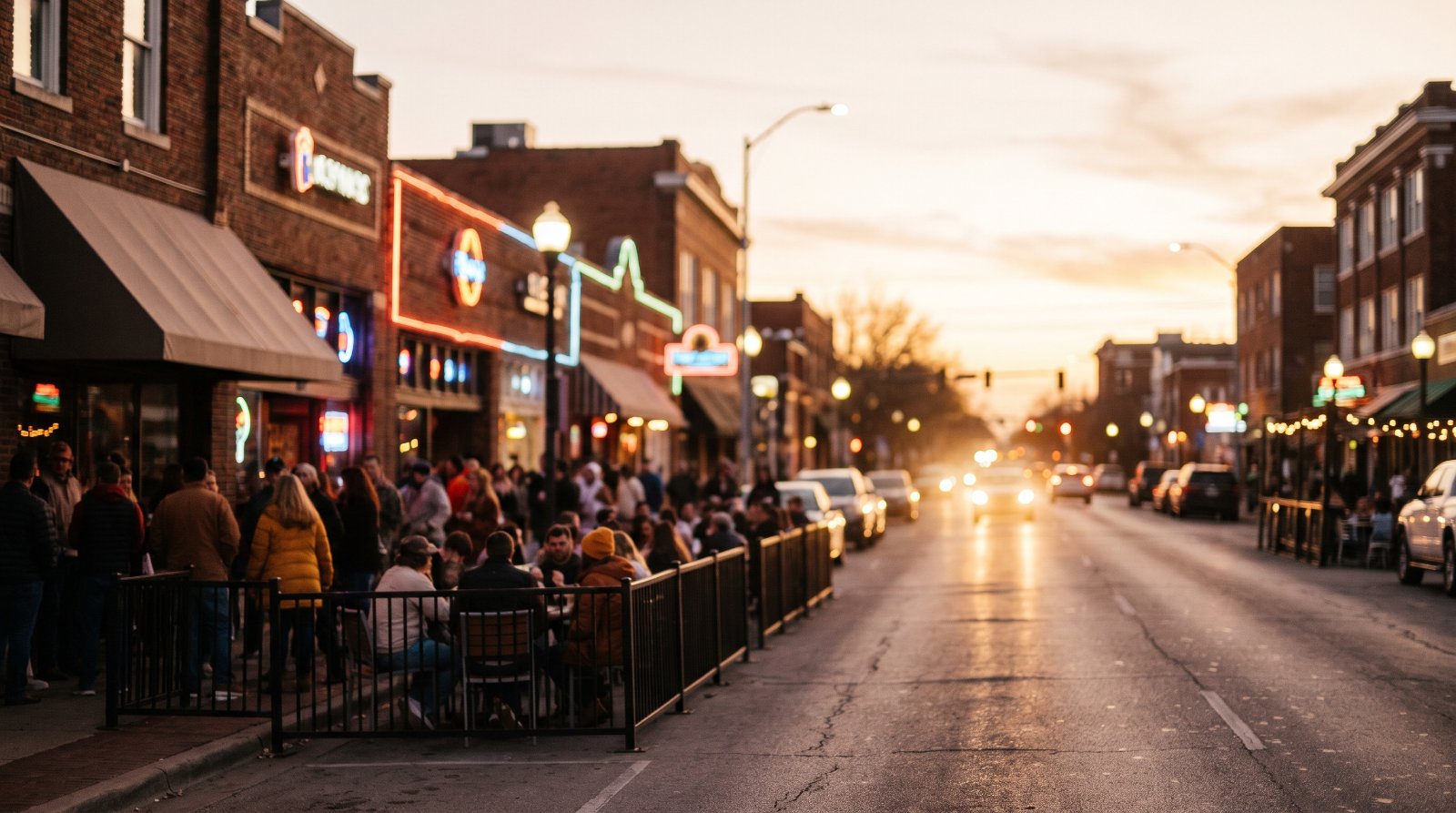
The district has been reinvented before, which explains some of its current oddness. In the late 1980s and through the ’90s, these warehouses ran as the city’s busiest tourist-entertainment quarter, restaurants, clubs, a marketplace mall in an old factory, before the energy migrated to newer districts and left the brick standing quiet again. The buildings have survived being freight docks, being nightlife, and being forgotten. Whatever comes next, they’ll survive that too; in the meantime, the quiet is part of the character.
Presiding over the district’s southern edge is Old Red, the 1892 courthouse at Main and Houston; a heap of red sandstone and turrets that looks airlifted from another century because it effectively was. Between the courthouse and the warehouses runs the district’s practical spine: the West End DART station, one of the busiest rail junctions in the city, which makes this the single easiest neighborhood in Dallas to reach without a car. Lunch hours on a weekday, the sidewalks fill with downtown office badges; the Dallas World Aquarium pulls its steady stream of families toward the district’s north side. Then five o’clock comes, and the West End does its famous trick: it empties.
Dealey Plaza, and the weight the district carries
Two blocks southwest, the district holds the site every visitor knows before they arrive. Dealey Plaza is where President Kennedy was assassinated in 1963, and the Sixth Floor Museum, inside the former Texas School Book Depository, documents that day and its aftermath with the seriousness the subject demands. Go once, without an itinerary crowding it, and give it the unhurried attention it asks for.
The district’s other institution carries comparable weight with a different charge: the Dallas Holocaust and Human Rights Museum, a few blocks north, is one of the most rigorous and affecting museums in Texas; built not just as memorial but as argument, and worth a full deliberate morning. Between these two, the West End functions as the place where Dallas keeps its gravest memory and its hardest questions. That’s not a reason to avoid the neighborhood; it’s the thing that gives these blocks their gravity. Most entertainment districts are interchangeable. This one means something, and you can feel it in how people walk here; slower, quieter, actually looking. If museums are becoming your genre, the museums-at-night guide covers when the city’s collections work best after dark.
The golden-hour case
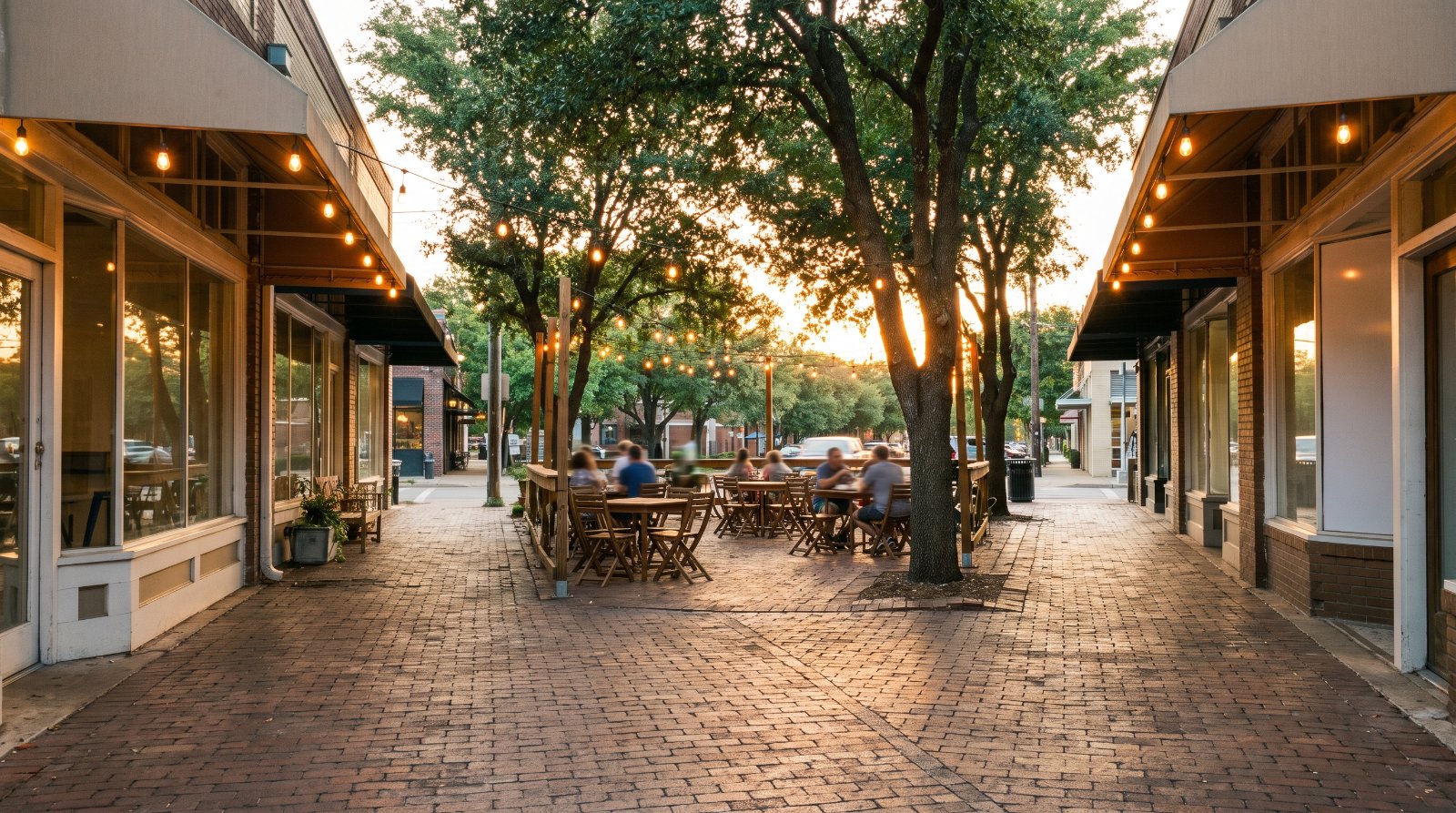
Here’s the argument nobody makes for the West End: it may be the best golden-hour walk in central Dallas, precisely because of the emptiness locals hold against it. Show up on a weekday around seven in the evening, when the office crowd has drained and the sun drops low enough to hit the brick broadside. The warehouses go copper. Old Red goes crimson. The streets, brick underfoot, human-scaled, quiet, belong entirely to you and a handful of people who’ve figured out the same thing. Every other photogenic neighborhood in this city makes you share; the West End at golden hour is a private screening.
The walk assembles itself: start at Founders Plaza, where a replica of John Neely Bryan’s log cabin marks the spot where somebody first decided Dallas should exist; loop the warehouse blocks while the light works; end at Dealey Plaza as the sky goes down behind the underpass. Forty-five minutes, zero dollars, and a better feel for how this city started than most residents ever bother to get. Dallas does not have many places where its whole timeline stands in one viewshed; the 1840s cabin, the 1890s courthouse, the 1960s tragedy, the 2020s skyline behind it all. This is the one.
The Discovery District is the after-dark reason
For decades the West End’s fatal flaw was that the reward for staying past sunset was a closed district. That flaw now has a workaround a short walk east: the AT&T Discovery District, the plaza carved out of AT&T’s headquarters blocks, where a media wall the size of a building face runs visuals over a lawn full of downtown workers unclenching, food hall traffic, and the after-dark energy the West End itself never sustained. It isn’t the West End proper, but it’s close enough to function as the district’s second act; brick and history for the first half of the evening, screen and crowd for the second, ten minutes of walking between them.
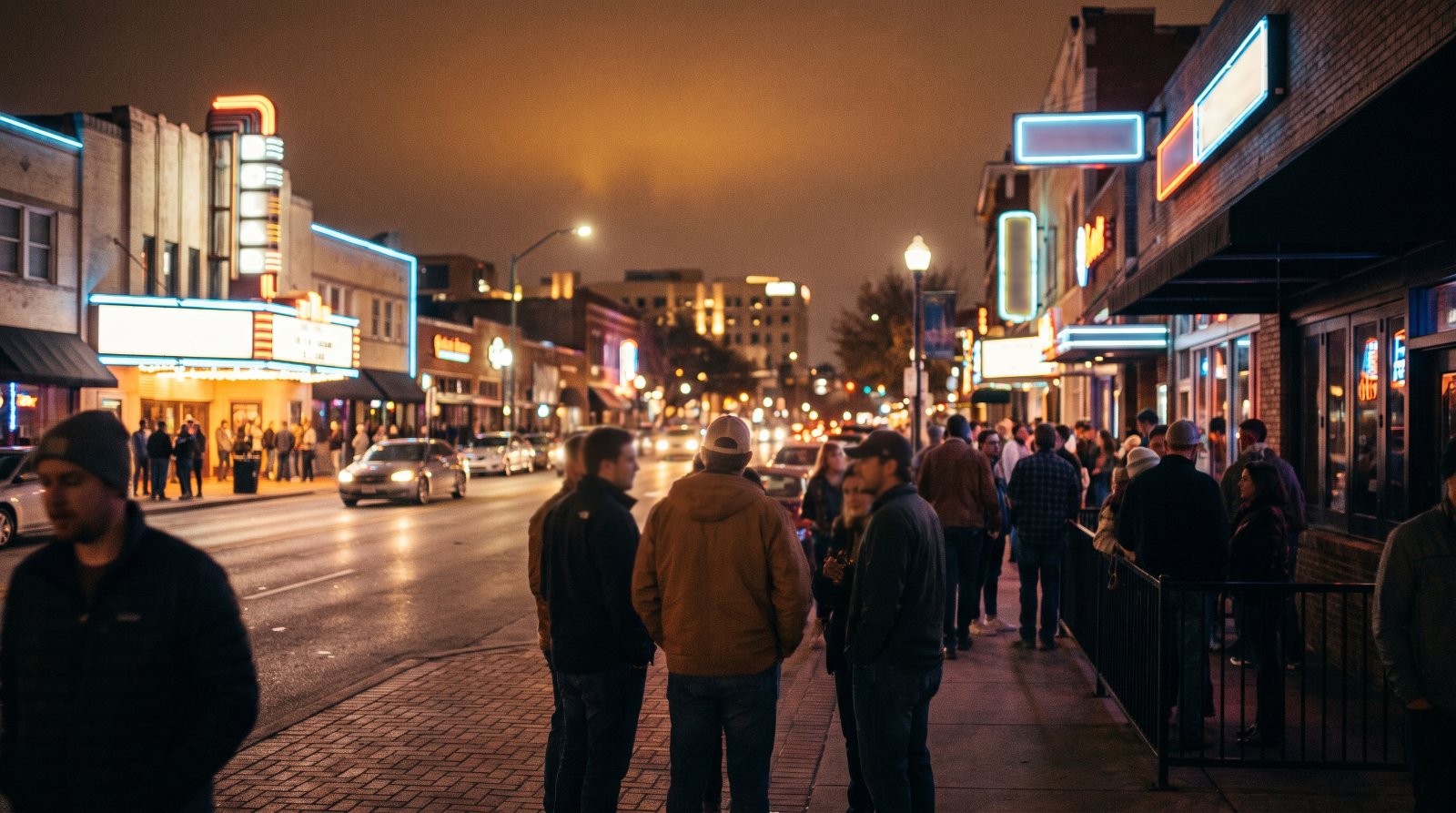
North of the district, Victory Park and the arena change the equation on game nights; when the Stars or Mavs are home, the whole quarter floods with foot traffic and the West End’s bars and sidewalks briefly remember the 1990s, when this was the city’s busiest entertainment district. An event at the arena is the one reliable occasion when the neighborhood is full after dark; and pairing a golden-hour warehouse walk with a puck drop is a legitimately great Dallas evening that almost nobody engineers on purpose.
When the West End is the wrong choice
This list is longer than most neighborhoods get, and honesty demands it:
- Most Friday and Saturday nights. No arena event means empty streets by nine. If you want a district that generates its own weekend, this is not it; Deep Ellum, the other surviving warehouse quarter, is what these same bones become when music moves in instead of museums.
- You want a dinner scene. The West End’s food skews lunch-crowd and tourist-adjacent. Eat elsewhere; walk here.
- You want spontaneity. This neighborhood rewards the planned visit; a museum morning, a golden-hour walk, a game night. It punishes the aimless drop-in worse than anywhere in the city.
- You’re expecting the warehouse-party version of warehouse blocks. Different district, different guide: the city’s raw-space venues get their own rundown in the warehouse venues guide.
The failure mode is showing up at 9pm on an ordinary Tuesday and finding it’s you, the streetlights, and a century of brick. Though, depending on the week you’ve had, that might not be a failure at all.
This weekend in the West End
The verdict, split fairly between the two camps: tourists are right that the West End matters and wrong about when to be there with everyone else; locals are right that it’s dead most nights and wrong to let that erase it. The correction for both is the same; go deliberately. A museum that will actually rearrange you, a golden-hour walk through the oldest commercial blocks in Dallas, and the Discovery District’s screen-lit lawn when you want the volume back up. Scheduled correctly, it’s one of the most rewarding evenings in downtown Dallas. Scheduled wrong, it’s a parking lot with history.
If you’d rather have the scheduling done for you, the weekend shortlist is a short list of things across Dallas actually worth leaving the house for, with who’s already going visible before you decide, and the West End makes the cut on the weeks it earns it: an arena night, a museum late, a reason. Tonight’s shortlist lives at /tonight.
Three, not thirty. The brick has waited 130 years; it can wait for the right evening.