Tag: dallas neighborhoods

  • Tourists Get the West End. Locals Skip It. Both Are Wrong.

    Tourists Get the West End. Locals Skip It. Both Are Wrong.

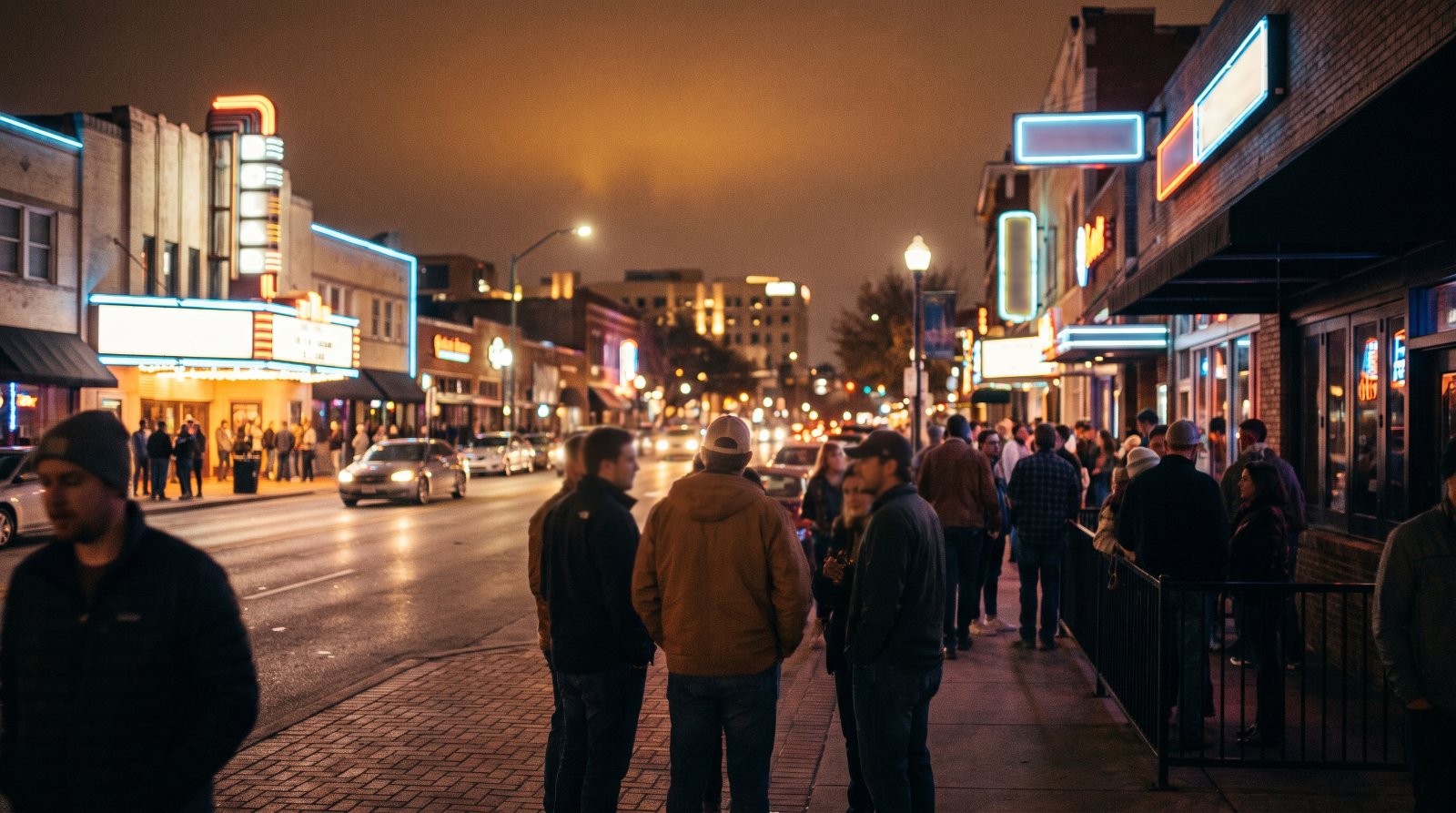
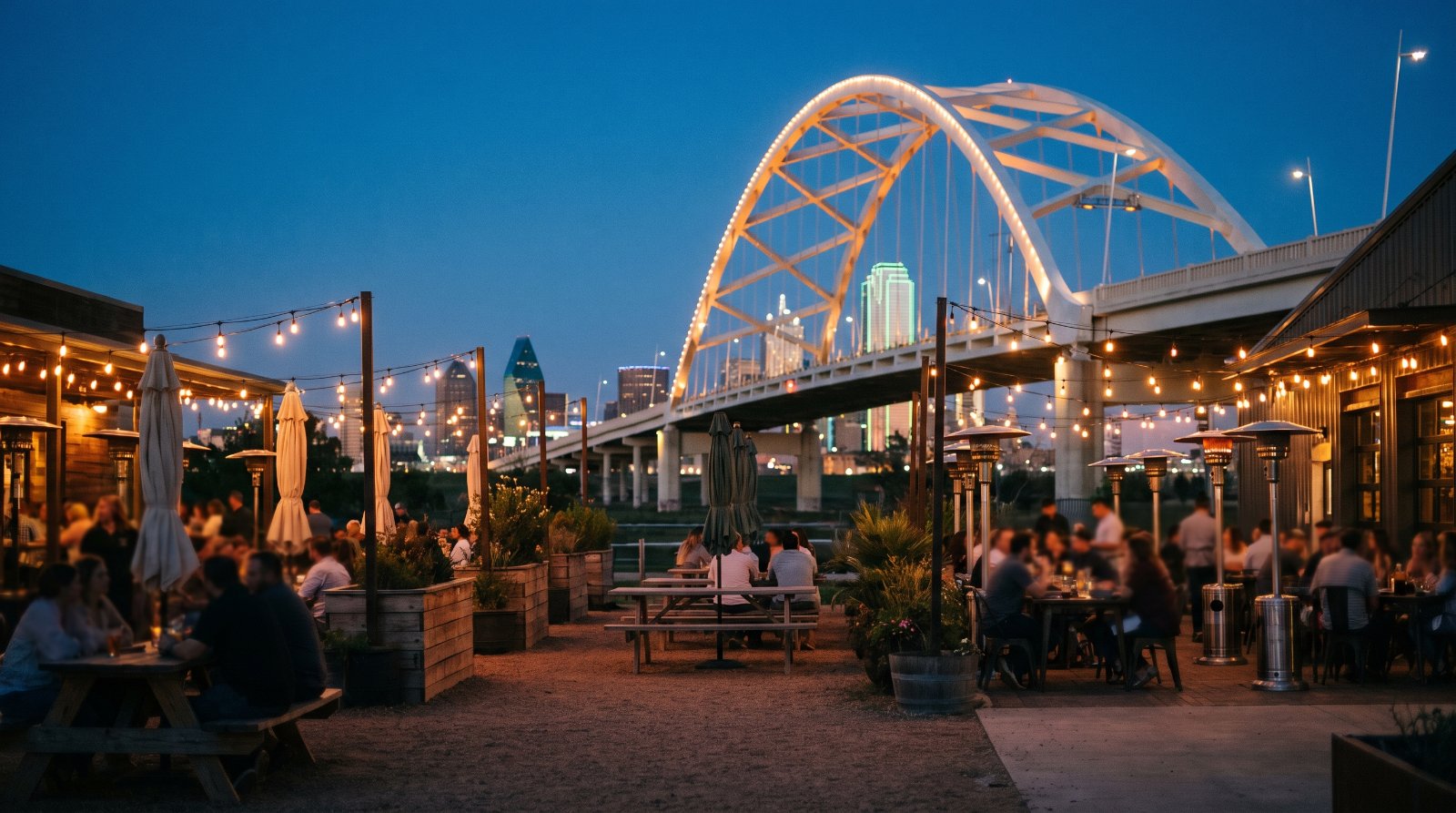
    The West End is downtown Dallas’s historic district: Dealey Plaza and the Sixth Floor Museum, brick streets that photograph best at golden hour, and the Discovery District’s screens after dark. It earns about an hour, in daylight or at dusk. Most Friday and Saturday nights it is the wrong choice, and this guide says why.

    The West End has the strangest reputation split of any neighborhood in Dallas. To visitors, it’s the first place they’re sent; the historic district, the museums, the brick streets on every postcard. To locals, it’s the place they haven’t been since a school field trip; filed somewhere between “parking for the arena” and “that’s still there?” One group treats it as the whole city. The other treats it as none of it. And both readings miss the same thing: a compact, genuinely old, genuinely beautiful few blocks of downtown Dallas that work brilliantly at specific hours and lie completely dormant the rest of the time.

    That’s the actual key to the West End; it isn’t good or bad; it’s scheduled. This guide is the schedule: what the district is, what it holds, the golden-hour case nobody makes for it, and the honest list of nights when you should absolutely be somewhere else.

    What the West End actually is

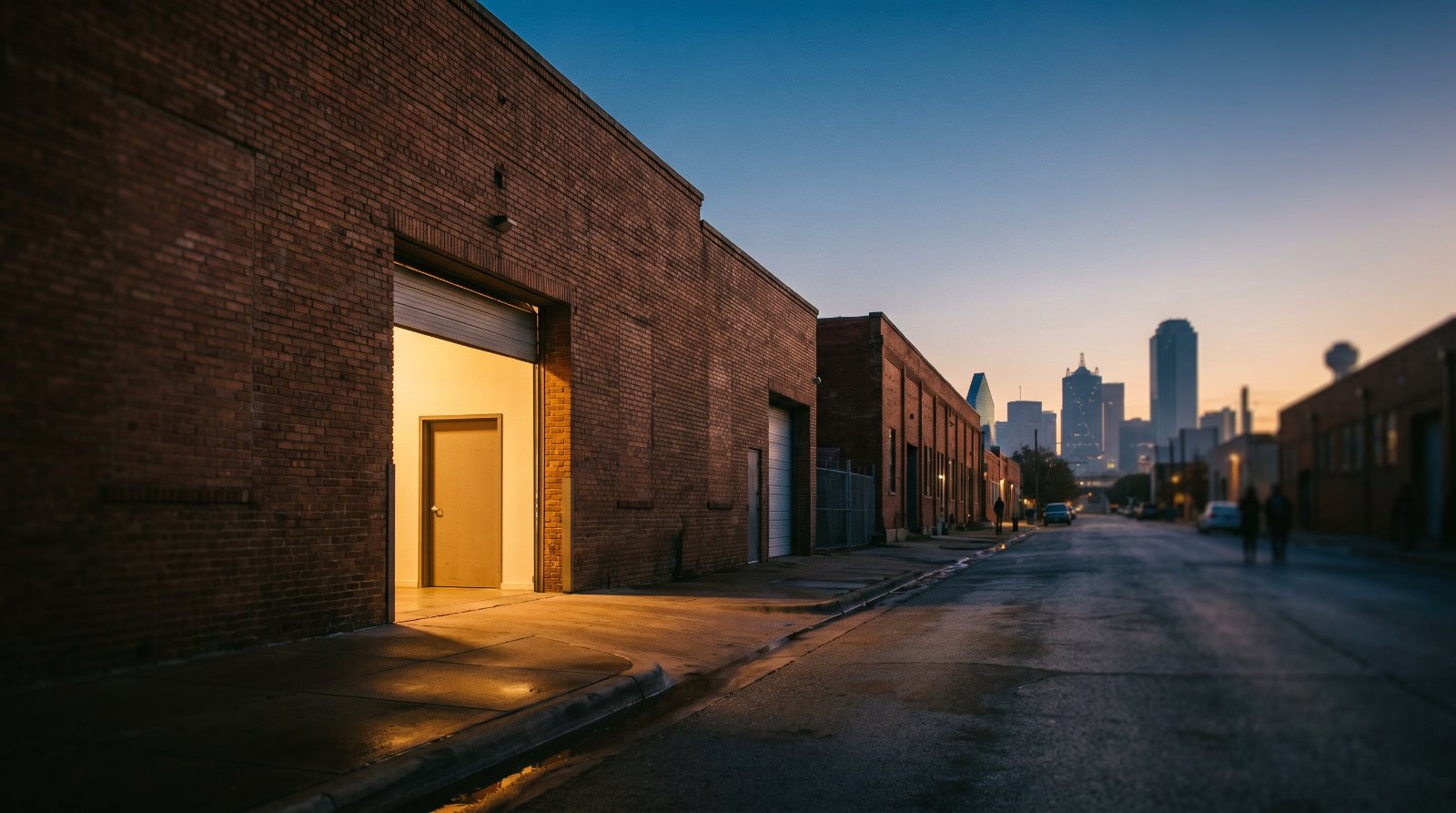
    Start with the bones, because the bones are the argument. The West End Historic District is the surviving stretch of Dallas’s late-1800s warehouse quarter; blocks of red brick built when the railroads made this corner of downtown the city’s loading dock. The buildings are broad-shouldered and low by downtown standards, five and six stories of arched windows and heavy masonry, and they’ve outlived nearly everything from their era. In a city with a famous habit of demolishing its own past, these are some of the oldest commercial blocks still standing; walking them is the closest Dallas gets to time travel on foot.

    The district has been reinvented before, which explains some of its current oddness. In the late 1980s and through the ’90s, these warehouses ran as the city’s busiest tourist-entertainment quarter, restaurants, clubs, a marketplace mall in an old factory, before the energy migrated to newer districts and left the brick standing quiet again. The buildings have survived being freight docks, being nightlife, and being forgotten. Whatever comes next, they’ll survive that too; in the meantime, the quiet is part of the character.

    Presiding over the district’s southern edge is Old Red, the 1892 courthouse at Main and Houston; a heap of red sandstone and turrets that looks airlifted from another century because it effectively was. Between the courthouse and the warehouses runs the district’s practical spine: the West End DART station, one of the busiest rail junctions in the city, which makes this the single easiest neighborhood in Dallas to reach without a car. Lunch hours on a weekday, the sidewalks fill with downtown office badges; the Dallas World Aquarium pulls its steady stream of families toward the district’s north side. Then five o’clock comes, and the West End does its famous trick: it empties.

    Dealey Plaza, and the weight the district carries

    Two blocks southwest, the district holds the site every visitor knows before they arrive. Dealey Plaza is where President Kennedy was assassinated in 1963, and the Sixth Floor Museum, inside the former Texas School Book Depository, documents that day and its aftermath with the seriousness the subject demands. Go once, without an itinerary crowding it, and give it the unhurried attention it asks for.

    The district’s other institution carries comparable weight with a different charge: the Dallas Holocaust and Human Rights Museum, a few blocks north, is one of the most rigorous and affecting museums in Texas; built not just as memorial but as argument, and worth a full deliberate morning. Between these two, the West End functions as the place where Dallas keeps its gravest memory and its hardest questions. That’s not a reason to avoid the neighborhood; it’s the thing that gives these blocks their gravity. Most entertainment districts are interchangeable. This one means something, and you can feel it in how people walk here; slower, quieter, actually looking. If museums are becoming your genre, the museums-at-night guide covers when the city’s collections work best after dark.

    The golden-hour case

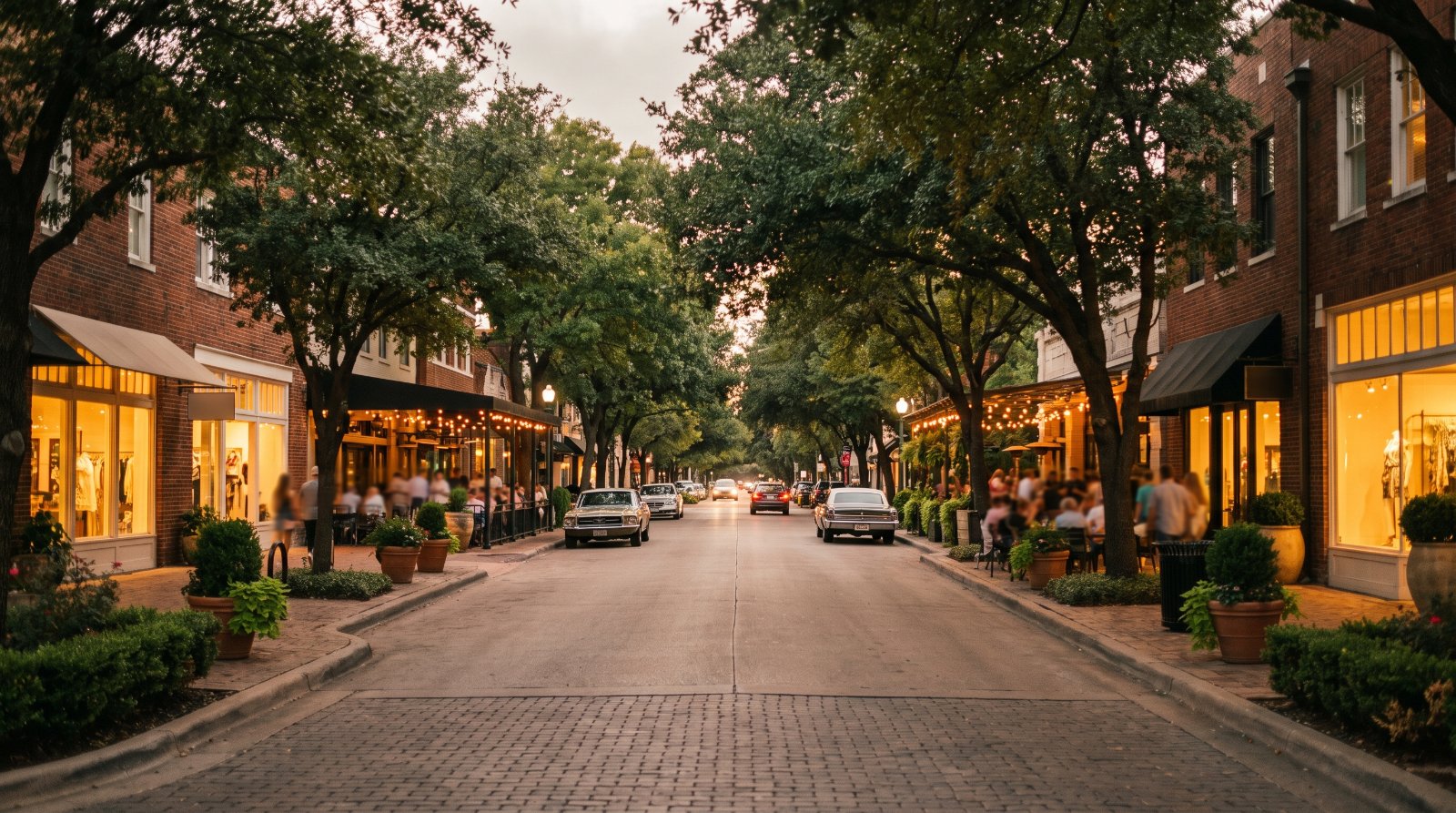
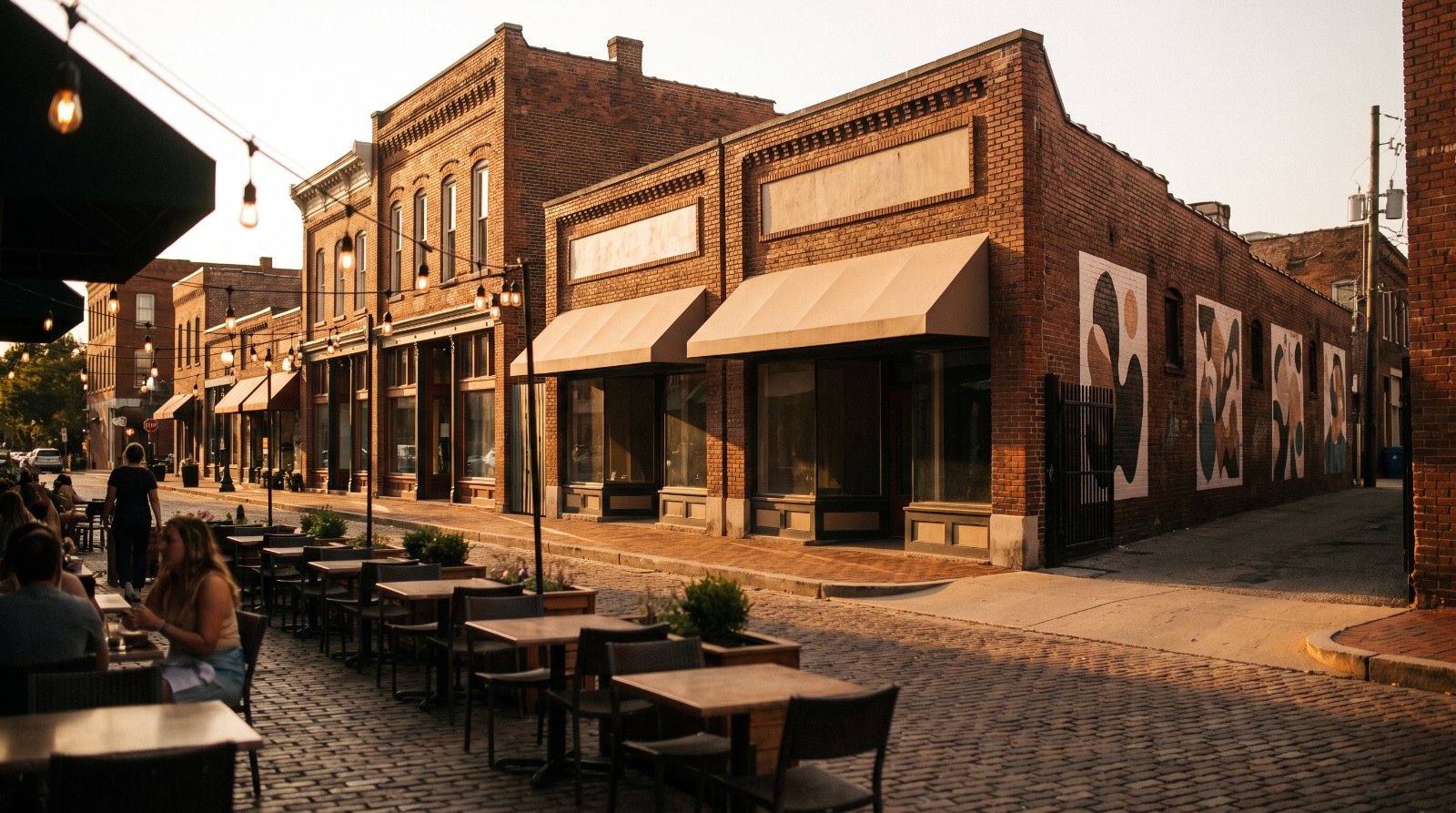
    Here’s the argument nobody makes for the West End: it may be the best golden-hour walk in central Dallas, precisely because of the emptiness locals hold against it. Show up on a weekday around seven in the evening, when the office crowd has drained and the sun drops low enough to hit the brick broadside. The warehouses go copper. Old Red goes crimson. The streets, brick underfoot, human-scaled, quiet, belong entirely to you and a handful of people who’ve figured out the same thing. Every other photogenic neighborhood in this city makes you share; the West End at golden hour is a private screening.

    The walk assembles itself: start at Founders Plaza, where a replica of John Neely Bryan’s log cabin marks the spot where somebody first decided Dallas should exist; loop the warehouse blocks while the light works; end at Dealey Plaza as the sky goes down behind the underpass. Forty-five minutes, zero dollars, and a better feel for how this city started than most residents ever bother to get. Dallas does not have many places where its whole timeline stands in one viewshed; the 1840s cabin, the 1890s courthouse, the 1960s tragedy, the 2020s skyline behind it all. This is the one.

    The Discovery District is the after-dark reason

    For decades the West End’s fatal flaw was that the reward for staying past sunset was a closed district. That flaw now has a workaround a short walk east: the AT&T Discovery District, the plaza carved out of AT&T’s headquarters blocks, where a media wall the size of a building face runs visuals over a lawn full of downtown workers unclenching, food hall traffic, and the after-dark energy the West End itself never sustained. It isn’t the West End proper, but it’s close enough to function as the district’s second act; brick and history for the first half of the evening, screen and crowd for the second, ten minutes of walking between them.

    North of the district, Victory Park and the arena change the equation on game nights; when the Stars or Mavs are home, the whole quarter floods with foot traffic and the West End’s bars and sidewalks briefly remember the 1990s, when this was the city’s busiest entertainment district. An event at the arena is the one reliable occasion when the neighborhood is full after dark; and pairing a golden-hour warehouse walk with a puck drop is a legitimately great Dallas evening that almost nobody engineers on purpose.

    When the West End is the wrong choice

    This list is longer than most neighborhoods get, and honesty demands it:

    • Most Friday and Saturday nights. No arena event means empty streets by nine. If you want a district that generates its own weekend, this is not it; Deep Ellum, the other surviving warehouse quarter, is what these same bones become when music moves in instead of museums.
    • You want a dinner scene. The West End’s food skews lunch-crowd and tourist-adjacent. Eat elsewhere; walk here.
    • You want spontaneity. This neighborhood rewards the planned visit; a museum morning, a golden-hour walk, a game night. It punishes the aimless drop-in worse than anywhere in the city.
    • You’re expecting the warehouse-party version of warehouse blocks. Different district, different guide: the city’s raw-space venues get their own rundown in the warehouse venues guide.

    The failure mode is showing up at 9pm on an ordinary Tuesday and finding it’s you, the streetlights, and a century of brick. Though, depending on the week you’ve had, that might not be a failure at all.

    This weekend in the West End

    The verdict, split fairly between the two camps: tourists are right that the West End matters and wrong about when to be there with everyone else; locals are right that it’s dead most nights and wrong to let that erase it. The correction for both is the same; go deliberately. A museum that will actually rearrange you, a golden-hour walk through the oldest commercial blocks in Dallas, and the Discovery District’s screen-lit lawn when you want the volume back up. Scheduled correctly, it’s one of the most rewarding evenings in downtown Dallas. Scheduled wrong, it’s a parking lot with history.

    If you’d rather have the scheduling done for you, the weekend shortlist is a short list of things across Dallas actually worth leaving the house for, with who’s already going visible before you decide, and the West End makes the cut on the weeks it earns it: an arena night, a museum late, a reason. Tonight’s shortlist lives at /tonight.

    Three, not thirty. The brick has waited 130 years; it can wait for the right evening.
  • Instagram Stops at the Mural Block. Bishop Arts West Keeps Going.

    Instagram Stops at the Mural Block. Bishop Arts West Keeps Going.

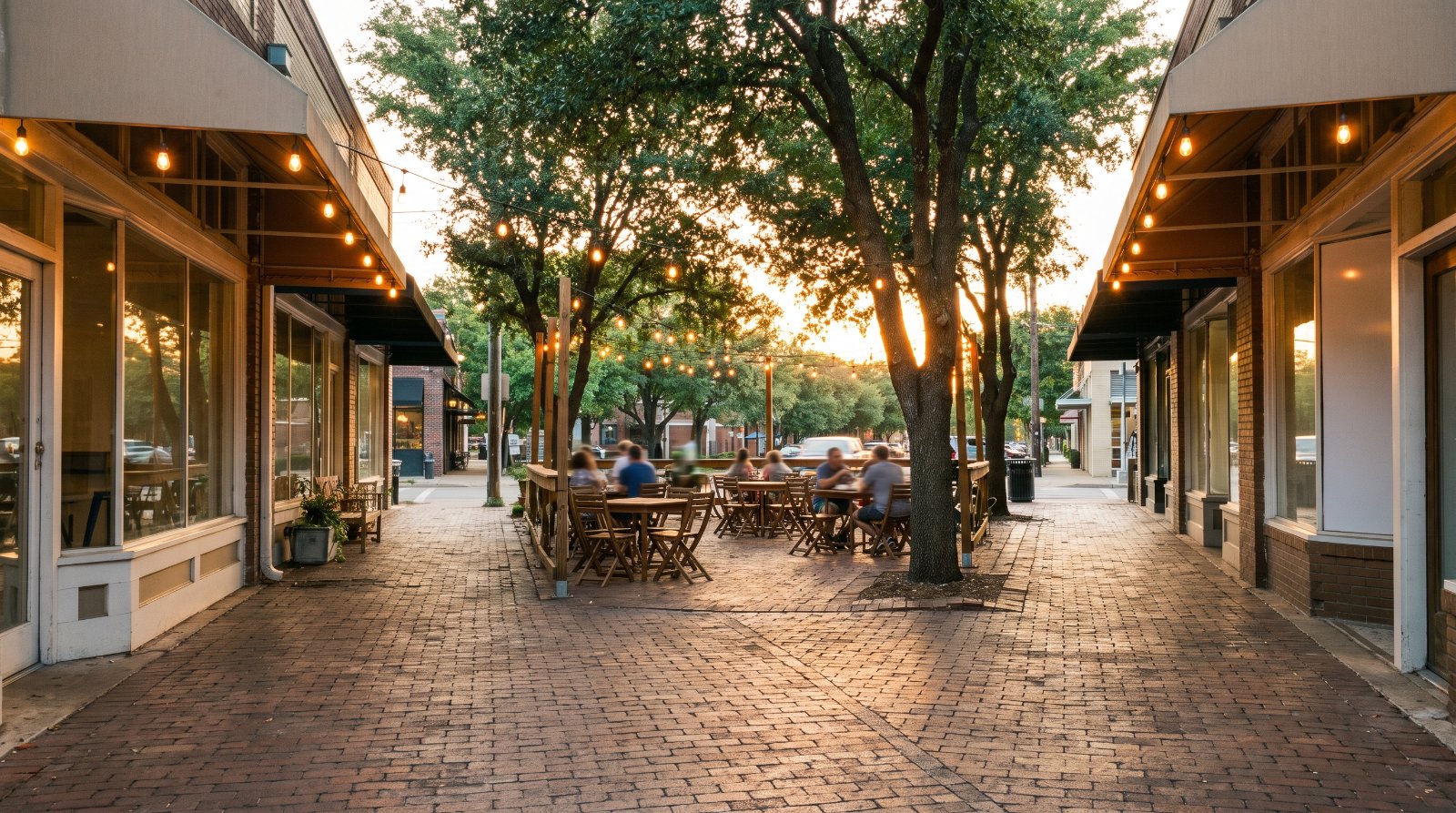
    Bishop Arts West is what starts when the retail blocks end: head west on Davis Street past the mural block and you reach the Kessler Theater, Spinster Records, and the porch streets of Winnetka Heights one block south. Go west first and finish in the core; this corridor is for using the street, not photographing it.

    Watch where people stand when they photograph Bishop Arts and you can draw the district’s perceived border in chalk: the mural, the pie, the two blocks of Bishop Avenue everyone means when they say the name. Then watch which way they leave. Almost nobody walks west; and west is where the neighborhood keeps going; down the West Davis corridor, into Winnetka Heights, through blocks that hold more of Oak Cliff’s actual life than the photographed core ever could.

    To be honest about what this post is: the core has its own guide; the Bishop Arts District guide covers the bookstore-bar circuit, the jazz room, the pie that earns its reputation, and when to visit so the crowds don’t ruin it. Read that one first if the district is new to you. This post starts where that one’s map fades: the moment you cross out of the retail blocks heading west on Davis Street, and the neighborhood stops posing and gets on with its week.

    Where the core ends and the corridor begins

    The transition is abrupt enough to feel on foot. One minute you’re in storefront-retail Bishop Arts, little shops, patios, weekend foot traffic, and a few minutes west on Davis the sidewalk empties, the buildings space out, and the businesses stop being for visitors. A tire shop. A panadería. A bar with regulars instead of reviews. The street’s job changes from being seen to being used; and if you keep walking, yours does too.

    This is the corridor’s whole appeal, and it requires an honest expectation-setting: Bishop Arts West is not a denser, secret version of the core. It’s the opposite; a lower, slower, more residential stretch where the good stuff sits farther apart and rewards intent rather than browsing. You don’t wander it the way you wander Bishop Avenue. You go for one specific reason, and the neighborhood fills in around the errand.

    It helps to know why the street reads this way. Davis was built as a streetcar commercial strip, the same era and logic that produced the core; a spine of small storefronts serving the houses a block on either side. When the core got rediscovered, its stretch of that spine turned outward, toward visitors. The western stretch never did. Same bones; different tenant list; and the difference is the entire point. What you’re walking through on West Davis is what the whole district looked like before it had an audience.

    West Davis, block by block

    The corridor’s anchor, and the best single reason to point yourself west, is the Kessler Theater, the 1940s movie house on Davis brought back to life as one of the finest listening rooms in Dallas. It’s an intimate, seated-and-standing venue where touring songwriters and jazz players work rooms small enough to hear a guitar breathe, and its restored marquee is West Davis’s lighthouse: on show nights the glow pulls people down blocks that are otherwise porch-lit and quiet. If the core’s Revelers Hall is jazz at conversation distance, the Kessler is the corridor’s grown-up sibling; same intimacy, bigger stage, deeper bench.

    Around it, the corridor’s institutions run older and humbler. Norma’s Cafe has been slinging diner breakfasts on Davis since the 1950s; a room where the coffee refills are automatic and half the tables have been sitting in the same booths for decades. El Si Hay works its lot as a walk-up taqueria of the kind that needs no interior at all; order at the window, eat standing up, understand immediately why the neighborhood never needed the food scene to arrive when it was already here. Spinster Records holds down the vinyl end of the corridor, a record shop with real taste and the browsing pace the core’s shops promise but can’t deliver on a busy Saturday.

    That’s the register of West Davis: not an itinerary, a rotation. Show at the Kessler, tacos at the window, breakfast the next morning, a record on the way home. Institutions, not attractions.

    Winnetka Heights: the porch district

    One block south of Davis, the corridor’s residential half begins, and it’s worth the turn. Winnetka Heights is one of Dallas’s designated historic districts; street after street of early-1900s houses, craftsman porches and prairie-style rooflines, built in the streetcar era and still carrying its proportions: houses close to the sidewalk, porches meant to be sat on, live oaks that have had a century to close ranks over the street.

    Walk it at dusk and the neighborhood explains itself. Porch lights come on. Dogs announce you, block by block, like a relay. The houses aren’t museum pieces, they’re lived in, in every state from lovingly restored to honestly weathered, and that mix is exactly the point. This is what the district’s charm is made of upstream of every storefront: a real streetcar-era neighborhood, at porch scale, that happened to keep its bones. The core’s photographers rarely make it down here; that suits the porches fine.

    Treat it accordingly. These are homes, not a set; walk, nod, keep your camera on the architecture rather than through anyone’s front window, and leave the sidewalk chalk drawings where they are.

    The loop itself needs no map: pick any street south of Davis, walk until the canopy breaks, turn, repeat. Twenty minutes covers a satisfying circuit; forty covers the district’s best of it. The houses do the pacing for you; every block has one porch, one paint job, one absurdly confident turret that stops you mid-stride. It’s the cheapest great walk in Dallas, and unlike the Katy Trail you will not be sharing it with the entire fitness economy.

    How to use it: the west-first evening

    The pairing with the core is the move, and direction matters. Run it west-first: early tacos at the window while the light is good, a slow Winnetka Heights loop as the porches light up, then the Kessler’s marquee; and if the night still has legs afterward, drift east into the core, where the bookstore-bar and the jazz room hold the late shift. Done this way, the core stops feeling like a set piece, because you’re arriving from the neighborhood instead of from a parking app. Context first, postcard second.

    The morning version works too, and it’s the cheaper date: Norma’s booth, record browsing at Spinster, porch loop before the heat gets serious. If slow mornings in third places are becoming your genre, the coffee shops guide runs the citywide version of that playbook. And for the wider territory this corridor belongs to, the theaters, Jefferson Boulevard, everything north Oak Cliff holds beyond the district, the Oak Cliff guide is the map one zoom level out.

    When Bishop Arts West is the wrong choice

    The honest disqualifiers:

    • You want browsing density. The corridor’s stops sit blocks apart with residential in between. If you want twenty doors in five minutes, that’s the core’s job; go read its guide, and go on a Wednesday.
    • You want a late night. Aside from show nights at the Kessler, West Davis winds down early. Midnight ambitions belong across the river.
    • You’re arriving without a reason. This stretch rewards a booked show, a taco craving, a walking mood. Show up with none of the three and you’ll conclude there’s nothing here; which is wrong, but will feel true.
    • It’s 3pm in August. The porch loop is a golden-hour-or-later activity. The canopy helps; it doesn’t perform miracles.

    The failure mode, for the record: you did the whole corridor in ninety minutes and went home early. Recoverable; the core is a ten-minute walk east and holds the nightcap.

    This weekend west of Bishop

    The case, compressed: Bishop Arts is real, and the proof was never on the mural block; it’s in the neighborhood that block belongs to. Go west once. Eat standing up at a taco window, hear a songwriter in a seventy-year-old theater, walk a street where every house predates your grandparents, and then decide which Bishop Arts you actually like better. There’s a decent chance it’s this one; there’s an even better chance you stop needing them to compete.

    For the short list version of the week, the weekend shortlist is a few picks across Dallas actually worth leaving the house for, who’s already going visible before you commit, and the Kessler’s calendar shows up in it whenever it earns the slot. Tonight’s options live at /tonight, and the citywide hub is at /dallas.

    Three, not thirty. The porches aren’t going anywhere.

  • Cedar Springs Is the Strip That Taught Dallas How to Go Out

    Cedar Springs Is the Strip That Taught Dallas How to Go Out

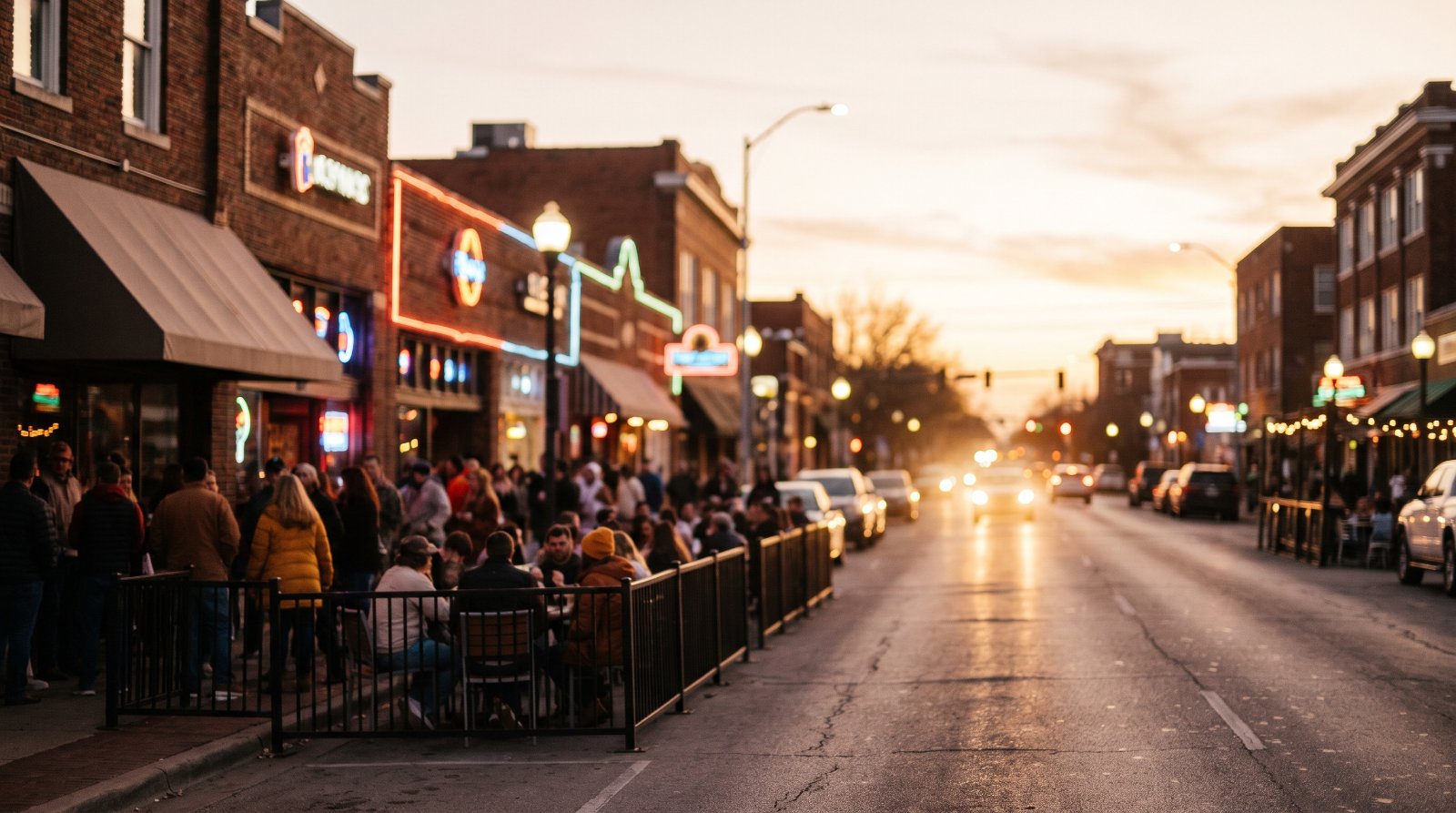
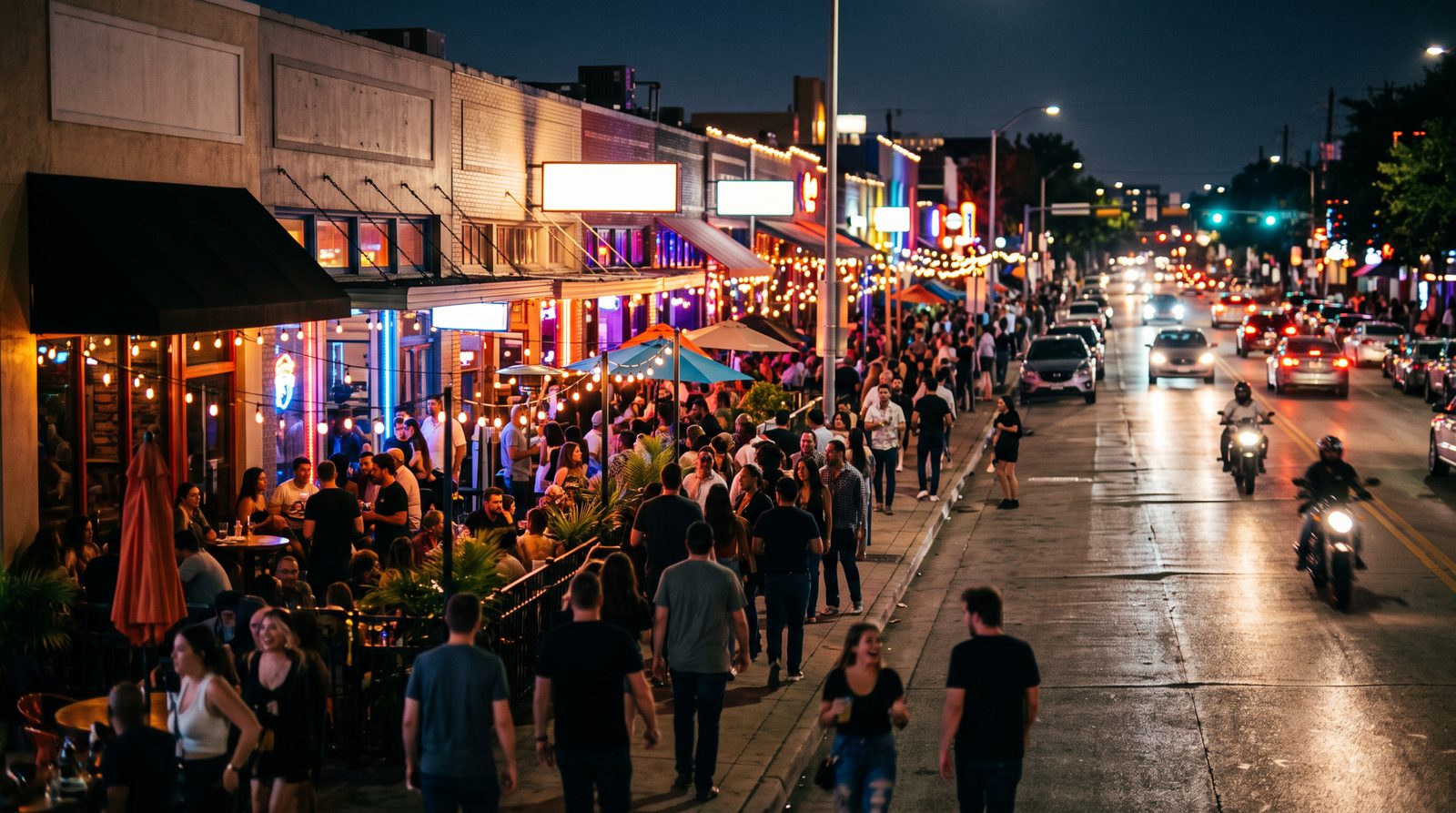
    Cedar Springs Road, the few blocks around Throckmorton in Oak Lawn, is Dallas’s original nightlife strip and the heart of its LGBTQ+ scene: storefront bars facing the sidewalk, a crowd that spans every age, and a Saturday night that starts loud and gets warmer as it goes. Start with a first drink somewhere with big windows and let the sidewalk set the pace.

    Every city has one street that figured out nightlife before the rest of town did, and in Dallas that street is Cedar Springs Road. The few blocks around Throckmorton, Oak Lawn’s main artery, known to everyone simply as the Strip, have been throwing the city’s most committed party for longer than most Dallas neighborhoods have had names worth saying. Dance floors that actually get danced on. Bartenders who remember you. A Saturday night that starts loud and gets warmer as it goes.

    Say the important thing plainly, up front: the Strip is the heart of LGBTQ+ Dallas, and it has been for generations. That’s not a footnote to the neighborhood; it’s the reason the neighborhood is good. The bars here were built by and for people who needed rooms where they could be entirely themselves; and rooms like that develop a quality the rest of the city spends a lot of money failing to imitate; everyone in them is actually glad to be there. The Strip is for everyone precisely because it has never been for everyone-in-general. You’re welcome on Cedar Springs. You’re also a guest in a house someone else built, and the house rules are the whole reason it’s the best party in town.

    What the Strip actually is

    Geographically, it’s compact: Cedar Springs Road as it runs through Oak Lawn, with the core clustered around the Throckmorton intersection; the crosswalks there are painted rainbow, city-installed and city-maintained, which tells you how officially Dallas recognizes what these blocks are. A few minutes away, at Cedar Springs and Oak Lawn Avenue, the Legacy of Love monument marks the neighborhood’s gateway. Overhead, every few minutes, jets slide down the flight path into Love Field, low enough to read the tail fins; the Strip’s own metronome, and a reminder that this street points somewhere.

    The scale matters. This is not an entertainment district in the master-planned sense; no parking garages the size of city blocks, no corporate anchor. It’s a strip in the honest sense: a run of storefront bars and shops that face the sidewalk, built at a height where the street can hear itself. On a weekend night the sidewalk is as much the venue as any room on it; a slow two-way current of people in everything from full drag to gym clothes, greeting each other like the block is a reunion. Which, most nights, it is.

    The rooms

    Vibe-level, because the point is knowing which door matches which night:

    • Round-Up Saloon. The two-step institution. A country-western dance hall where the boots are real, the floor is full, and a stranger will teach you the steps if you stand near the rail looking willing. There is no better first stop on the Strip, and no room in Dallas that converts skeptics faster.
    • Sue Ellen’s. The Strip’s longest-running room for women, and one of the longest-running of its kind anywhere. Live bands, a patio, and a crowd that has been showing up for each other for decades.
    • JR’s. The corner living room. Big windows onto the street, a crowd that spans every age the neighborhood has, and the right first-drink energy for a night whose shape you haven’t decided yet.
    • The Rose Room. The drag stage inside Station 4, and the reason Dallas drag has a national reputation. Production values that embarrass most concert venues, performers at the top of the craft, and a show that treats your attention as something to be earned. Go once and you’ll understand why the city talks about it the way it does.

    That’s a sampler, not a census; the Strip holds more doors than this, and half the fun is that they’re forty feet apart. Striking out costs you a sidewalk, not a drive.

    Why it taught the city to go out

    Here’s the thesis in the title, cashed out. Most nightlife runs on evaluation; rooms where everyone is quietly auditioning; ranking; being ranked. The Strip’s founding premise was the opposite. These were rooms built as refuge, where the whole point was to stop performing the moment you got inside the door. Strip out the audition and what’s left is the actual point of going out; dancing because the song is good, talking to strangers because they’re there, staying late because you’re happy.

    That’s the standard the Strip set, and you can feel Dallas nightlife measuring against it everywhere else in the city. The hospitality here isn’t a service style; it’s a value system with a dance floor. Birthdays get announced from stages. Newcomers get absorbed into groups mid-song. The bartender’s memory for faces functions as the neighborhood’s institutional memory. Other districts sell you a night out; Cedar Springs demonstrates one.

    And it’s earned the right to be loud about it. Weekend nights on the Strip are packed, thumping, and unsubtle; that is the product, not a side effect. Nobody comes to Cedar Springs at midnight on Saturday for a quiet chat. They come because somewhere between the two-step and the second show, the week’s weight comes off.

    Pride, briefly

    The history deserves its two sentences straight. For decades, Dallas’s Pride parade ran right down Cedar Springs, the neighborhood functioning as both host and honoree; the citywide celebration has since moved its main events to Fair Park, where the crowds have more room. The Strip didn’t lose anything in that move that matters; every June the street still runs at festival pitch, and the other eleven months it remains what the parade was always celebrating: the place itself.

    Beyond the Strip: Oak Lawn and Turtle Creek

    The Strip is Oak Lawn’s loudest few blocks, not its whole story. Walk east and the neighborhood tips downhill toward Turtle Creek, where the city keeps one of its gentlest landscapes; a green corridor of parkland and old trees winding along the water, close enough that you can trade the dance floor for total quiet in ten minutes on foot. Tucked along the creek sits the Kalita Humphreys Theater, the Frank Lloyd Wright-designed playhouse that still stages work today; even dark, the building is worth the detour.

    This adjacency is the neighborhood’s secret weapon. Most loud districts strand you in loudness; leaving Deep Ellum means driving. Oak Lawn lets you sequence the night: creek walk at golden hour while the light does its thing on the water, first drink at JR’s as the street wakes up, show at the Rose Room, and the walk back toward Turtle Creek when your ears need the credits to roll. For the polished-patio version of this side of town, Uptown picks up one neighborhood over; the Katy Trail crowd and the Strip crowd are closer cousins than either admits.

    When Cedar Springs is the wrong choice

    Honesty, as always:

    • You want conversation volume. Weekend nights on the Strip are for dancing and shouting happily into ears. If the night is about actually hearing someone, do the Turtle Creek end early, or pick a quieter neighborhood and save the Strip for a night that wants noise.
    • You want grit and guitar amps. The Strip’s stages run drag and dance floors, not rock rooms. Warehouse noise and 1am guitars live across town in Deep Ellum.
    • You’re treating it as a spectacle. The Strip is not a zoo, and drag is not a backdrop for your group photos. Come to participate; tip the performers, learn the two-step, hold the door. Guests who act like guests get the best of this neighborhood; tourists who act like audiences get its politest cold shoulder.
    • You hate a wait. Prime Saturday hours mean lines at the marquee rooms. Go early, go Thursday, or make peace with the sidewalk; which, on this street, is half the entertainment anyway.

    The failure mode here is mild by Dallas standards: you stayed too late and spent too little time deciding to. The city has worse problems; most of them are covered by what the rest of Dallas is doing at 9pm on any given night.

    This weekend on the Strip

    The verdict is not complicated: Cedar Springs is one of the great going-out streets in Texas, it belongs in your rotation no matter who you are, and it will make you better at being in rooms full of strangers; because it’s been perfecting that exact art longer than anywhere else in the city. Creek at sundown; boots by ten; show at midnight. Bring cash for the performers and your actual personality for everyone else.

    If you’d rather have the week’s short list handed to you, the weekend shortlist is a few things across Dallas genuinely worth leaving the house for, with who’s already going visible before you decide, and Oak Lawn’s picks in the mix when they’ve earned it. Tonight-shaped plans live at /tonight; the citywide hub is at /dallas.

    Three, not thirty. The two-step only takes one song to learn.

    Quick answers on Cedar Springs

    Where is Cedar Springs in Dallas?

    Cedar Springs Road runs through Oak Lawn, northwest of downtown Dallas. The strip everyone means is the few blocks around the Throckmorton intersection, marked by the Legacy of Love monument at Cedar Springs and Oak Lawn Avenue, under the flight path into Love Field.

    What are the bars on Cedar Springs like?

    The Strip is a run of storefront bars that face the sidewalk: dance floors, drag stages, video bars, and patios within a couple of walkable blocks. Crowds span every age, the dress code runs from full drag to gym clothes, and on weekend nights the sidewalk itself is half the venue.

    When should you go to Cedar Springs?

    Saturday night is the classic run: it starts loud and gets warmer as it goes. Early evening suits a first drink somewhere with big windows; midnight is not the hour for a quiet chat. June runs at festival pitch for Pride, though the parade’s main events now happen at Fair Park.

  • Greenville Avenue, Walked End to End: Three Miles of Dallas Changing Its Accent

    Greenville Avenue, Walked End to End: Three Miles of Dallas Changing Its Accent

    Greenville Avenue runs about three miles from Ross Avenue up past Mockingbird, and it changes character every few blocks: Lowest Greenville is the loud young stretch, Belmont to Mockingbird grows quieter and more grown-up, and the north end handles the errands. Walk it south to north near golden hour; the avenue runs shadeless in stretches.

    Most Dallas streets are a way to get somewhere. Greenville Avenue is a way to understand something. Walk it south to north, roughly three miles, Ross Avenue up past Mockingbird, and you move through more versions of this city than any other single stretch of pavement can show you: the strip that parties, the blocks that grew up, the streets that were always grown, the mile that just runs errands. It’s a biography of Dallas written in storefronts, and you can read the whole thing in an afternoon.

    One thing this post is not: the neighborhood deep dive. If you want Lower Greenville as a destination, the patios, the anchors, where to actually spend a Friday, that’s the Lower Greenville guide, and it’s the companion piece to this one. That post is about picking a room. This one is about the walk between them: what the avenue does block by block, where its accent changes, and why the changes mean something.

    How to read a street on foot

    A quick note on method, because the walk rewards it. Streets talk in details; what the parking looks like, how tall the buildings sit, whether the patios face the sidewalk or hide behind it, who’s out at 4pm versus 10pm. Greenville’s whole appeal is that these details shift every few blocks, and the shifts are legible. You’re not walking to get your steps in. You’re walking to watch a city change its mind in real time.

    Logistics, briefly: start at the south end in the late afternoon so you hit the northern stretch before dark; wear real shoes; treat the cross streets, Belmont, Richmond, McCommas, Mockingbird, as chapter breaks. In August, this is an after-six undertaking. The avenue runs shadeless in stretches, and Dallas asphalt holds a grudge until sundown.

    Chapter one: Lowest Greenville, where the volume lives

    The southern blocks, Ross north to Belmont, the stretch the city calls Lowest Greenville, are the part of the avenue with a reputation, and the reputation has been through several editions. What that stretch used to be and what it is now is a story the Lower Greenville guide tells properly; the walking version is simpler. This is the avenue at its youngest and loudest; bars and kitchens packed shoulder to shoulder, patios open to the sidewalk, foot traffic that starts early on weekends and doesn’t so much end as relocate.

    Walked through rather than settled into, Lowest Greenville reads like an opening argument. The buildings are low and old, storefront-scale, built for a streetcar city, which is what this was, and every one of them is working hard for your attention. Neon, chalkboards, door staff; the whole apparatus. It’s the only stretch of the walk where the street is unambiguously performing for you, and it’s worth clocking that before the performance stops.

    Because it does stop. Cross Belmont and you can feel the avenue drop its shoulders.

    Chapter two: Belmont to Mockingbird, where the avenue grows up

    North of Belmont the pitch changes. The blocks stretch out, the bars thin into restaurants, and the crowd ages up a few years without anyone announcing it. This is the stretch where the avenue stops selling you a night and starts assuming you have one planned. Reservations instead of walk-ups, wine lists instead of wells, conversations you can hear.

    The mile-marker is the Granada Theater, the 1946 movie house whose marquee still runs the avenue’s best light. The Granada belongs to the Lower Greenville story, it’s the anchor of that neighborhood’s case for itself, so this walk will just tip its cap and note what the marquee does to the street: for a block in either direction, everything organizes around it, the way old main streets organized around their theaters. It is the avenue’s one piece of genuine spectacle, and it earns the pause.

    Keep north and the residential begins bleeding through. Houses appear between the commercial runs. Trees get serious. The sidewalk traffic shifts from destination-bound to dog-led. You’re approaching the stretch where the avenue’s real tenants live, and the street softens to meet them.

    The M Streets detour: one block off, a hundred years back

    Somewhere around McCommas, do the thing this walk exists for: turn off the avenue. One block west puts you in the M Streets, formally Greenland Hills, informally the alphabet of streets that gave the neighborhood its name, and into the most concentrated run of Tudor-style houses in Dallas, most of them built in the 1920s. Steep gabled roofs, arched doorways, brick and half-timber; street after street of it.

    The detour matters to the walk’s thesis. The avenue is the neighborhood’s commercial spine, but the M Streets are its actual body; the reason the restaurants north of Belmont can afford to be calm. These blocks were built as a streetcar suburb a century ago, and they still carry that scale: porches close to the sidewalk, driveways an afterthought, houses built to be looked at from foot height, at walking speed; which is exactly how you’re looking at them. Fifteen minutes of wandering here recalibrates the whole avenue. When you step back onto Greenville, you’ll read its northern blocks correctly; not as a thinning-out, but as a main street relaxing into the neighborhood that owns it.

    Chapter three: Mockingbird and north, where the errands live

    Cross Mockingbird and the avenue makes its last change of accent. The storefronts go practical: groceries, hardware, lunch counters, the Old Town shopping center. Central Market sits up here at Lovers Lane, which is as Dallas a landmark as any theater; half the city’s dinner parties begin in its aisles. The buildings spread out, the parking lots widen, and the street stops performing entirely. This is the avenue in work clothes.

    Honesty about this stretch: as a walk, the payoff thins. The blocks run longer, the shade runs shorter, and nothing up here needs you the way Lowest Greenville needed you. But it belongs in the biography, because it’s the ending most Dallas streets get; the part where a city’s daily life, not its nightlife, sets the terms. Walk as far as Lovers Lane, call it complete, and you’ve seen the full arc: performance, maturity, home, errand. Three miles, four Dallases.

    One day a year, the avenue is a single organism

    There’s exactly one day when the walk does itself: the St. Patrick’s parade. Dallas has run it down Greenville Avenue each March for decades, and it’s grown into one of the biggest St. Patrick’s celebrations in this part of the country; the avenue closed to cars, the crowd stretching through the very blocks this post just walked. For one green afternoon, Lowest Greenville’s volume floods the entire street, M Streets porches turn into grandstands, and the avenue’s four personalities dissolve into one.

    It’s worth seeing once, mostly because of what it proves; that the street’s separate stretches still think of themselves as one avenue, and will act like it given a parade permit. The other 364 days, the walk is how you get that view.

    When the walk is the wrong choice

    The honest disqualifiers, because a three-mile walk is not always the assignment:

    • You want one great room, not thirty blocks. Skip the survey and use the Lower Greenville guide to pick your destination directly. The walk is for understanding the avenue; the guide is for enjoying it.
    • It’s mid-afternoon in August. The avenue offers no mercy between two and six. Golden hour or later; or wait for October, when this becomes one of the best walks in the city.
    • You’re in a group. Four people walk at four speeds and want four different stops. This route works best solo or as a two-person operation; solo especially, and if walking your own city alone sounds like a skill worth having, the solo playbook makes that case at length.
    • The night needs a crescendo. The walk ends in grocery territory, by design. If you want a finale, run it in reverse, start calm at Lovers Lane, end loud on Lowest Greenville, or hop one neighborhood west afterward, where Knox and Henderson run a two-act night of their own.

    This weekend on the avenue

    The case, restated: Greenville Avenue is the rare Dallas street that rewards being traveled at three miles an hour, because the point isn’t any single block; it’s the transitions. The strip that performs, the stretch that matured, the Tudor streets that anchor it all, the errand mile that keeps it honest. You can drive it in eight minutes and learn nothing. Walk it once and you’ll never need a neighborhood explained to you the same way again.

    And when the walk turns up a block you want to come back to at night, that’s what the shortlists are for. The weekend shortlist comes with a handful of picks across Dallas worth actually leaving the house for, who’s already going, visible before you decide, and the avenue’s rooms show up in it when they’ve earned the slot. Tonight’s version lives at /tonight, and the whole-city hub is at /dallas.

    Three, not thirty. The avenue’s been there a hundred years; it’ll hold your pace.

  • Knox or Henderson? One Dallas Name, Two Streets, and How to Pick Your Side

    Knox or Henderson? One Dallas Name, Two Streets, and How to Pick Your Side

    Knox-Henderson is one name for two streets split by US-75. Knox, west of the freeway, is the daylight side, fed by the Katy Trail and best from Saturday morning through an early dinner. Henderson, east of the freeway, is the side that stays out late. Pick the side that matches the night you want, or do dinner on one and a nightcap on the other.

    Dallas says “Knox-Henderson” like it’s one place, and that hyphen is doing more work than anyone admits. Knox Street and Henderson Avenue are the same road wearing two names, the switch happens at Central Expressway, and the personality change at that underpass is complete enough that you can know one side cold and still get the other one entirely wrong. Plenty of evenings have died in the gap; someone hears “Knox-Henderson is great for dates,” books the polished side when the night wanted the loose side, and spends two hours wondering why a neighborhood this recommended feels like somebody else’s plan.

    So here’s the split, stated plainly. Knox, west of the freeway, is the daylight side; fed by the Katy Trail, groomed by the Highland Park border, at its best between a Saturday morning and an early dinner. Henderson, east of the freeway, is the evening side; looser, later, more neighborhood bar than showroom. They sit maybe fifteen minutes apart on foot, which makes this the rare corner of Dallas where one parking spot buys you two different nights. You just have to know which side does what; and when.

    The hyphen is a freeway

    Geography first, because everything else follows from it. The street runs roughly east–west across the top of the Uptown–Old East Dallas seam. West of US-75 it’s Knox Street, pointed at the Katy Trail and the Highland Park line. East of US-75 it’s Henderson Avenue, sloping down through Old East Dallas toward Ross. Between them sits the underpass: a hundred-odd yards of concrete, traffic hum, and pigeon acoustics that functions like a border crossing. Same road on both sides. Different country.

    The seam explains the two personalities better than any leasing brochure could. Knox grew up pressed against Highland Park, one of the most manicured zip codes in Texas, and it shows; wide sidewalks, groomed storefronts, a street that carries itself like it expects to be photographed. Henderson grew up against Old East Dallas, a quilt of old houses and older trees, and that shows too; patios under live oaks, bars that were pouring long before the neighborhood became a recommendation, a block rhythm that loosens the farther you get from the freeway.

    Neither side is the “real” Knox-Henderson. The seam is the whole point. Dallas has plenty of neighborhoods with one personality; this is the only one where two of them share a name and a crosswalk.

    Knox: the side that showers first

    To understand Knox Street, start with the Katy Trail. Dallas’s converted-railroad walking spine; covered properly in the Uptown guide, because it’s the spine of that neighborhood too; surfaces right at Knox, and the street’s entire rhythm follows from that fact. Mornings arrive in running shoes. The coffee lines are full of people who’ve already done something with their day by nine. Brunch runs long, the shopping is real shopping rather than browsing theater, and by late afternoon the patios fill with a crowd that looks freshly rinsed because it is.

    The street has anchors with actual tenure. Weir’s Furniture has held its corner since the 1940s; long enough to have watched every other storefront on the block change hands around it, and the closest thing Knox has to a founding document. Down at the trail end, Toulouse runs a French bistro patio close enough to the Katy Trail that you can order a second glass while watching the runners and telling yourself you’ll start Monday. That’s the Knox register in one image: effort nearby, comfort at your table.

    The honest note: Knox is done early. That’s not a flaw; it’s a schedule. The street peaks between ten in the morning and nine at night, then hands the baton across the freeway. It also reads polished because it is polished, and if your night wants a little disorder in it, staying on Knox past dinner is how you end up somewhere expensive wondering where everyone went.

    Henderson: the side that stays out

    Cross under Central and the street exhales. Henderson Avenue doesn’t have a border with Highland Park to impress; it has Old East Dallas at its back, and the difference is audible. The buildings sit lower, the patios sprawl under trees instead of umbrellas, and the crowd dresses for the evening it’s actually having rather than the one being documented.

    The rooms tell you what the street values. The Old Monk has been Henderson’s living room for decades; a Belgian-leaning pub, dark wood, a patio that fills the moment the temperature drops below punishing, and a total absence of scene. Farther down, Louie’s runs the kind of old-school operation that has never needed to advertise: stiff drinks, thin-crust pizza, regulars who’ve been regulars since before you moved here. Around and between them, the avenue stacks wine bars, taquerias, and neighborhood joints at a density that means striking out costs you half a block, not a car ride.

    Henderson’s clock runs opposite to Knox’s. It’s quiet at brunch and warming up at nine; its best hours are the ones Knox has already conceded. Walk it southeast toward Ross and you can feel the accent loosen block by block; less retail, more neighborhood, the city getting older and more interesting under your feet.

    The dinner-to-nightcap mechanic

    Here’s why this neighborhood earns its date-night reputation, and it isn’t any single restaurant. It’s the mechanic. Dinner on one side, nightcap on the other, and a fifteen-minute walk in between that works as a built-in intermission; enough time to find out whether the conversation survives without a table between you. No second parking spot; no rideshare negotiation; no “where next” stall while both phones come out. The neighborhood answers the hardest logistical question of a date before you’ve asked it.

    Run it either direction. Polished-first: early dinner on Knox while the street still has its light, then under the freeway to The Old Monk’s patio, where the evening can get as long as it wants. Or daylight-first for a low-stakes weekend version. Katy Trail walk, Knox coffee, and done by two, no candle required. The date-night edition of the weekend preview makes the fuller case for rut-breaking, but the short version is that Knox-Henderson lets you change venues without changing plans; and that’s most of what a good date night is.

    It also works solo or with the group chat, same mechanic, and if it’s already Tuesday and you just want tonight handled, the tonight shortlist usually knows what’s moving on both sides of the freeway.

    When Knox-Henderson is the wrong choice

    Every neighborhood is a bet, so here’s when to put the chips somewhere else:

    • The band is the plan. Knox-Henderson does background music, not headliners. When live sound is the point of the night, head east; the Greenville Avenue walk passes the marquee that settles the argument.
    • You want midnight and beyond. Henderson stays out later than Knox, but this is not a 1am neighborhood. Deep Ellum exists for a reason.
    • You’re eight people deep. The rooms here run intimate. A big group does better with Uptown’s sprawl, where a party of ten isn’t a furniture emergency.
    • It’s Saturday brunch hour and you hate lines. Knox at 11am on a Saturday is the neighborhood at maximum demand. Come at the same hour on a Sunday, or accept the wait as part of the show.

    Choosing a side is choosing a failure mode, too. Knox’s is “pleasant, pricey, and over by ten.” Henderson’s is “you stayed for one more and now it’s Thursday.” Pick the one your week can absorb.

    This weekend on Knox and Henderson

    The verdict: Knox-Henderson is two neighborhoods sold as one, and that’s an asset once you stop expecting the halves to match. Trail and coffee on Knox while the light is good; dinner wherever the reservation gods allow; then under the freeway to a patio that doesn’t care what time you leave. It’s the most efficient two-act night in Dallas; and the intermission is free.

    If you’d rather skip the scouting, the weekend shortlist is a short list of things across Dallas actually worth leaving the house for, with who’s already going visible before you commit, and both sides of this street show up when they’ve earned it. Tonight-sized plans live at /tonight, and the wider city hub is at /dallas.

    Three, not thirty. The underpass will still be there when you’re ready to cross.

  • Everything North of the Trinity Thinks It Knows Oak Cliff. It Knows Six Blocks of It

    Everything North of the Trinity Thinks It Knows Oak Cliff. It Knows Six Blocks of It

    Oak Cliff is far bigger than the six blocks of Bishop Arts: it holds the Texas Theatre, the Kessler listening room, and Jefferson Boulevard, one of the most alive streets in Dallas. Treat it as a set of destinations rather than a strip to wander; pick the show or the room first and build the evening around it.

    Ask someone in Uptown about Oak Cliff and you’ll get one of two answers; both wrong. The first is Bishop Arts plus rumor; cute blocks, good tacos, a vague gesture at everything past them. The second is a stack of secondhand opinions about “south of the river” from people whose cars have never actually crossed it. Either way, the north-of-the-Trinity read compresses the biggest, oldest, most rooted part of Dallas into a postcard and a shrug.

    Here’s the correction this guide is built on: Oak Cliff isn’t a district you visit; it’s a third of the city. And it was its own city until Dallas annexed it in 1903, which the place has arguably never fully conceded. People are from Oak Cliff in a way people are not from Uptown. Generations deep; schools and parishes and family businesses deep. That changes what a guide should be. This isn’t a treasure map. It’s directions. To a handful of rooms and streets that are open to anyone who shows up right: as a customer and a guest, not a scout for content.

    One scope note: the Bishop Arts core has its own guide, and this piece deliberately doesn’t re-walk it. This is about North Oak Cliff beyond those six blocks; which is where most of the good stuff was all along.

    Start with the scale, because it rewires the visit

    North of the river, “neighborhood” means a walkable pocket you park once for. Oak Cliff doesn’t work that way. It’s a sprawl of actual neighborhoods, hills, oaks, 1920s bungalows, mid-century blocks, stitched together by a few long commercial streets: Davis running west, Jefferson running parallel below it, Tyler and Polk cutting across. The nodes are minutes apart by car, not steps.

    So the visit has a different shape here. You don’t wander Oak Cliff; you go to a specific place in it, do that thing well, and maybe add a second stop. That’s not a flaw to route around; it’s the structure of a part of the city that grew up as its own town, with its own main streets, rather than as an entertainment district. Adjust the expectation and the whole area opens up.

    The Texas Theatre does more living than history

    The Texas Theatre on Jefferson is the landmark everyone half-knows and almost nobody has actually been inside. Two sentences of history, because they’re unavoidable: it opened in 1931 as one of the grand movie palaces of its era, and in November 1963 it became the place where Lee Harvey Oswald was arrested, which fixed it permanently in the national memory. The building carries that weight without performing it. There’s no exhibit; there’s no morbid theater. There’s a movie theater.

    And what a strange, great one; an independent house that programs rep screenings, new oddities, and the kind of one-night film events that give a city its inner life; with a real bar in the lobby, so the movie comes with a before and an after built in. Seeing a film there on a weeknight is one of the most quietly excellent things to do in Oak Cliff; a multiplex-simple plan that feels like membership in something. The marquee alone, that neon tower over Jefferson, is worth the drive at dusk.

    The Kessler is the listening room the city measures against

    A few minutes away on Davis Street sits the Kessler Theater, a restored theater from the same movie-house era that now runs as the listening room other Dallas venues get compared to. Small enough that every seat is a good one; booked with taste across genres; run like the music is the point, because it is. Deep Ellum is where Dallas goes to stand in a crowd. The Kessler is where it goes to actually hear something.

    A Kessler show is also the perfect armature for a first real Oak Cliff evening: dinner somewhere on Davis, the show, and the drive home along streets that look like no other part of Dallas. Where the room fits in the city’s larger live-music ecosystem, volume rooms, discovery rooms, sit-down rooms, is mapped in the live music guide; the short version is that when the Kessler’s calendar matches your taste even once a month, it quietly becomes your favorite venue in the city.

    Jefferson Boulevard is the most alive street in Dallas

    Jefferson Boulevard doesn’t appear on many weekend-guide lists, which says more about the lists than the street. This is one of the longest-running working main streets in the city; quinceañera dress shops with windows like parade floats, panaderías, botánicas, jewelers, taquerias that have outlived every restaurant trend north of the river. On a Saturday it’s full of families doing actual life: shopping for a daughter’s fifteenth birthday, getting boots resoled, eating lunch in rooms where the menu hasn’t needed to change.

    The way in is simple: be a customer. Come hungry, eat well, buy the pan dulce, browse where browsing is welcome. What Jefferson doesn’t need is an audience; the street isn’t a set, and treating it like a photo walk is the fastest way to be the wrong kind of visitor. Spend money where people have been earning it for decades and you’re participating in the street’s actual economy; which is the entire difference between visiting a place and gawking at one.

    The Texas Theatre anchors one end of this logic perfectly: movie first, then lunch on Jefferson, and you’ve had a more textured Dallas afternoon than any patio crawl delivers.

    Lake Cliff, Tyler Station, and the found hours

    Two more coordinates for the map, both low-key on purpose:

    • Lake Cliff Park. A park from the neighborhood’s earliest era wrapped around a small lake, with the downtown skyline stacked up across the river from its northern edge. Morning walks, big pecan shade, one of the best sunrise-on-the-skyline views in Dallas and effectively zero competition for it. Free, obviously; which still matters in this city.
    • Tyler Station. An old mill building turned into a warren of makers, small studios, and workspaces, with a neighborhood brewery pouring under the same roof. It’s the vibe-level answer to “where does creative Oak Cliff actually work all day,” and worth a look when something public is on there.

    Neither is a destination you build a whole night on. Both are the connective tissue that turns a single-stop trip into an afternoon that feels like it happened somewhere real.

    When Oak Cliff is the wrong choice

    Honesty, both directions:

    • You want a walkable strip that runs itself. That’s the Bishop Arts core; its guide is here. Or Lower Greenville. Broader Oak Cliff asks you to have a destination and a car.
    • You want a nightlife district. Oak Cliff’s night runs on specific rooms, a show, a screening, a long dinner, not on volume or a crawl. If the plan is loud-until-late, that’s Deep Ellum’s department.
    • You’re hoping to “discover” something. Wrong verb; wrong posture. Everything worth going to here was somebody’s regular spot before you heard of it. Go be a good guest at an established thing; the neighborhood has no vacancies for pioneers.
    • You’ve got forty-five minutes and no plan. The distances will eat the whole window. Oak Cliff rewards the committed afternoon and the planned evening, not the drive-by.

    The failure mode isn’t having a bad time; it’s having a thin one: doing a lap of the obvious blocks and concluding you’ve seen it. The fix is one specific commitment. A marquee, a show, a lunch counter. Depth here is a choice you make before you cross the bridge.

    This weekend in Oak Cliff

    The verdict: Oak Cliff belongs in your rotation as the place you go on purpose; the Texas Theatre weeknight, the Kessler night when the calendar cooperates, the Jefferson Saturday lunch, the Lake Cliff morning you’ll want to repeat. It will never be the neighborhood you stumble into; and that’s precisely its value. Everything you do there, you meant.

    The weekend shortlist is a short list of what’s worth leaving the house for across Dallas, and when a Kessler show or a Texas Theatre one-nighter makes the cut, you’ll see who’s going before you commit. Tonight-shaped plans live at /tonight; the full city hub is at /dallas.

    Three, not thirty. And when one of the three is south of the river, take it; the city’s oldest side keeps its best evenings for people who cross on purpose.

  • Bishop Arts Is Six Blocks. That’s the Entire Point.

    Bishop Arts is a six-block district in North Oak Cliff, walkable end to end in about eight minutes, at its best from mid-afternoon into the evening: shops wind down around six, dinner crowds build after seven, and Friday and Saturday parking is genuinely hard. Go early, park once, and let the afternoon become the night.

    Bishop Arts is six blocks. Not a district in the way Dallas usually means the word; not a mile of warehouses, not a corridor you drive between stops. Six blocks, walkable end to end in about eight minutes, with more independent storefronts per foot than anywhere else in the city.

    This is the single most common reason people come back disappointed. They budget a night for it, arrive at nine, and discover that the thing they came for closed at six and the thing that’s open is a forty-minute wait. Bishop Arts is not a night out. It’s an afternoon that becomes one, if you let it. Here’s the honest read.

    Why six blocks, and why here

    Bishop Arts exists because of a streetcar. In the 1930s this corner of North Oak Cliff was one of the busiest transit junctions in Dallas; the place where the lines met and therefore the place where the shops were. When the streetcars stopped, the reason stopped with them, and the neighborhood spent forty years as the kind of address people gave apologetically.

    The revival was slow, tenant by tenant, from the eighties onward, and it worked precisely because nobody had money to knock anything down. What you’re walking through is a 1930s commercial strip that survived by being ignored; which is why the buildings are small, the doors are close together, and the scale feels like nothing else in a city that mostly builds for cars.

    That history is also why the neighborhood is touchy. The blocks got popular, rents followed, and some of the businesses that made it worth visiting can no longer afford to be in it. You don’t need to have an opinion about that to visit well. You do need to know it’s the conversation happening around you.

    The shape of the day

    The mistake is treating this as a dinner destination. The correct shape runs the other direction:

    • Afternoon is the actual district. The boutiques, the bakeries, the record and book browsing, the reason anyone calls it “Arts”; all of that is a daylight economy. Come at two and the six blocks make sense immediately.
    • Early evening is the handoff. Between five and seven the street changes staff and clientele. This is the best hour here, and almost nobody plans for it.
    • Night is good but narrow. A handful of rooms carry the late shift, and they’re excellent. But the district contracts after nine; the browsing is over, and what’s left is dinner and a drink.

    Compare that to Deep Ellum, which is nearly the inverse: dead in the afternoon, at full volume at eleven. Running both in one night is a classic Dallas overreach. Pick the hour, then pick the neighborhood.

    Parking is the whole logistics problem

    Six blocks of destination with a residential street grid around it means the parking math is genuinely hostile on a Friday or Saturday night. Three ways through it:

    • Come on a weekday or come early. The same street at three on a Wednesday is a completely different, much better experience.
    • Take the streetcar. The line runs from downtown across the river and drops you at the edge of the district. It is free, it is scenic across the Trinity, and it removes the entire problem.
    • Park once and stay parked. Do not move the car between blocks. You cannot; it’s six blocks.

    When Bishop Arts is the wrong choice

    Honesty being the point of these guides; skip it when:

    • You need volume or a dance floor. Nothing here is built for a crowd of strangers. That’s an east-of-downtown assignment.
    • You’re arriving at nine with a group of eight. The rooms are small by design. Large parties late are the single most reliable way to have a bad time here.
    • You want the skyline. You’re on the wrong side of the river and down in a street grid. For the view, Trinity Groves is the version of “across the river” that faces the city.
    • You want scale. Big rooms, big art, big ceilings; that’s the Design District, which does industrial volume the way this district does intimacy.

    This weekend in Bishop Arts

    The verdict: go, and go earlier than you think. Bishop Arts is the rare Dallas place that rewards aimlessness; but only during the hours when there’s something to be aimless among. Arrive at two, drift until six, eat at seven, and you will have had the afternoon this city is worst at offering. Arrive at nine and you’ll have had dinner in a nice place you could have had anywhere.

    If you’d rather have the short list handed to you, the weekend shortlist is three picks, the room and the reason. For something in the next two hours, Tonight in Dallas is the faster door; and the Dallas guide is where the rest of the neighborhoods live.

  • Everyone Says They’re Going to Deep Ellum. Almost Nobody Knows Where They Are

    Deep Ellum is Dallas’s live music district just east of downtown, built on three parallel streets: Elm, Main, and Commerce, each running a different kind of night. It rewards a plan; the neighborhood is at its best when you pick the show first and the street second, and just a street on the nights the calendar is wrong.

    Everyone in this city has said the sentence. “We’re going to Deep Ellum.” It gets said in group chats on Thursday and in Ubers on Saturday, and it is, almost always, a sentence about a parking situation rather than a place. You end up on one block of Elm, in whichever room had the shortest line, and you go home having experienced roughly four percent of a neighborhood that has been the most interesting square mile in Dallas for a hundred years.

    Deep Ellum is not a bar crawl. It is three parallel streets with a century of receipts, a genuine live-music economy, a mural program that became its own tourist attraction, and a very specific ceiling that nobody warns you about. Here’s the honest read.

    The name is a clue, and so is the history

    “Deep Ellum” is what Deep Elm sounded like when people actually said it. Elm Street, east of downtown, far enough out to be its own world. In the 1920s and ’30s that world was one of the most important Black and Jewish commercial districts in the South, and one of the most important blues and jazz corridors in the country. Blind Lemon Jefferson played these streets. Robert Johnson recorded in Dallas. This was not a scene that happened to be here; this was the scene, and the rest of the city knew it.

    Then the highways came. Central Expressway and the interchange work severed Deep Ellum from downtown as cleanly as a cut, and the district spent decades as an afterthought, then a warehouse squat, then a punk and indie stronghold, then, recently, and loudly, a place with a marketing budget. Knowing that arc is not trivia. It explains why the neighborhood feels like four neighborhoods stacked on top of each other, and why locals are touchy about which one you think you’re visiting.

    Three streets, three completely different nights

    The thing that makes people feel lost here is that they treat Deep Ellum as one destination. It’s three, running parallel, and they do not want the same evening from you.

    • Elm is the volume. The marquees, the lines, the venues that hold a thousand people, the sidewalk at 11pm that is its own event. If your night has a headliner in it, it’s on Elm.
    • Main is the dinner street. Slower, more restaurant than room, the one you’d actually take a date to before deciding whether the night gets a second chapter.
    • Commerce is the one locals mean. Smaller rooms, longer regulars, the bars where the bartender’s opinion is worth more than the menu. It rewards showing up twice.

    Walk all three in one loop and the district stops being confusing. It takes about fifteen minutes.

    The murals are real, and they are not the neighborhood

    The mural program turned a stretch of wall into one of the most photographed backdrops in North Texas, and it did exactly what it was supposed to do: it gave people a reason to look up. It also produced the single most common way to spend an evening here badly; arriving for the wall, taking the picture, and leaving having met no one and heard nothing.

    Look at the art. It’s good, and a lot of it is by people who live within a mile of it. Then put the phone away and go inside somewhere, because the murals are the invitation and the rooms are the point. This is the same failure mode that turns the Design District’s gallery night into a photo errand instead of an evening.

    How to actually use Deep Ellum

    • Arrive before nine or after eleven. The nine-to-eleven window is when every show lets in and every line is at its worst. Early gets you a seat and a conversation; late gets you the room after the crowd thins and the bartender relaxes.
    • Take the train if the night has a headliner. There is a DART station at the edge of the district, and on a show night it is straightforwardly better than circling for a lot. Parking here is the number-one reason people leave in a bad mood.
    • Pick the room, not the block. Check who’s actually playing before you go. Deep Ellum on a night with the right show is the best evening in Dallas; Deep Ellum on a random Tuesday is a quiet street with good tacos.
    • Eat first, on Main. The neighborhood’s food is better than its reputation, and eating before the show is the difference between a night and a hangover.
    • Give it a second visit before you judge it. No district in Dallas is worse served by a single sample.

    When Deep Ellum is the wrong choice

    Every neighborhood is a bet. Here’s when to put the chips somewhere else:

    • You want the view. There isn’t one. Deep Ellum looks inward, at rooms and walls. If the skyline is the assignment, cross the river to Trinity Groves, which does exactly one thing and does it close to perfectly.
    • You want quiet, or you want to hear each other. On a Friday after ten, the sidewalk is loud before you’ve even chosen a door. This is a feature. It is not always the feature you want.
    • You want to browse. There’s shopping, but drifting between storefronts isn’t the district’s rhythm; the good stuff here is behind doors, on a schedule, with a cover.
    • You want a guaranteed night. Deep Ellum has the highest ceiling in the city and a real floor. When the calendar is wrong, it is genuinely just a street.

    This weekend in Deep Ellum

    The verdict: go, but go on purpose. Deep Ellum punishes the group that shows up at 9:30 with no plan and rewards, extravagantly, the person who picked a room, ate first, and walked all three streets on the way. It is the only neighborhood in Dallas where the best possible night and the most forgettable one happen on the same block, four hours apart.

    If you’d rather not do the scouting, that’s the entire job of the weekend shortlist: three picks, with the room and the reason. For a shortlist you can use in the next two hours instead, Tonight in Dallas is the faster door. And if you’re working through the city one neighborhood at a time, the Dallas guide is where the rest of them live.

    Quick answers on Deep Ellum

    What is Deep Ellum known for?

    Live music. Deep Ellum, just east of downtown Dallas, has been the city’s music district for about a hundred years, with venues, murals, bars, and taquerias spread across three parallel streets: Elm, Main, and Commerce. Each street runs a different kind of night.

    When is Deep Ellum busy?

    Friday and Saturday after ten, when the sidewalks are loud before you have chosen a door. On a night with the right show it is the best evening in Dallas; on a random Tuesday it is a quiet street with good tacos. The calendar, not the neighborhood, decides which one you get.

    How do you actually use Deep Ellum?

    Pick the show first and the street second. Deep Ellum rewards a plan built around a specific room and start time; wandering in cold usually lands you on one crowded block of Elm Street. Check the calendar, commit to the show, and eat within a block of the venue.

  • You’ve Photographed the Bridge. Trinity Groves Is What Happens When You Cross It

    You’ve Photographed the Bridge. Trinity Groves Is What Happens When You Cross It

    Trinity Groves is the restaurant row on Singleton Boulevard in West Dallas, at the foot of the Margaret Hunt Hill Bridge and a five-minute drive from downtown. It does one night shape close to perfectly: a walk-up dinner decision, the city’s best free skyline view, and the Ronald Kirk Pedestrian Bridge to end the evening on foot. Cross the bridge; do not just photograph it.

    The Margaret Hunt Hill Bridge might be the most photographed object in Dallas. It’s the white arch in every apartment-tower ad, every conference badge, every transplant’s third Instagram post; the city adopted it as a logo almost the moment it opened. And yet the standard Dallas relationship with the bridge is entirely one-sided. You shoot it from the downtown levee. You drive under it on the tollway. And the number of times you’ve crossed it to find out what it was built to connect you to; for most of this city, that count is ZERO.

    What’s on the other side is Trinity Groves; a restaurant row planted at the western foot of the bridge, holding the single best view of the Dallas skyline that exists, in a part of the city most people north of the river couldn’t sketch on a map. It’s worth crossing for. It’s also a specific kind of place with specific limits, and pretending otherwise is how people end up disappointed at 9:45pm. Here’s the honest read.

    The bridge, and the Dallas habit of not crossing it

    Two facts worth actually knowing: the bridge was designed by Santiago Calatrava, the Spanish architect whose signature white arches span rivers across Europe, and it opened in 2012 as the city’s big bet on finally facing the Trinity instead of turning its back to it. That’s the whole history lesson, and it explains the shape of everything at its feet. Trinity Groves exists because the bridge suddenly made West Dallas a five-minute drive from downtown instead of a psychological expedition.

    The not-crossing habit is real, though, and it isn’t really about distance; it’s about grooves. Dallas runs on a handful of them, Uptown to Deep Ellum to Lower Greenville, and the west side of the river isn’t on any of them. Crossing the bridge requires a decision in a way that drifting up McKinney doesn’t. Which is exactly why it works as a plan: nobody ends up at Trinity Groves by accident, so the crowd on any given night is entirely people who meant to be there.

    A restaurant row built as a lab

    Here’s the part of the story most first-timers don’t know: Trinity Groves opened in the early 2010s as a restaurant incubator; a development where new concepts get a first room, a first lease, and a real shot, with the lineup expected to change as ideas graduate or wash out. The rotating cast isn’t churn; it isn’t decline. It’s the design.

    That one fact recalibrates how you should use the place. Don’t arrive loyal to a specific restaurant you read about two years ago; it may have moved on, and something unproven and interesting may be in its slot. Arrive loyal to the format instead: a horseshoe of dining rooms and patios you can walk end to end in four minutes, compare menus in the window, and pick by appetite rather than by reservation. It’s the rare Dallas dinner where the decision happens on foot, at the door, with the skyline over your shoulder.

    The practical effect is that Trinity Groves is unusually good for groups that can’t agree. The walk-and-compare mechanic absorbs indecision; the loudest opinion in your group text gets exactly one lap to make its case. And because everything shares parking and geography, “let’s just see” is an actual strategy here instead of a stall tactic.

    The skyline owes you nothing; except from here

    Every rooftop east of the river sells you the skyline from inside it, which means you’re always looking at half of it. The west bank is the only place the city stands up in full: the whole downtown wall, face-on, with the bridge’s arch in the foreground doing its one perfect trick. Sunset happens behind you at Trinity Groves, which means you’re not squinting into it; you’re watching it light the towers up like a slow dimmer switch running in reverse.

    The best free version of this is the Ronald Kirk Pedestrian Bridge, the old Continental Avenue crossing one span north, decommissioned from car traffic and handed to people on foot. It runs parallel to the Calatrava arch at exactly the right distance to see it whole, and walking it at dusk is one of the two or three best zero-dollar moves in Dallas; twenty minutes over the river, skyline in front of you the entire way; joggers and quinceañera photo shoots and first dates all sharing the deck. Dinner on one side, walk in the middle, city on the other. If skyline views are the whole assignment, the rooftop rundown covers the from-inside-it version; this is the only chapter where you get to look Dallas in the face.

    West Dallas is a place, not a backdrop

    One thing worth saying plainly: Trinity Groves is a development at the foot of a bridge. West Dallas is a part of the city; one that was here long before the arch went up, with generations of families, mostly Latino and Black, whose neighborhoods sit within a few blocks of the patios. Singleton Boulevard has been somebody’s main street for a lot longer than it’s been a dinner destination.

    You don’t need to do anything ceremonial with that information. Just carry it. It means the right posture on that side of the river is guest, not discoverer; the neighborhood around the restaurant row isn’t an extension of it, and the difference between the two is the difference between visiting a place and consuming it. Eat well, walk the bridge, tip like the view was part of the meal, and skip the urban-safari commentary on the drive out.

    How to actually use Trinity Groves

    The honest mechanics, because this is where expectations go sideways:

    • It’s a drive-to destination, not a wander neighborhood. You arrive, you do the thing, you leave. There is no second act around the corner, no next bar down the block. Plan the night as dinner-plus-bridge-walk and it lands; plan it as “we’ll see where the night takes us” and the night takes you back across the river.
    • The patio hours are the good hours. The whole proposition is the view, and the view works at golden hour and after dark. An August afternoon out there is a dare; an 8pm arrival is the move.
    • It’s a strong early-date format. Walk-and-compare dinner, then a bridge walk with a skyline doing the talking during any lull. Built-in ending, built-in extension; the Kirk bridge is right there if it’s going well.
    • Take out-of-towners here first. Not because it’s the most Dallas place; because it’s where Dallas is most visible. The city literally lines up for the photo.

    When Trinity Groves is the wrong choice

    Skip the crossing when:

    • You want a night with chapters. Dinner here ends and the neighborhood ends with it. If the plan needs a bar after the bar, stay east; Deep Ellum exists for exactly that appetite.
    • You want to browse. No bookstores, no record bins, no storefront drift. That’s a Bishop Arts afternoon; one neighborhood south, a world apart in texture.
    • Live anything is the point. The stage-shaped part of the night lives elsewhere; this is a dinner-and-view format, and it’s honest about it.
    • You’ve been three times this month. The view doesn’t change. That’s its power on a first visit and its ceiling on a fifth. Trinity Groves is a rotation player, not a home base.

    The failure mode here is arriving with Deep Ellum expectations: you’ll have a great dinner, take the best photo of your year, and be confused about what to do at 10pm. The answer is nothing. You go home. That’s not the neighborhood failing; that’s the format working exactly as designed.

    This weekend in Trinity Groves

    The verdict: cross the bridge; deliberately, occasionally, at the right hour. Trinity Groves does one night shape and does it close to perfectly: a walk-up dinner decision, the city’s best view for free, and a pedestrian bridge that turns the drive home into the last scene of the evening instead of an errand. Every city has a place it takes its own picture from. Dallas’s happens to serve dinner.

    If you’d rather have the week’s short list handed to you, the weekend shortlist is a few things across Dallas actually worth the drive, west side included when it earns the slot, with who’s going visible before you commit. Tonight’s version lives at /tonight, and the full city hub is at /dallas.

    Three, not thirty. And once in a while, one of the three is on the other side of the river; exactly where the photo gets taken from.

    Quick answers on Trinity Groves

    What is Trinity Groves?

    Trinity Groves is a restaurant row on Singleton Boulevard in West Dallas, at the foot of the Margaret Hunt Hill Bridge. It exists because the bridge made West Dallas a five-minute drive from downtown, and it works as a walk-up dinner destination with the skyline directly in view.

    Can you walk across the Margaret Hunt Hill Bridge?

    Not that one; it carries cars. The walkable crossing is the Ronald Kirk Pedestrian Bridge, the old Continental Avenue span one bridge north, closed to traffic and handed to people on foot. It is free, it faces the skyline, and it is the best way to end a Trinity Groves evening.

    Is Trinity Groves worth going to?

    For one specific night shape, yes: a casual walk-up dinner, the city’s best free skyline view, and a bridge walk afterward. There is no second act around the corner and no bar crawl to be had, so treat it as one clean evening rather than a launchpad.

  • Think the Dallas Design District Is Just Furniture Showrooms? Stay Past Six

    Think the Dallas Design District Is Just Furniture Showrooms? Stay Past Six

    The Dallas Design District turns on after six: Dragon Street gallery nights, warehouse-scale art at Dallas Contemporary, and the levee walk with the best free golden-hour view of the skyline. Daytime hours belong to the showrooms and the trade, so go for gallery evenings; a Sunday afternoon drive-through proves nothing.

    Say “Design District” to most of Dallas and you can watch the interest drain out of the conversation in real time. Furniture showrooms. Rug warehouses. The place your one friend with a decorator went once; on a weekday, with an appointment. It sits in the flats northwest of downtown, pinned between Stemmons and the Trinity levees; and if your entire exposure is the drive down Riverfront toward somebody’s wedding venue, “neighborhood” feels like a generous word for it.

    Here’s what that read misses: the Design District is the only part of central Dallas where art gets to be the size it wants to be. Not the size a landlord tolerates; the size it wants. The same warehouse bones that built the wholesale trade make this the one place in the city where a gallery can hang something twelve feet tall without apologizing to anyone. The district has exactly one trick, and it’s a clock. It runs on hours that are almost the perfect inverse of everywhere else in Dallas, and nearly everyone who dismisses it showed up at the wrong one.

    The stereotype is true; and it’s load-bearing

    The furniture thing didn’t come from nowhere. The district grew up in the mid-1900s as a wholesale trade corridor in the Trinity’s old industrial flats, and for decades its showrooms sold to the trade only; designers in, everyone else squinting through the glass. That started loosening in the 2000s, when showrooms began opening their doors to the public and galleries migrated in for the reason artists migrate anywhere; square footage nobody else was fighting over.

    So the showrooms aren’t a phase the neighborhood is growing out of. They’re the load-bearing wall. The design trade keeps the buildings honest, long, deep, high-ceilinged rooms with loading docks and concrete floors, and that turns out to be exactly the container serious art needed. Write the district off for its daytime business and you miss what those same buildings do after dark. The two economies share walls; the second one doesn’t advertise.

    Dragon Street is the gallery spine

    Dallas galleries cluster here the way venues cluster on Elm Street in Deep Ellum, and Dragon Street is the spine; the densest run of commercial art rooms in the city, with more scattered down the cross streets toward Riverfront. These are working galleries, not gift shops; real shows, rotating monthly, hung in rooms big enough that the work gets air. You can walk in on a Saturday afternoon, spend twenty minutes with paintings priced like cars, and leave without anyone taking your email.

    That last part matters more than it sounds. The unspoken rule of gallery-going, the one that keeps the gallery-shy on the sidewalk, is that you’re allowed to just look. Nobody expects you to buy. Nobody is going to make you say something smart. A gallery on a quiet afternoon is one of the few free rooms in Dallas where standing still and thinking counts as participating.

    And when several rooms open new shows on the same evening, the street briefly becomes the thing nobody believes Dallas has: a walkable art night. Door to door on foot, wine in plastic cups, strangers comparing notes in front of the same canvas. Watch for those nights; they’re the district’s social season, and they’re the easiest possible way in. An opening is the rare party where showing up alone and knowing nothing isn’t the exception; it’s the default condition.

    Anchoring all of it is Dallas Contemporary, the warehouse-scale museum on the district’s Glass Street edge. It’s a museum in the loosest, best sense; a former industrial building where shows get to be enormous, loud, and occasionally bewildering; a full register away from the marble-hall museums across town. If art after dark is your genre generally, the museums-at-night rundown covers the whole city’s version of it. The Contemporary is the Design District doing it at native scale.

    The district runs on an inverted clock

    Here’s the mechanic that explains every bad first impression: most Dallas neighborhoods fill up on weekend afternoons and thin out by ten. The Design District does the opposite. Its daytime economy runs on weekday trade hours, so a Sunday-at-2pm drive-through delivers exactly what the skeptics report; shuttered showrooms, empty sidewalks, a district apparently in witness protection.

    Come back on an opening night, or any evening the rooftop and the dinner rooms are running, and the same streets are alive in a low-key, grown way. No lines, no promoters, no parking blood sport. The people who are there came on purpose, which changes the texture of every room. This is the whole trade the district offers: you give up spontaneity, and in exchange you get intention. Nothing here is trying to catch your eye from a sidewalk, because the sidewalk was never the point.

    The practical version: check what’s on before you go, aim for evenings, and treat the district as a destination neighborhood rather than a wandering one. It rewards a plan the way Deep Ellum rewards the lack of one.

    The levee edge nobody uses

    The district’s western boundary is the Trinity levee system, and threading through the neighborhood is the Trinity Strand Trail; a paved path following the river’s old meander, quietly connecting the warehouse blocks toward the Katy Trail’s orbit. It is, reliably, one of the emptiest good walks in central Dallas. The skyline sits close and fully visible; the light off the levee grass at golden hour is the best free show in the zip code; and most evenings you will pass more herons than people.

    It isn’t the Katy Trail and it isn’t trying to be; no ice house waiting at the end, no run-club social layer. But as a pre-dinner walk before a gallery night, or a place to take a visitor who thinks they’ve seen Dallas, the levee edge is the district’s quiet second argument. The neighborhood’s whole aesthetic, big sky, hard geometry, no crowd, concentrates out there.

    Where to land when the galleries close

    Vibe-level, because the district does one right room per night rather than a crawl:

    • The Gallery Rooftop Lounge. The rooftop above the district’s hotel edge, with the skyline at eye level instead of postcard distance. This is the after-opening move; the art conversation continues, now with a view of the city that made it.
    • Meddlesome Moth. The district’s long-running gastropub, where the beer list is the point and the room has more character than most bars twice its age. The reliable dinner anchor when the evening needs food underneath it.
    • Ascension. The daytime exception to the inverted clock: coffee serious enough to justify the drive, in a room full of people sketching things. If you need the district before dark, start here.

    Notice what’s not on the list: a strip. There is no run of bars, no next-door-if-this-is-full option. Each of these is a destination with dead blocks around it; which is either a flaw or a filter, depending on what you want from a night.

    When the Design District is the wrong choice

    Honesty being the point of these guides; skip it when:

    • You want to wander. The blocks are long, the sidewalks are industrial, and striking out means getting back in the car. Browse-and-drift is Bishop Arts territory, full stop.
    • It’s Saturday afternoon and you expect open doors. Some showrooms and galleries will be open; plenty won’t. The district’s daytime is a weekday.
    • The night wants volume. Dancing, live rooms, a crowd to disappear into; that’s Deep Ellum, which does 1am better than this neighborhood does 11pm.
    • You need options stacked next to options. A group that can’t commit will starve here. Take them somewhere with density; save this place for people who’ve already agreed on the plan.

    The Design District’s failure mode is specific: you showed up at the wrong hour, saw a warehouse district, and concluded that’s all there was. It isn’t a boring neighborhood; it’s the most schedule-dependent neighborhood in Dallas, which is a different diagnosis entirely. Respect the clock and it delivers. Ignore it and it won’t even wave.

    This weekend in the Design District

    The verdict: this is Dallas’s best low-frequency neighborhood. Not every week; but when there’s an opening night, a show at the Contemporary, or an evening that wants a rooftop without a scene attached, nothing else in the city offers this particular ratio of art to elbow room. Walk the levee first; hit the galleries at opening-hour; land on one right room after. The district’s warehouse siblings across the city, the ones that trade in sound instead of canvas, get a guide of their own.

    And if you’d rather not do the scouting, the weekend shortlist is a short list of what’s actually worth leaving the house for across Dallas, gallery nights included when they earn it, with who’s going visible before you commit. Tonight-shaped plans live at /tonight, and the wider city hub is at /dallas.

    Three, not thirty. And in this neighborhood, honestly; sometimes ONE, chosen well, after six.